Watching TV Part 1
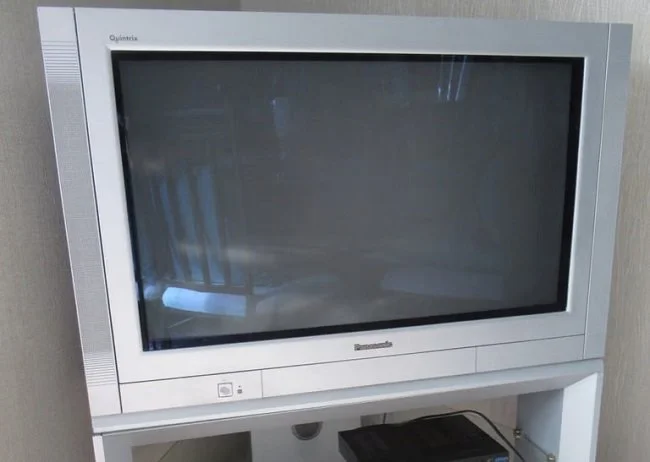
A Widescreen Panasonic CRT TV
I recently visited my local branch of the British Heart Foundation. This is a chain of UK charity shops that sell previously owned furniture and electrical goods, all of which are certified to be in good working order. It’s one of the few places where you’ll still find old school CRT televisions. These mainly come from house clearances. On this occasion, a particularly bulky model from the early 2000s was on display and despite its age, it still had a good, clear picture. I spoke to a member of staff and apparently these TVs are still popular with gamers who buy them for use with retro video games consoles. I felt especially nostalgic for this particular ageing Sony TV, because Mrs P and I had once owned a similar model. We bought it from a local department store (which no longer exists) and I remember it took two robust gentlemen to deliver it and install it.
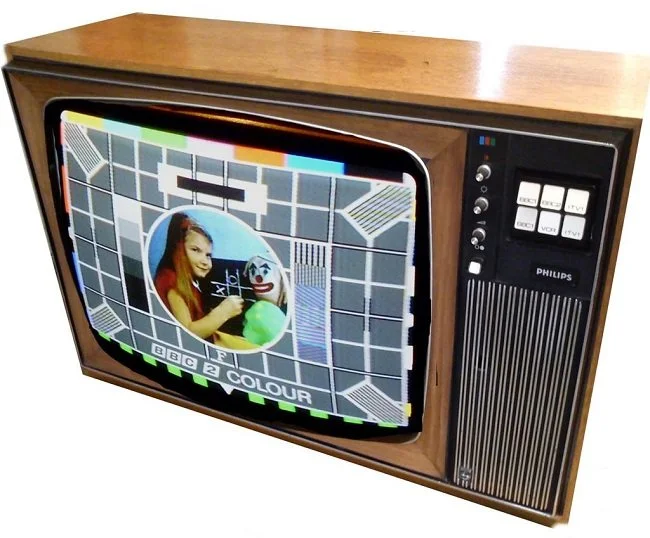
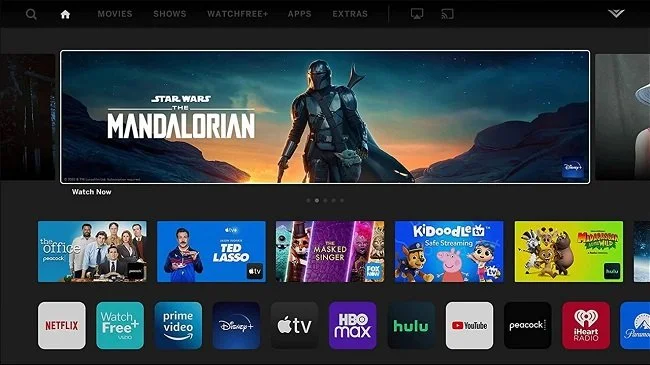
For much of my life, televisions have been expensive, bulky devices that no matter where you put them, always became the focal point of the room. During the seventies TVs were the primary source of household entertainment and most families did not have any additional devices connected to them. It was not until the eighties that VCRs and games consoles grew in popularity and became more commonplace peripheral devices. Today in contrast, a TV is usually part of a wider home entertainment system, potentially consisting of some sort of DVR, a games console, a DVD/Blu-ray player and a surround sound system. The TV and some of these other devices will all be connected to the internet and provide access to streaming services. It is no longer even considered essential to have access to a cable, satellite or digital terrestrial source. Some households are happy to rely purely on the internet.
Anyone remember Tivo?
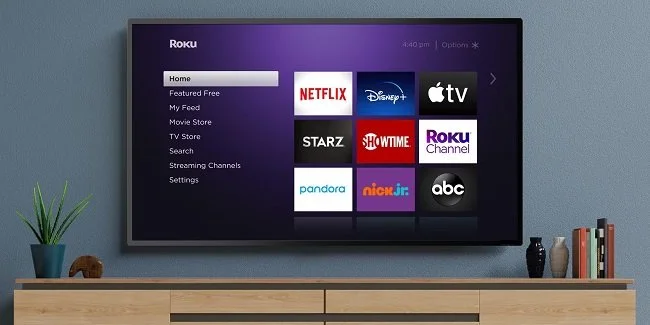
Returning to the title of this post, I think we are all fully aware that we watch TV in a much different manner to how we did thirty years ago. So this is not the central point of this article, although I may come back to it. On this occasion I am curious not so much about peoples specific viewing habits but rather the medium they use to watch. For example, I remember working with someone who due to their constant travelling, watched primarily via their tablet. My granddaughters used to do the same, until they got TVs in their bedrooms. For them, family viewing is a rarity. Furthermore, they tend to watch specific shows via streaming or YouTube Kids. If memory serves, I don’t think their home has a roof aerial, satellite dish or cable service. Conversely, my neighbours have gone all in on digital satellite services, mainly due to the sports coverage on offer. They also watch as a family on large TV in their lounge. You may do the same or something completely different. The fact is there is no standard way of watching TV anymore.
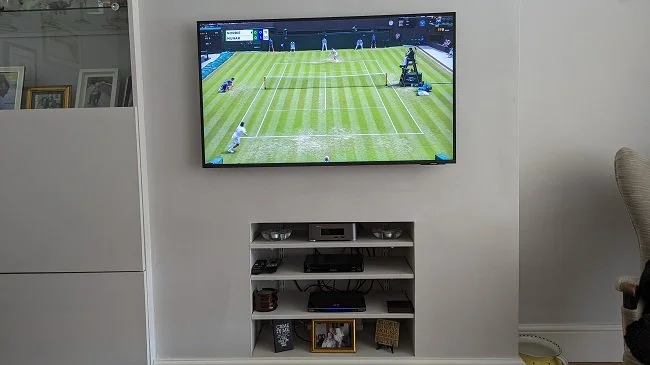
In our home, we have a wall mounted 4K TV in our lounge. Despite it being equipped with various apps for streaming as well as a terrestrial digital tuner, it ultimately serves as nothing more than a high end monitor. There are various other devices attached including a new DVR (a BT TV Box Pro) supplied by our ISP. This provides digital terrestrial channels as well as subscription based IPTV services. It can record three different channels while watching a fourth and can output streaming content in 4K HDR and Dolby Atmos. It currently has eight on demand and “catch up” services that we are actively logged into. Despite all its functionality, Mrs P uses it mainly for recording from a handful of mainstream UK TV channels. If there is ever a viewing conflict between Mrs P and I, then I will watch streaming services via my PC. It also has a TV tuner installed in case there’s an issue with internet services.
BT TV Box Pro
One of the benefits of TV today is that there’s no shortage of choice as to what to watch. Mrs P and I will frequently watch TV shows together as we broadly have similar tastes. If we want to watch a specific show, we determine what platform it is available on and whether we have existing access to it. We continuously make use of free trials to various streaming services. We seldom buy physical media anymore, although I will buy a Blu-ray copy of a film if it is difficult to source anywhere else. Overall we can usually access what we wish to watch. Some shows we’re happy to watch weekly but others we prefer to binge watch. By default we always have the subtitles on, which is no reflection upon our hearing but is mainly due to the way sound mixing is conducted these days. As I have stated before, I prefer to watch in either HD or UHD, without adverts as well as on screen graphics and logos.
Despite the technological changes that have happened over the years, not everything associated with watching televisions is an improvement. For example, I recently installed a new DVR. The process required me to choose the power management settings, connect the box to the internet, tune the various TV stations and hide any I didn’t want. I then had to set a PIN for content control, log into multiple streaming services using multiple log on credentials and set the remote control to operate our existing TV as well. Furthermore the new remote doesn’t have appropriate buttons to shut down the TV, only the DVR. Fortunately, the remote for the old DVR is still compatible, so we’re using that one instead. And speaking of remote controls, it would appear I now have six lying around the lounge to operate four devices? How is this easier?