
Phenomena AKA Creepers (1985)
For those unfamiliar with the work of Italian director Dario Argento, Phenomena may not necessarily be the best place to start. It is somewhat excessive movie even by the film makers own standards. Yet if approached with the right mind set, then it can be a very rewarding film. Mainstream American cinema often has a clear and linear framework. It is constructed in an established fashion and despite adopting techniques and styles from other countries, is frequently somewhat conservative in its presentation. Italian cinema, especially the work of Argento, focuses very much on visual aesthetics. Framing, the use of colour, editing and atmosphere often take priority over narrative and logic.
For those unfamiliar with the work of Italian director Dario Argento, Phenomena may not necessarily be the best place to start. It is somewhat excessive movie even by the film makers own standards. Yet if approached with the right mind set, then it can be a very rewarding film. Mainstream American cinema often has a clear and linear framework. It is constructed in an established fashion and despite adopting techniques and styles from other countries, is frequently somewhat conservative in its presentation. Italian cinema, especially the work of Argento, focuses very much on visual aesthetics. Framing, the use of colour, editing and atmosphere often take priority over narrative and logic.
Phenomena centres on Jennifer Corvino (Jennifer Connelly), the daughter of a famous actor who starts at an exclusive girl’s school in Switzerland. She befriends Doctor MacGregor (Donald Pleasance), a disabled entomologist who is helping Police with their enquiries regarding a serial killer. The Doctor also has a Chimpanzee. I mention this as it is an integral plot device. It should also be noted that Jennifer is a somnambulist and has a telepathic link with insects. It is not long before Jennifer crosses the path of the serial killer, yet because of her strange gifts suspsicion falls on her.
On paper the plot does sound somewhat ludicrous and I’d be lying if I said it doesn’t come across that way in the film. However Phenomena is beautifully shot on location in Switzerland and manages transcends its storyline through its audio visual excesses. Argento uses crane shots and stedicams to construct audacious and shocking set pieces, which are beautifully grotesque. European cinema always seems to depict acts of violence in a far more horrific way than the US. It is hard to put a finger on what the exact difference is. Colour and sound play an important part in the construction of Phenomena. The music veers from soft choral motifs, to burst of eighties metal. Night scenes are bathed in blue hues and blood is often splattered against lighter colours that starkly contrast it.
If you have a curious nature, a liking for the horror genre and an interest in European cinema, then this film is certainly a “baptism of fire”. Just to re-iterate the plot contains a killer dwarf, flesh eating insects, bad Scottish accents and a chimp with a cut throat razor. The final twenty minutes are quite gruelling but it is also an exquisite assault on your senses and for that reason alone I feel compelled to recommend Phenomena. Try and avoid the US release of the film which was renamed Creepers. This version was heavily edited from one hundred and ten minutes down to eighty two. Most of the violence is missing and the bizarre plot is rendered even more incomprehensible.
Phenomena features a soundtrack by long time Argento collaborators Goblin and their musical style contributes greatly to the film. The main theme is repeated in subtle variations throughout the course of the story. Although very much a product of the time, their unique European ambiance is still quite striking and the complete opposite of a traditional melodramatic orchestral score. This combined with the ambient sound effects and cacophonous sound mixing adds an extra dimension to Argento’s work and reflects his established aesthetic. One way or another Phenomena is a movie that leaves a lasting impression










The Beyond (1981)
Known in Italy as “E tu vivrai nel terrore! L'aldilà” which literally means “And you will live in terror! The afterlife”, The Beyond is the second entry in the so-called “Gates of Hell” trilogy by director Lucio Fulci. However, all three films are not connected in any way and simply share supernatural themes and graphic violence. Something Lucio Fulci became synonymous with in the latter part of his career. The Beyond is one of the director’s better films, in so far as it has good production values and is set in rural Louisiana. It has a lot of visual flair and a great soundtrack by composer Fabio Frizzi. However, the story is not a traditional linear narrative. Instead, after establishing a basic premise of a hotel built on one of the seven gates of hell and a vengeful dead warlock, The Beyond becomes mainly a series of elaborate and ghoulish set pieces, designed more for visual impact rather than logical sense.
Known in Italy as “E tu vivrai nel terrore! L'aldilà” which literally means “And you will live in terror! The afterlife”, The Beyond is the second entry in the so-called “Gates of Hell” trilogy by director Lucio Fulci. However, all three films are not connected in any way and simply share supernatural themes and graphic violence. Something Lucio Fulci became synonymous with in the latter part of his career. The Beyond is one of the director’s better films, in so far as it has good production values and is set in rural Louisiana. It has a lot of visual flair and a great soundtrack by composer Fabio Frizzi. However, the story is not a traditional linear narrative. Instead, after establishing a basic premise of a hotel built on one of the seven gates of hell and a vengeful dead warlock, The Beyond becomes mainly a series of elaborate and ghoulish set pieces, designed more for visual impact rather than logical sense.
Starring English actress Catriona McColl (Hawk The Slayer), as the beleaguered hotel owner Liza Merril and New Zealand ex-pat David Warbeck (A Fistful of Dynamite), as Dr. John McCabe, The Beyond quickly descends into mayhem. An odd job man has his eye gouged out by the zombified corpse of a dead warlock. An architect researching the hotel’s original plans, falls from a step ladder and has his face eaten by tarantulas. Dead bodies from the local morgue get up and attack the living. It’s all very grim, ghoulish and bombastic with lurid makeup effects by Gianetto De Rossi. Fulci turns everything up to eleven, the proceedings are handsomely shot and not a moment is wasted. However, despite the director taking it all very seriously, the cast are not so committed. There’s a scene towards the end when David Warbeck escapes in a lift from advancing zombies. While reloading his gun you briefly see him putting a bullet directly into the end of the gun barrel for a joke.
Following its initial release around Europe, critical opinion on The Beyond was polarised. Many found it gory and confusing. Forty years later, retrospective criticism has been a lot kinder, praising the film’s surrealistic qualities, production design, musical score and cinematography. Some have gone on to claim that Fulci made the proceedings intentionally disorienting, as part of a subtle commentary upon traditional cinematic style. I am not so sure that is the case and believe that Fulci simply was content to create a horror film that focused on style over narrative. Cinematic analysis aside, The Beyond is a striking piece of Italian horror and does manage to hold your interest, despite its lack of internal logic. Spiders tend not to eat people’s faces but it’s cool when they do. And for those expecting a happy ending, think again. The denouement is bleak but suits the tone of the film perfectly.
El Orfanato AKA The Orphanage (2007)
Laura García Rodríguez is adopted from an orphanage as a child. 30 years later, adult Laura (Belén Rueda) returns to the now closed orphanage, accompanied by her husband, Dr. Carlos Sánchez Rivera (Fernando Cayo), and their seven-year-old son, Simón (Roger Príncep). They plan to use the orphanage as a facility for disabled children. In the meantime, Simón talks about a boy named Tomás. He draws pictures of his new friend as a child wearing a sack mask. A social worker, Benigna Escobedo (Montserrat Carulla), visits Simón, as he has been adopted by Laura and Carlos. Simón is HIV positive. Angered by Benigna's unscheduled visit, Laura asks her to leave. She later finds Benigna in the orphanage's coal shed, but Benigna gets away. Simón becomes more enamoured with his imaginary friends but becomes angry when he learns from Tomás that Laura is not his birth mother, and he is terminally ill.
Laura García Rodríguez is adopted from an orphanage as a child. 30 years later, adult Laura (Belén Rueda) returns to the now closed orphanage, accompanied by her husband, Dr. Carlos Sánchez Rivera (Fernando Cayo), and their seven-year-old son, Simón (Roger Príncep). They plan to use the orphanage as a facility for disabled children. In the meantime, Simón talks about a boy named Tomás. He draws pictures of his new friend as a child wearing a sack mask. A social worker, Benigna Escobedo (Montserrat Carulla), visits Simón, as he has been adopted by Laura and Carlos. Simón is HIV positive. Angered by Benigna's unscheduled visit, Laura asks her to leave. She later finds Benigna in the orphanage's coal shed, but Benigna gets away. Simón becomes more enamoured with his imaginary friends but becomes angry when he learns from Tomás that Laura is not his birth mother, and he is terminally ill.
El Orfanato includes many of the classic hallmarks of supernatural cinema. There is a suitably gothic building, near to a beach. The cliff has secret caves that flood at high tide. Then there are the ghosts themselves who remain hidden for much of the film. Director J. A. Bayona uses sound and sleight of hand to build the atmosphere. There are a few shocks, that although not excessively graphic, are jolting due to their skillful execution. Children are represented honestly and credibly, and the story does not shy away from showing both their inclusionary and exclusionary proclivities. Too many US films depict children in a saintly manner, especially when a dying child is used as a plot device. Both Belén Rueda and Fernando Cayo excel as parent’s dealing with an impossible situation. Again, the emotional strain upon their relationship is shown realistically.
Screenwriter Sergio Sánchez touches on several classic themes that frequently occur within the horror genre. The stigma of deformity and of difference, as well as the cruelty of children. This is depicted both in the way Simón is treated when others find out about his illness and in a subplot regarding his ghostly friend Tomás. The story also deals with regret, guilt and a mother’s love. However, all of which is handled in an intelligent, nuanced and remarkable unsentimental manner. Instead, we are present with genuine tragedy, pathos and melancholy. Despite such bleak subject’s cinematographer Óscar Faura imbues the proceedings with great beauty. The conclusion is quite radical and not what you would call a “Hollywood ending”. Yet it is an emotionally honest outcome. El Orfanato is a fine example of “kinder horror” and an exceedingly well-crafted film that conspicuously avoids the contrived sensibilities of US cinema. It is an emotionally raw and moving film but also a very rewarding one.
The Last Voyage of the Demeter (2023)
Based on a single chapter, the Captain's Log, from Bram Stoker's classic 1897 novel “Dracula”, The Last Voyage of the Demeter takes place aboard a Russian schooner which is chartered to carry a private cargo of unmarked wooden crates, from Carpathia to London. The film details the strange events that befall the doomed crew as they attempt to survive the ocean voyage, stalked each night by a terrifying presence on board their ship. When it finally founders and wrecks near Whitby Harbour, the ship is found to be derelict. There is no trace of the crew. (IMDb synopsis)
After some research, it becomes clear that this film’s journey from concept to final release has neither been easy or straight forward. Numerous writers have tinkered with the script and multiple directors have been associated with the project over the last decade. The film was completed in 2021 and has been awaiting a cinematic release ever since. Such issues can often lead to a studio losing confidence in a film. However, The Last Voyage of the Demeter is a perfectly serviceable horror adventure, albeit one that owes a lot to Alien. Yet many horror films follow a pattern and explore common themes. Ultimately it comes down to providing a new perspective. The Last Voyage of the Demeter achieves this and offers an entertaining two hours. Is it perfect? No. Is it poorly made, dull and lacking in suspense? No. If you paid a lot to see it at the theatre then you may be a little underwhelmed. But as an evening’s scary home entertainment, it is fine.
Based on a single chapter, the Captain's Log, from Bram Stoker's classic 1897 novel “Dracula”, The Last Voyage of the Demeter takes place aboard a Russian schooner which is chartered to carry a private cargo of unmarked wooden crates, from Carpathia to London. The film details the strange events that befall the doomed crew as they attempt to survive the ocean voyage, stalked each night by a terrifying presence on board their ship. When it finally founders and wrecks near Whitby Harbour, the ship is found to be derelict. There is no trace of the crew. (IMDb synopsis)
After some research, it becomes clear that this film’s journey from concept to final release has neither been easy or straight forward. Numerous writers have tinkered with the script and multiple directors have been associated with the project over the last decade. The film was completed in 2021 and has been awaiting a cinematic release ever since. Such issues can often lead to a studio losing confidence in a film. However, The Last Voyage of the Demeter is a perfectly serviceable horror adventure, albeit one that owes a lot to Alien. Yet many horror films follow a pattern and explore common themes. Ultimately it comes down to providing a new perspective. The Last Voyage of the Demeter achieves this and offers an entertaining two hours. Is it perfect? No. Is it poorly made, dull and lacking in suspense? No. If you paid a lot to see it at the theatre then you may be a little underwhelmed. But as an evening’s scary home entertainment, it is fine.
So, in light of this, I find it odd that many critics have been negative about the film and what I would define as overly critical. I wrote a review of the horror film Countdown a few years back and made the point that not every film can break new ground or be a masterpiece. Countdown was perfectly adequate for what it was and what part of the market it catered for. The same can be said about The Last Voyage of the Demeter. So, what exactly do some critics expect? Film quality, artistic merit and even entertainment in general all exist on a spectrum. Just like the books we read, the music we listen to and the food we eat. I do wonder if some critics have the capacity and intellectual rigour to temper their expectations and contextualise them. Everything seems to be presented as a binary choice these days. That apparently now includes one’s assessment of a film.
With all of that in mind, what does The Last Voyage of the Demeter have to offer? The production values are good, especially the location work in Malta at the start of the film. The digital effects depicting the schooner and storms at sea are credible. The creature effects, which are a mixture of prosthetics and CGI, are creepy. The cast are competent, and it is an advantage that many are not household names. I felt the international nature of all the actors to be appropriate to the story and the nature of ships crews from the era depicted. I enjoyed lead actor Corey Hawkins’ London accent and felt that Liam Cunningham brought appropriate gravitas as the ship’s ageing Captain. The film may have benefited from just a slightly quicker pace and a reduction of the running time by ten minutes. But the last thirty minutes are quite tense. Also, there’s a classy and subtle score by composer Bear McCreary.
Some have raised the point that because the outcome of the story is known in advance, like that of Apollo 13, that it mitigates any suspense and sense of immersion. I don’t believe that is the case at all. It certainly wasn’t with regard to Ron Howard’s film about the ill fated apollo mission. The Last Voyage of the Demeter still manages to maintain a degree of freedom in the way it resolves certain plot elements. It is as creative as it wants about the death of the cast members. I also suspect that many viewers are not aware of the connection with Bram Stoker’s Dracula. Although a literary classic, I don’t think it is by default appealing to modern audiences. So many viewers may not consider the film a “fait accompli”. Caveats and argument about the subjective nature of movie criticism notwithstanding, The Last Voyage of the Demeter is an entertaining and creative concept, offering a different variation on a known cinematic theme. Set your expectations and enjoy accordingly.
Phantasm (1979)
A teenage boy and his friends face off against a mysterious grave robber, known only as the Tall Man, who employs a lethal arsenal of unearthly weapons. (IMDb synopsis) NB. This summary fails to capture the essence of Phantasm and does not do it justice. However, to delineate the plot in greater detail is difficult and counterproductive. Phantasm is not only a film to be watched but one to be experienced.
There is a bizarre, dreamlike quality to Phantasm. After watching it for the first time, you may not remember the specifics of the story, but certain scenes will linger in the memory, in the same way you may recollect snatches of a nightmare following a disturbed night’s sleep. Like so many independent films, made on small budgets by aspiring professionals, it is filled with creativity and innovative ideas that more than make up for its modest production values. Phantasm revels in its surreal imagery and grotesque set pieces and avoids the trappings of a traditional linear and logical narrative. It is a horror film that eschews the genre conventions of the time, in the same way that Dark Star (1974) flew in the face of traditional science fiction films. Although now part of a curious franchise, this original works perfectly well as a standalone film and has developed a substantial cult following among both film fans and high-profile film makers.
A teenage boy and his friends face off against a mysterious grave robber, known only as the Tall Man, who employs a lethal arsenal of unearthly weapons. (IMDb synopsis) NB. This summary fails to capture the essence of Phantasm and does not do it justice. However, to delineate the plot in greater detail is difficult and counterproductive. Phantasm is not only a film to be watched but one to be experienced.
There is a bizarre, dreamlike quality to Phantasm. After watching it for the first time, you may not remember the specifics of the story, but certain scenes will linger in the memory, in the same way you may recollect snatches of a nightmare following a disturbed night’s sleep. Like so many independent films, made on small budgets by aspiring professionals, it is filled with creativity and innovative ideas that more than make up for its modest production values. Phantasm revels in its surreal imagery and grotesque set pieces and avoids the trappings of a traditional linear and logical narrative. It is a horror film that eschews the genre conventions of the time, in the same way that Dark Star (1974) flew in the face of traditional science fiction films. Although now part of a curious franchise, this original works perfectly well as a standalone film and has developed a substantial cult following among both film fans and high-profile film makers.
Told predominantly from the perspective of 13-year-old Mike, Phantasm is a film about grief, the mortality of friends and family and coming to terms with our own existential dread. The film starts with the funeral of a family’s oldest brother, Tommy. Mike has also been raised by his two brothers since the death of his parents. Hence loss is very much a key theme in Phantasm. Because of Mike’s age, it can be argued that Phantasm also alludes to transitioning from a child to an adult. Mike frequently checks on his older brother Jody and observes his activities such as his drinking in a bar and his sexual dalliances with a woman he meets there. This seems to both intrigue and shock Mike. Is the Tall Man’s transformation of the dead into malignant dwarf slaves, a metaphor for Mike’s concerns about becoming an adult? Such ideas and themes are present to ponder, should the viewer see fit to do so.
Alternatively, one can focus on the film’s visual imagery which is vivid. The briefly glimpsed hooded dwarves that scuttle in the shadows. The sleek but deadly silver spheres that patrol the marbled lined corridors of the Morningside Funeral Home. Then there is the imposing and esoteric presence of Angus Scrimm as the Tall Man. One of the cinema's most incongruous but memorable villains. Phantasm, ostensibly a horror film, also has a wealth of interesting ideas and concepts that hail more from the science fiction genre. The Tall Man appears to be an interdimensional traveller, using the corpses of the recently deceased to create homunculus that can survive and work in the extreme heat and increased gravity of his own world. Furthermore, the interdimensional gateway seems to work via sound and vibration. The Tall Man also appears to have transformative abilities, appearing alternatively as the Lady in Lavender.
The 2016 restoration and 4K remaster of Phantasm is quite a revelation. All previous copies that I have viewed have been too dark and terribly pan and scanned, thus greatly diminishing the film’s visual flair. The current Blu-ray release offers a clear image at the correct aspect ratio, as well as the original mono sound mix and a new 5.1 remix. The soundtrack by Fred Myrow and Malcolm Seagrave greatly adds to the film’s atmosphere with its haunting electronic music. The resulting franchise that has followed in the wake of Phantasm is a curious beast. None of the films quite match the innovation of the original or recapture its haunting quality. They are mainly a showcase for the director, Don Coscarelli, to experiment with his respective ideas about the Tall Man’s origins and the silver spheres. Hence, I recommend curious viewers to initially content themselves with the original, as it offers more than enough to reflect upon.
Maniac Cop (1988)
In New York City, a waitress is attacked by muggers on her way home. When she seeks help from an officer on the beat, he breaks her neck. When the same officer (Robert Z’dar) commits further murders, Lieutenant McCrae (Tom Atkins) is assigned to investigate. He is told by his superiors to suppress eyewitness accounts that the killer is wearing a police uniform. However, he passes this information to a journalist, in an attempt to protect civilians. Ellen Forrest (Victoria Catlin), suspects that her husband Jack (Bruce Campbell) may be the “Maniac Cop”, as the press are calling him, and follows him to a motel, only to discover he is having an affair with fellow officer Theresa Mallory (Laurene Landon). Ellen is subsequently murder by the killer and Jack is arrested under suspicion of murder. McCrae believes Jack has been framed and speaks to Mallory, who can provide Jack with an alibi. Mallory is then attacked by the Maniac Cop while working undercover as a prostitute. McCrae and Mallory fight off the killer, who escapes mysteriously unharmed, despite being shot several times.
In New York City, a waitress is attacked by muggers on her way home. When she seeks help from an officer on the beat, he breaks her neck. When the same officer (Robert Z’dar) commits further murders, Lieutenant McCrae (Tom Atkins) is assigned to investigate. He is told by his superiors to suppress eyewitness accounts that the killer is wearing a police uniform. However, he passes this information to a journalist, in an attempt to protect civilians. Ellen Forrest (Victoria Catlin), suspects that her husband Jack (Bruce Campbell) may be the “Maniac Cop”, as the press are calling him, and follows him to a motel, only to discover he is having an affair with fellow officer Theresa Mallory (Laurene Landon). Ellen is subsequently murder by the killer and Jack is arrested under suspicion of murder. McCrae believes Jack has been framed and speaks to Mallory, who can provide Jack with an alibi. Mallory is then attacked by the Maniac Cop while working undercover as a prostitute. McCrae and Mallory fight off the killer, who escapes mysteriously unharmed, despite being shot several times.
Maniac Cop is a great “high concept” idea, made at a time when the slasher genre was running out of steam and writers were striving for a new angle. The story is modest in scope and efficiently handled, especially the idea of an honest cop being thrown to the wolves for the sake of political expediency. Director William Lustig has previous experience with both gory slashers such as Maniac (1980) and gritty urban crime movies like Vigilante (1982). Unfortunately, the film’s ambitions are hampered by the budget. The various murders by the “Maniac Cop” are not that gory, apart from a prison flashback sequence. In one scene a cop is shot by a member of the public, who panics when they are pulled over while driving. The squib blows the entire blood bag out of the back out of their hat and as the stunt man falls to the ground you can see the electrical cabling coming out of their costume. Obviously, there wasn’t the budget to reshoot the scene, so it was left in despite its noticeable flaws.
Low budgets often go hand in hand with independent horror films. It often drives filmmakers to be very creative. However, sometimes a low budget can hamstring a film no matter how. The strongest aspect of Maniac Cop is the cast, who are all genre stalwarts who are more than comfortable with the hardboiled dialogue. The film also benefits from a very atmospheric score by Jay Chattaway, which has a memorable motif that is often played in an off-kilter fashion. The story, by genre veteran Larry Cohen, is well conceived but after spending time and effort setting the story up, there’s simply no money left for a satisfactory payoff. Hence Maniac Cop runs out of steam in the third act and has a somewhat weak ending. Perhaps the best thing that Maniac Cop achieves is laying the groundwork for a bigger budget and superior sequel that was made two years later.
The Sentinel (1977)
During the seventies, the success of several disaster movies indirectly started a trend for all-star casts. Then when the horror genre became a bankable commodity once again and Hollywood started pouring money into such productions, the casting of famous actors both old and new continued. Hence Michael Winner’s 1977 adaptation of The Sentinel, based upon the book by Jeffrey Konvitz, features multiple stars from forties and fifties Hollywood. Their presence adds some gravitas to the production but like so many of the director’s other films, there is an unseemly and somewhat unpleasant quality to The Sentinel. Perhaps a different director could have brought the various elements of the story together more successfully. Winner creates both atmosphere and shocks, but it is all a little too knowing. He also commits a cardinal sin at the film’s climax. Casting disabled actors for shock value as the denizens of hell.
During the seventies, the success of several disaster movies indirectly started a trend for all-star casts. Then when the horror genre became a bankable commodity once again and Hollywood started pouring money into such productions, the casting of famous actors both old and new continued. Hence Michael Winner’s 1977 adaptation of The Sentinel, based upon the book by Jeffrey Konvitz, features multiple stars from forties and fifties Hollywood. Their presence adds some gravitas to the production but like so many of the director’s other films, there is an unseemly and somewhat unpleasant quality to The Sentinel. Perhaps a different director could have brought the various elements of the story together more successfully. Winner creates both atmosphere and shocks, but it is all a little too knowing. He also commits a cardinal sin at the film’s climax. Casting disabled actors for shock value as the denizens of hell.
Alison Parker (Christina Raines) is a fashion model who suffers from neurosis, which has led to several suicide attempts. When she moves into a Brooklyn Heights brownstone, she notices that the top floor apartment is occupied by a blind priest, Father Halliran (John Carradine), who continuously sits at the window. Overtime, Alison starts suffering from fainting spells and insomnia. She also hears unexplained noises. Her neighbours are also somewhat odd, including the eccentric, elderly Charles Chazen (Burgess Meredith), and the female couple Gerde (Sylvia Miles) and Sandra (Beverly D'Angelo). She even attends a bizarre birthday party for Chazen's cat. Alison decides to share her concerns with the rental agent Miss Logan (Ava Gardner) but is perplexed to be told that her and the blind priest are the building’s only tennants. Alison's boyfriend Michael (Chris Sarandon), who is a lawyer, contacts a corrupt detective called Brenner (Hank Garrett), to investigate what is happening.
The all-star cast of “Hollywood legends” certainly adds to the allure of The Sentinel. The fact that such actors as Burgess Meredith, Ava Gardner and Jose Ferrer get to play such baroque and grotesque characters is intriguing. The screenplay, which was adapted by both Jeffrey Konvitz and Michael Winner, retains many of the themes from the original book such as hidden trauma and the stigma of attempted suicide. The make-up effects are unpleasant but exemplary, created by industry legend, Dick Smith. This was the age of the big budget horror film with studios eager to recreate the box office success of The Exorcist and The Omen. Hence The Sentinel seeks to replicate many of the horror tropes seen in those movies. Overall, this is a professionally made picture with good quality production values. Yet despite all this, the various elements don’t quite seem to fit and the film feels off.
The best and most revered horror films are those made by people who understand the versatility of the genre and how it can be successfully used to explore complex themes and make intelligent commentary on the human condition. The Exorcist and Dawn of the Dead are two fine examples of this. However, Michael Winner is a divisive film maker. Often with his films, there comes a tipping point where the viewer may consider is he genuinely subverting the genre and its themes to do something original, or is he mocking the material and the audience? I can’t help but feel that Winner was not the right sort of director for The Sentinel. He claimed that he was inspired by the paintings of Hieronymus Bosch but that is a poor excuse for exploiting the disabled. The Sentinel could have been a better film in different hands. As it stands, its questionable excesses diminish it.
The Keep (1983)
Michael Mann’s The Keep (1983) is a cinematic “curate’s egg” that often leaves viewers with mixed feelings. In visual terms, this supernatural horror film with science fiction overtones, is both striking and innovative. The sound design and soundtrack by Tangerine Dream are compelling but at the expense of the dialogue, which is often muffled and difficult to hear. Narratively, it is confusing and rushed. The editing further compounds this. The novel by F. Paul Wilson, upon which it is based, blends elements of gothic horror and classic vampire themes and juxtaposes them with the horror of World War II and the evils of the Schutzstaffel (SS). Mann has removed the traditional cinematic trappings associated with the “undead” and instead presents us with a stylised, science fantasy story in which the antagonist is a supernatural entity that feeds on evil. However, due to The Keep having a troubled production and last-minute re-editing, much of the film’s dramatic and narrative substance has been lost along the way. What remains is intriguing but flawed.
Michael Mann’s The Keep (1983) is a cinematic “curate’s egg” that often leaves viewers with mixed feelings. In visual terms, this supernatural horror film with science fiction overtones, is both striking and innovative. The sound design and soundtrack by Tangerine Dream are compelling but at the expense of the dialogue, which is often muffled and difficult to hear. Narratively, it is confusing and rushed. The editing further compounds this. The novel by F. Paul Wilson, upon which it is based, blends elements of gothic horror and classic vampire themes and juxtaposes them with the horror of World War II and the evils of the Schutzstaffel (SS). Mann has removed the traditional cinematic trappings associated with the “undead” and instead presents us with a stylised, science fantasy story in which the antagonist is a supernatural entity that feeds on evil. However, due to The Keep having a troubled production and last-minute re-editing, much of the film’s dramatic and narrative substance has been lost along the way. What remains is intriguing but flawed.
In 1941 in Romania, Captain Klaus Woermann (Jürgen Prochnow), arrives with his unit at an uninhabited castle, known locally as “the Keep”, located in the Dinu Pass of the Carpathian Mountains. The building is maintained by villagers, Alexandru and his two sons, who are paid from a longstanding trust fund. The interior of the “the keep” has numerous cross shaped icons made of nickel, embedded in the wall. One night two soldiers seeking hidden treasure remove one of the stone blocks in the wall, releasing an entity that kills them. After more subsequent deaths Woermann requests reinforcements but is shocked when SS officer, Erich Kaempffer (Gabriel Byrne), arrives with a detachment of his commandos. Kaempffer, ignores the supernatural nature of the deaths and suspects partisans. Local village priest, Father Mihail Fonescu (Robert Prosky), suggests the Germans consult the historian, Theodore Cuza (Ian McKellen), who has studied “the keep” in the past.
Filmed on location in Wales and at Shepperton Studios during late 1982, The Keep suffered several problems both during production and postproduction. Unseasonal weather damaged several sets thus delaying filming and adding to the budget. Then special effects supervisor Wally Veevers died before completing his work on the film. Veevers specialised in optical effects, often using bespoke equipment and techniques only known to him. Paramount Pictures refused to pay any additional costs to find an alternative and so his absence meant that many effects shots couldn’t be completed and had to be cut from the film. Then there were further problems while editing The Keep. Mann’s final cut was 210 minutes, featuring a great deal more character development and plot exposition. The studio naturally balked at what they regarded as a horror film being so long. So, Mann edited a second version which ran 120 minutes. Sadly, this was not well received by test audiences and so the studio took control and produced a rushed, final edit of 96 minutes.
It is this theatrical version which leaves so many viewers bemused. It is self-evident within the first 10 minutes of The Keep, that this is not a typical gothic themed, vampire horror film. Mann’s modern visual aesthetic, which we previously saw in his 1981 film Thief, is amped up here. Director of cinematography Alex Thomson (Excalibur and Legend) has a keen eye for contrasting colours as well as brightly backlighting characters and key scenes. Then there’s the pulsing electronic soundtrack by German band, Tangerine Dream, which utilises revised material from several of their previous albums. Hence, the film may well be set in 1943 but it has a very contemporary, industrial look and sound. Furthermore, the makeup and animatronics by Nick Malley along with Wally Veevers visuals effects avoid standard horror tropes. Blood and gore is replaced by desiccation. Wooden stakes through the heart with lasers.
Sadly, the last-minute re-edit renders many scenes incomplete, and the characters often appear to act with little or no clear motivation, due to the amount of material removed. Sir Ian McKellen’s performance as Dr. Cuza remains strong but sadly Alberta Watson as his daughter Eva and the criminally underrated Scott Glenn as Glaeken Trismegestus have their roles cut to a minimum. Many secondary plotlines are also lost in the theatrical edition of The Keep. Who exactly is Glaeken and why does Eva fall in love with him so quickly. What power does he have over her? Then there is the matter of the way the evil released inside “the keep” spreads to the village, like a disease and the locals soon start to turn on each other. It is worth noting that the author did not like Michael Mann’s interpretation and in 2006 collaborated with artist Matthew Dow Smith to produce a graphic novel version he felt was closer to his work.
The Keep was a commercial failure upon release, although it did garner praise for its visual aesthetics. Over the years, various interviews with those that worked on the film have raised a lot of interest among film fans. Sadly, there has yet to be a Blu-ray release of The Keep, although DVD copies remain in circulation. Occasionally, cable channels show a TV version of the film with a slightly different ending. However, director Michael Mann appears to have no interest in revisiting the film and producing a new edit closer to his original vision. Mann has indicated that the climactic battle in which the Nazis are killed off was indeed shot but lacked the required special effects to complete the scene. Paramount has not confirmed whether this or` any other unused footage still exists. Hence it seems likely that The Keep will remain an interesting but flawed cinematic project. Yet even in its existing truncated version it can still make for fascinating viewing.
The Uninvited (1944)
In 1937, while on holiday in Cornwall, London music critic and composer Roderick "Rick" Fitzgerald (Ray Milland) and his sister Pamela (Ruth Hussey) discover Windward House, an abandoned clifftop home. They decide to see if they can buy it from its current owner Commander Beech (Donald Crisp). He willingly settles for an unusually low price of £1,200. Rick and Pamela meet Beech's 20-year-old granddaughter Stella Meredith (Gail Russell), who lives with her grandfather after her parents death. Stella is strongly attached to the house, and its sale upsets her. Although Stella’s mother, Mary Meredith, fell to her death from the cliffs outside Windward House seventeen years earlier, Stella reflects fondly on her time there as a child. Commander Beech forbids Stella from going to Windward House, but Rick and Pamela feel sorry for Stella and indulge her visits. However, shortly after moving in Pamela and then Rick become aware of drafts on the staircase, cold spots in the studio room and ghostly weeping in the night.
In 1937, while on holiday in Cornwall, London music critic and composer Roderick "Rick" Fitzgerald (Ray Milland) and his sister Pamela (Ruth Hussey) discover Windward House, an abandoned clifftop home. They decide to see if they can buy it from its current owner Commander Beech (Donald Crisp). He willingly settles for an unusually low price of £1,200. Rick and Pamela meet Beech's 20-year-old granddaughter Stella Meredith (Gail Russell), who lives with her grandfather after her parents death. Stella is strongly attached to the house, and its sale upsets her. Although Stella’s mother, Mary Meredith, fell to her death from the cliffs outside Windward House seventeen years earlier, Stella reflects fondly on her time there as a child. Commander Beech forbids Stella from going to Windward House, but Rick and Pamela feel sorry for Stella and indulge her visits. However, shortly after moving in Pamela and then Rick become aware of drafts on the staircase, cold spots in the studio room and ghostly weeping in the night.
There is much to commend The Uninvited. It is a gentle, humorous romantic drama, punctuated with supernatural elements. The script by Dodie Smith and Frank Partos reflects Hollywood’s perceptions of archetypes and romance of the time. The lead character Rick (played effortlessly by Ray Milland) is fun and amusing with his quips and wry humour. Stella, the object of his affection and noticeably his junior, is young, naive and oblivious to the realities of life. She is also in danger, possibly from herself or may be from a malevolent outside force. Despite being studio bound, the story unfolds against sumptuously crafted sets, especially Windward House, with its palatial staircase and imposing rooms. All of which is superbly lit and photographed by Charles Lang. half of the film atmosphere derives from the excellent composed shots and clever use of visual effects, such as matte paintings and foreground miniatures.
However, as well as being a robust example of quality studio filmmaking from the era, there appears to be a lot of hidden narrative depth to The Uninvited. Is Stella's child-like demeanour simply a product of her parochial upbringing or are there hints at hereditary mental illness? Then there’s the curious manner in which Mary Meredith’s best friend, Miss Holloway, dotes upon her memory in an obsessive fashion. Was this more than a platonic friendship? Then there is the age gap between Rick and Stella. Although not unusual by the cultural standards of the time it does offer a point of contemplation. Is he looking for a wife or a daughter? It is possible that these themes are not actually present and it’s a case of watching a film from the forties with modern sensibilities. Yet it is worth remembering that filmmakers at the time were having to work within the confines of the Motion Picture Production Code and had to be creative if they wanted to tackle adult themes.
Whether you wish to contemplate the alleged deeper themes, or simply enjoy The Uninvited as a charming romantic, supernatural drama, either way it will entertain. Lewis Allen directs assuredly and the story spans its three act structure neatly and efficiently. The story has a strong female presence and is unusual insofar that the supernatural element is not continuously dismissed by the protagonists. There are no elaborate set pieces by modern standards. But the paranormal incidents that occur work well because of their subtlety. A bouquet withers due to the cold. An impromptu piano performance which starts upbeat and romantic, takes a sombre and morose turn. And then there are the household pets that eschew the supernatural. It is all so pleasantly old school, understated and very absorbing. The Uninvited is one to watch when you want a change from contrived jumps and scares that are on offer nowadays.
A Bay of Blood (1971)
Disabled countess Federica Donati (Isa Miranda) is strangled to death by her husband, Filippo Donati (Giovanni Nuvoletti). Filippo is subsequently stabbed to death by an unseen assailant, and his body is then dragged to the bay beside their mansion. The police investigate and find a suicide note written by the countess, but do not discover Filippo's murder. Real estate agent Frank Ventura (Chris Avram) and his lover Laura (Anna Maria Rosati) are plotting to take possession of the bay. When the Countess refused to sell her estate to them, the couple conspired with Filippo to murder his wife. The pair are unaware that Filippo is dead and cannot proceed with their scheme without his signature. Meanwhile, four local teenagers Duke (Guido Boccaccini), Bobby (Roberto Bonanni), Denise (Paola Montenero) and Brunhilde (Brigitte Skay) break into the seemingly deserted mansion, looking for fun. However, they are soon killed one by one. Are all these events connected?
Disabled countess Federica Donati (Isa Miranda) is strangled to death by her husband, Filippo Donati (Giovanni Nuvoletti). Filippo is subsequently stabbed to death by an unseen assailant, and his body is then dragged to the bay beside their mansion. The police investigate and find a suicide note written by the countess, but do not discover Filippo's murder. Real estate agent Frank Ventura (Chris Avram) and his lover Laura (Anna Maria Rosati) are plotting to take possession of the bay. When the Countess refused to sell her estate to them, the couple conspired with Filippo to murder his wife. The pair are unaware that Filippo is dead and cannot proceed with their scheme without his signature. Meanwhile, four local teenagers Duke (Guido Boccaccini), Bobby (Roberto Bonanni), Denise (Paola Montenero) and Brunhilde (Brigitte Skay) break into the seemingly deserted mansion, looking for fun. However, they are soon killed one by one. Are all these events connected?
A Bay of Blood (AKA Twitch of the Death Nerve) is a giallo, as the complexity of the prior plot synopsis may indicate to those familiar with the genre (I only summarised the first 30 minutes of the film). However, the film contains many of the tropes that would later become staples of the slasher genre, a decade later. There has been some debate among fans whether A Bay of Blood is indeed a proto-slasher but it has too many hallmarks of a giallo. The most obvious being that the murders are all due to human agency with real life motivations. Slasher films feature antagonists who kill through psychosis or sometimes, without motivation at all and often have supernatural abilities. Setting aside such debates, director Mario Bava certainly changed the trajectory of the giallo genre, taking a more violent and exploitative approach. The lavish visual style is still present, but the focus of the set pieces has changed from suspense to gore.
As well as being a giallo, A Bay of Blood is a rich slice of early seventies, Italian pop culture. Hence our quartet of hip and groovy teens arrive in a Dune Buggy, sporting flares and mini dresses and doing the shake to a particularly funky soundtrack by Stelvio Cipriani. As ever with Italian cinema, the production design and sets are creative and stylish. Mario Bava once again handles cinematography himself and composes some creative and dynamic scenes. The pastel shades and autumn colours of previous films such as Black Sabbath and Blood and Black Lace are replaced with starker lighting designed to reinforce the impact of the grisly set pieces. Special effects artist Carlo Rambaldi (who a decade later worked on Alien and E.T.) designed and executed the graphic death scenes. Two of which, the machete to the face and the couple having sex impaled by a spear, were subsequently “repeated” in Friday the 13th Part 2.
To the casual viewer, A Bay of Blood is a somewhat archaic whodunnit with a high and gory body count. They may also feel that the period trappings date the proceedings. However, to those who are more familiar with gialli or simply have a greater tolerance for material outside of the current mainstream, then A Bay of Blood is an interesting piece of genre history. The story is delightfully convoluted as well as implausible and the violence is flamboyant and stylised. Like most Italian films from this era, dialogue has been added in post-production, which gives such films a very unique soundscape. It is clear that this film was a major influence on American cinema a decade later and although not a slasher movie, it certainly established the foundations of that genre of film. A Bay of Blood is designed to be an assault upon the senses, rather than a logical, linear horror film. Viewed on such terms it can be very rewarding.
The Caller (1987)
A woman (Madolyn Smith) returns to a remote cabin in the woods carrying groceries. On the way she passes an abandoned vehicle, which she searches. She finds a broken doll in the glove box. On arrival at the cabin, she takes a shower and then calls her daughter. She then prepares a meal for a guest and goes to the garage only to find that her jeep has a puncture from a broken bottle. A mysterious stranger (Malcolm McDowell) prowls around outside the cabin, watching the woman through the windows. He then knocks, claiming that his car has broken down and asks if he can use her phone. He calls a local tow service and requests that his car is collected and repaired. The woman grudgingly allows the stranger to wait although she states she is expecting a guest. The two then converse and it soon becomes clear that they’re both sceptical of each other’s respective stories. A strange game of cat and mouse ensues with each alternately gaining the upper hand. Slowly the atmosphere becomes more tense.
A woman (Madolyn Smith) returns to a remote cabin in the woods carrying groceries. On the way she passes an abandoned vehicle, which she searches. She finds a broken doll in the glove box. On arrival at the cabin, she takes a shower and then calls her daughter. She then prepares a meal for a guest and goes to the garage only to find that her jeep has a puncture from a broken bottle. A mysterious stranger (Malcolm McDowell) prowls around outside the cabin, watching the woman through the windows. He then knocks, claiming that his car has broken down and asks if he can use her phone. He calls a local tow service and requests that his car is collected and repaired. The woman grudgingly allows the stranger to wait although she states she is expecting a guest. The two then converse and it soon becomes clear that they’re both sceptical of each other’s respective stories. A strange game of cat and mouse ensues with each alternately gaining the upper hand. Slowly the atmosphere becomes more tense.
The Caller comes across more like a stage play than a film. There are only two cast members and the first thirty minutes are exclusively confined to the cabin. Initially the guarded dialogue exchanges between the two characters seems to imply that maybe the stranger is a police officer and the woman a suspect in murder case. But it soon becomes clear, due to the contradictory dialogue and the curious behaviour of each character when the other is out of the room, that something much more arcane is going on. The screenplay by Michael Sloan strives to be “Kafkaesque”, but although intriguing, it isn’t clever enough. The two leads are good and strive to bring some dramatic focus to the proceedings. But by the second act, which takes place the following day when the stranger and the woman meet in town and resume their confrontation, it starts to become frustrating.
The denouement of The Caller is remarkably left field and radically alters the trajectory of the film in its closing scenes. Director Arthur Allan Seidelman, who has a background in theatre as well as film, handles the proceedings in a workmanlike fashion. The fact that this film was made by Empire Pictures may perhaps give some viewers a clue as to what may lie ahead of them. The ending does resolve the story, but it may not satisfy all viewers. Upon reflection such a story would have fared better as an episode of The Twilight Zone or The Outer Limits. If you are going to tackle a story which incorporates a substantial twist that tests your viewers suspension of disbelief, then you perhaps need to approach such material in a more subtle fashion. As it stands The Caller is a curiosity but not necessarily because it is compelling. After investing an hour of your time, you just want to see where it ends up.
Night of the Eagle (1962)
Norman Taylor (Peter Wyngarde) is a psychology lecturer whose career has taken off since he and his wife, Tansy (Janet Blair), returned to England from Jamaica. His students are doing well and he is socially climbing within the school’s administrative hierarchy. Some other members of the faculty are jealous of his success. One night he is shocked to discover curious artefacts hidden around his home and to learn that his wife is practising obeah. Tansy claims that the charms are responsible for his rapid advancement and also protect him, as she has found a similar but malicious item left in their home after a bridge evening. Norman, a consummate rationalist, demands that the charms are destroyed but Tansy warns him she is not responsible for what may happen next. The next day events take a turn for the worse. A student accuses Norman of rape and another threatens him with a gun due to his poor grades. During the night, a freak storm batters Norman’s cottage. Is it just bad weather or something more sinister?
Norman Taylor (Peter Wyngarde) is a psychology lecturer whose career has taken off since he and his wife, Tansy (Janet Blair), returned to England from Jamaica. His students are doing well and he is socially climbing within the school’s administrative hierarchy. Some other members of the faculty are jealous of his success. One night he is shocked to discover curious artefacts hidden around his home and to learn that his wife is practising obeah. Tansy claims that the charms are responsible for his rapid advancement and also protect him, as she has found a similar but malicious item left in their home after a bridge evening. Norman, a consummate rationalist, demands that the charms are destroyed but Tansy warns him she is not responsible for what may happen next. The next day events take a turn for the worse. A student accuses Norman of rape and another threatens him with a gun due to his poor grades. During the night, a freak storm batters Norman’s cottage. Is it just bad weather or something more sinister?
Night of the Eagle was released in the US by American International Pictures under the title Burn, Witch Burn. They added a narrated prologue about witchcraft still being prevalent today to the beginning of the film, along with a spell to protect the audience. They also made an addition to the closing credits with an onscreen question, “do you believe?”, which adds a more sensationalist tone to the film that isn’t required. Beyond these minor embellishments there are no differences between the US and UK versions. Veteran film and TV director, Sidney Hayers, handles the proceedings well and takes a serious tone, making good use of Reginald Wyer’s crisp and well-structured black and white cinematography. The film takes a measured pace and quickly builds a portentous atmosphere. The stone eagles that adorn the school are frequently visually referenced, implying that Norman Taylor is being watched and plotted against.
Night of the Eagle is loosely based upon Conjure Wife by Fritz Leiber. Adapted by Richard Matheson and Charles Beaumont, who frequently wrote for The Twilight Zone, with additional material by George Baxt, the screenplay is measured and reflects British society at the time, especially the social aspirations of the middle classes. This was Peter Wyngarde’s first leading role and his performance is key to the film’s success. The story and production strive to build the sort of atmosphere found in the works of Val Lewton and there are elements not too dissimilar to Jaques Tourneur’s Night of the Demon. However, the shocks that punctuate the slow burn storytelling are a little too brief and feel a little under done. The storm that assails Norman’s home, may have been conjured by an incantation hidden in the background noise of a tape recording that is playing. Yet this novel idea is over too quickly when the door bursts open, just as the recording is stopped.
Night of the Eagle is an interesting precursor to later films such as Rosemary’s Baby (1968) and The Stepford Wives (1974). There is a common theme shared between all these genre movies that the security and even mundanity of middle-class communities is in fact a facade, behind which something far more sinister lurks. The film also reflects the sexual politics of the times and depicts women who have to intercede in a “man’s world” outside of the usual channels and through unorthodox means. The ending of the film neatly resolves the story and makes the films point succinctly. The additions made to the US version hammer home this message further but in an unsubtle manner. Although Night of the Eagle may lack the grandeur and scope of some of its cinematic contemporaries, it still delivers an atmospheric tale, efficiently and charismatically.
Ghost (1990)
Banker Sam Wheat (Patrick Swayze) and his girlfriend, artist Molly Jensen (Demi Moore), move into a Manhattan loft apartment and begin to renovate. They are helped by Sam's friend and co-worker Carl Bruner (Tony Goldwyn). One night, after attending the theatre with Molly, Sam is fatally shot by a mugger who tries to steal his wallet. Sam is shocked to discover he is a ghost but refuses to move on to the afterlife because of his love for Molly. In the following weeks he observes his funeral and Molly’s unhappiness. However, when the mugger (Rick Aviles) who shot him breaks into their apartment and searches it, Sam suspects that his death was not just a robbery that went wrong. During his travels Sam discovers a fake medium, Oda Mae Brown (Whoopi Goldberg), who can hear him. Sam desperately tries to convince her to help him as he believes that Molly may be in danger.
Banker Sam Wheat (Patrick Swayze) and his girlfriend, artist Molly Jensen (Demi Moore), move into a Manhattan loft apartment and begin to renovate. They are helped by Sam's friend and co-worker Carl Bruner (Tony Goldwyn). One night, after attending the theatre with Molly, Sam is fatally shot by a mugger who tries to steal his wallet. Sam is shocked to discover he is a ghost but refuses to move on to the afterlife because of his love for Molly. In the following weeks he observes his funeral and Molly’s unhappiness. However, when the mugger (Rick Aviles) who shot him breaks into their apartment and searches it, Sam suspects that his death was not just a robbery that went wrong. During his travels Sam discovers a fake medium, Oda Mae Brown (Whoopi Goldberg), who can hear him. Sam desperately tries to convince her to help him as he believes that Molly may be in danger.
Ghost is unusual in so far that it is a mainstream, commercial studio film, that is entertaining, accessible, and well made. Do not be fooled by the PG-13 rating, Ghost is not a twee, overly sentimental family film. It works all the better for the fact that the story is portrayed in a more credible adult fashion. Although ostensibly a supernatural, romantic drama, it is tempered by some clever ideas, genuine tension, and some quite scary set pieces. The casting is sound and there’s a tangible sense of romance between leads. Whoopi Goldberg provides excellent comic relief, but she also gives a good performance as a jaded and cynical con artist. The direction, by Jerry Zucker, is measured and finds the right balance between the lighter and darker elements. This was his first dramatic movie. He had previously made several parody films such as Airplane! and The Naked Gun: From the Files of Police Squad!
One aspect of Ghost that works well is the lack of explanation regarding the supernatural elements. There is not an excess of religious connotations. Death results in the spirit either moving on to the afterlife or being dragged away by spectral figures. Some spirits, such as Sam, linger in the world for personal reasons. It is also interesting how spirits have limited abilities to interact with physical objects. Ghost also balances the romance and humour with a few solid shocks, such as the sinister figures that claim those who have died and are deemed evil. The villain’s death is also surprisingly shocking. All of which contribute to the film being well rounded and a good example of mainstream, studio filmmaking from the decade. If Ghost were remade today, I suspect it would be bereft of all these positive aspects and more of a cynical marketing pitch to a specific demographic.
House (1986)
Horror author Roger Cobb (William Katt) inherits his aunt’s house after she commits suicide by hanging herself. She raised Roger as a child when his parents died. Under pressure from his publisher to complete another horror book, Roger decides to move into the gothic property and write about his experiences in Vietnam instead. He hopes the process will be cathartic, not only for his PTSD but because his son Jimmy, vanished from the house without a trace. The trauma of which caused himself and his wife, Sandy (Kay Lenz), to separate. It’s not long before Roger is haunted by dreams of Vietnam and how he was forced to abandon a fellow soldier, Big Ben (Richard Moll), to die. After seeing supernatural apparitions are seen around the house, Roger attempts to photograph them with the assistance of his neighbour and fan, Harold (George Wendt). Is Roger succumbing to mental illness or is the house genuinely playing upon his fears?
Horror author Roger Cobb (William Katt) inherits his aunt’s house after she commits suicide by hanging herself. She raised Roger as a child when his parents died. Under pressure from his publisher to complete another horror book, Roger decides to move into the gothic property and write about his experiences in Vietnam instead. He hopes the process will be cathartic, not only for his PTSD but because his son Jimmy, vanished from the house without a trace. The trauma of which caused himself and his wife, Sandy (Kay Lenz), to separate. It’s not long before Roger is haunted by dreams of Vietnam and how he was forced to abandon a fellow soldier, Big Ben (Richard Moll), to die. After seeing supernatural apparitions are seen around the house, Roger attempts to photograph them with the assistance of his neighbour and fan, Harold (George Wendt). Is Roger succumbing to mental illness or is the house genuinely playing upon his fears?
Comedy horror is a difficult path to tread. Few films that try to blend these two genres really get it right. House however tries its best and the results are fairly successful. Directed by Steve Miner, House blends traditional haunted house tropes with comically grotesque apparitions and jump scares. It even touches upon the complex issues of PTSD and the trauma of the Vietnam war. It shrewdly doesn’t make the mistake of ramping up the gore and horror too much, preferring to favour the bizarre and grotesque instead. Hence, this neatly dovetails into the comedic elements making them comfortable bedfellows. On paper it all sounds somewhat incongruous, but it all comes out in the wash. Mainly due to the screenplay by Ethan Wiley hitting the right tone, good production values for an independent film on a mid-tier budget and a charismatic lead performance by William Katt.
House is a change of pace for director Steve Miner, who previously made Friday the 13th Part 2 and Friday the 13th Part III. The creepy ambience of the old house is well maintained and belies the modest budget. The studio bound Vietnam flashbacks don’t fare so well but are kept to a minimum. The make-up effects are inventive, especially the zombie version of Big Ben. Harry Manfredini provides a quirky score that bolsters both the shocks and the humour well. Although the story touches on several weighty issues, the overall tone of the film is light. It would have been a mistake to have jettisoned the levity and make this a darker and more serious exploration of Vietnam and missing children. As it stands, House is a droll, enjoyable comedy horror that isn’t too taxing on one’s nerves or patience. It does what it sets out to do well and sometimes that is sufficient.
Thirty-One Days of Horror Movies
It would appear that quite a few bloggers write horror movie themed posts throughout the month of October and the lead up to Halloween. Krikket over at Nerd Girl Thoughts has already planned a very interesting viewing schedule of 31 horror films and I am most interested to read her thoughts in the days to come. As a blogger I like a series of planned articles, as I find that it keeps me engaged and focused. So, I’ve decided to write 31 horror movie reviews over the course of October. There is no rhyme or reason to the list of films and they’re not in any specific order. Some are classics that I’ve had on my review “to do list” for a while. Others are titles that have been lurking, unwatched, on my media player for a while. “Thirty-One Days of Horror Movies” presents a golden opportunity to address these. Overall, there’s a broad spectrum of titles from around the world, which will hopefully provide a degree of variety.
It would appear that quite a few bloggers write horror movie themed posts throughout the month of October and the lead up to Halloween. Krikket over at Nerd Girl Thoughts has already planned a very interesting viewing schedule of 31 horror films and I am most interested to read her thoughts in the days to come. As a blogger I like a series of planned articles, as I find that it keeps me engaged and focused. So, I’ve decided to write 31 horror movie reviews over the course of October. There is no rhyme or reason to the list of films and they’re not in any specific order. Some are classics that I’ve had on my review “to do list” for a while. Others are titles that have been lurking, unwatched, on my media player for a while. “Thirty-One Days of Horror Movies” presents a golden opportunity to address these. Overall, there’s a broad spectrum of titles from around the world, which will hopefully provide a degree of variety.
The following list is provisional and dependent on whether I can find copies of some of the titles. Streaming services do offer some obscure and niche titles, but they are far from comprehensive. Due to the nature of some of the films on the lists, not all of the reviews will be especially in depth. There is only so much one can say about Willaim Lustig’s Maniac Cop, for example. But others may well lend themselves to more rigorous scrutiny, such as Onibaba and Witchfinder General. As ever with my cinematic musings, I hope that some of the reviews of the more niche market and obscure titles will encourage others to seek them out and watch them. However, there is still good material to be found in the mainstream, so I’ve included some more recent movies for balance. I will note accordingly which version of a film I have watched if there are multiple editions available, to avoid confusion.
Thirty-One Days of Horror Movies 2023:
Amityville: The Awakening (2017)
Black Sunday (1960)
The Bride (1985)
The Last Voyage of the Demeter (2023)
Maniac Cop (1988)
Maniac Cop 2 (1990)
Maniac Cop III: Badge of Silence (1993)
The Caller (1987)
The Uninvited (1946)
The Host (2006)
The Keep (1983)
The Boogeyman (2023)
A Bay of Blood (1971)
The Bad Seed (1956)
The Good Son (1993)
The Prowler (1981)
Onibaba (1964)
Talk to Me (2023)
The Nest (1988)
Witchfinder General (1968)
The Funhouse (1981)
Ready or Not (2019)
Two Evil Eyes (1990)
Death Valley (1982)
Halloween Ends (2022)
The Beyond (1981)
Terrified (2017)
The Sentinel (1977)
Night of the Eagle (1962)
Eyes of a Stranger (1981)
The Orphanage (2007)
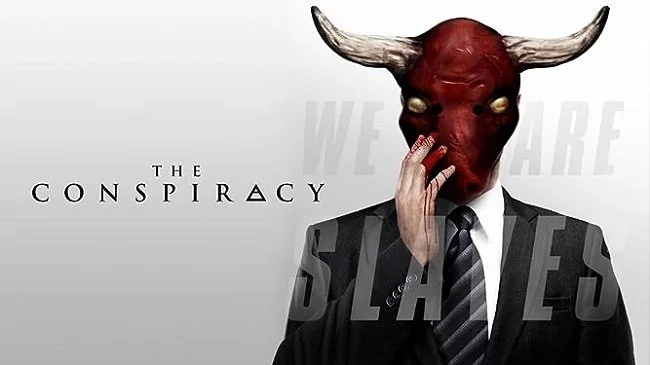
The Conspiracy (2012)
Filmmakers Aaron (Aaron Poole) and Jim (James Gilbert) decide to make a documentary about online conspiracy theories Terrance G (Alan Peterson), mainly due to the amount of attention he attracts online. Terrance explains in detail how many global events all appear to be linked to an NGO called the Tarsus Club. Jim remains sceptical of such theories, but Aaron is more willing to accept them. During an interview, Terrance becomes agitated and points out a man whom he believes to be following him. A few days later Terrance vanishes. Aaron searches through various newspaper clippings left in Terrance’s apartment and finds a reference to a Time magazine article about the Tarsus Club written by Mark Tucker (Bruce Clayton). As the pair of journalists search for Tucker, they see the same man that was following Terrance. They are also menaced by a Black SUV that parks outside Jim’s house at night. Finally, Tucker contacts them online and it becomes clear that he has more to reveal about the Tarsus Club. Aaron suggests that they try to infiltrate the next meeting, but Jim is reluctant to do so, due to the possible danger.
Filmmakers Aaron (Aaron Poole) and Jim (James Gilbert) decide to make a documentary about online conspiracy theories Terrance G (Alan Peterson), mainly due to the amount of attention he attracts online. Terrance explains in detail how many global events all appear to be linked to an NGO called the Tarsus Club. Jim remains sceptical of such theories, but Aaron is more willing to accept them. During an interview, Terrance becomes agitated and points out a man whom he believes to be following him. A few days later Terrance vanishes. Aaron searches through various newspaper clippings left in Terrance’s apartment and finds a reference to a Time magazine article about the Tarsus Club written by Mark Tucker (Bruce Clayton). As the pair of journalists search for Tucker, they see the same man that was following Terrance. They are also menaced by a Black SUV that parks outside Jim’s house at night. Finally, Tucker contacts them online and it becomes clear that he has more to reveal about the Tarsus Club. Aaron suggests that they try to infiltrate the next meeting, but Jim is reluctant to do so, due to the possible danger.
The Conspiracy is very much a film of two halves. The first forty-five minutes sets up the story well as the two documentary filmmakers immerse themselves in the world of conspiracy theorists. We meet various personalities known within the conspiracy theory community, there are clips from their YouTube channels and we see online meetings via virtual chat rooms. Terrance G. is very plausible (and by far the most interesting character) who is cleverly offset and contrasted by occasional sound bites from an academic. His disappearance and the subsequent investigation by Aaron and Jim is suitably intriguing. Events begin to escalate as the journalists are followed by a black SUV and Aaron’s home is broken into. These events put a strain upon Jim and Aaron’s working relationship. When they meet Mark Tucker and he alludes to more powerful and sinister forces, the plot maintains a sense of credibility within its own internal logic. The Tarsus Club, initially represented as a political lobbying body and international business cartel, is not an inherently implausible plot device. So far, so good.
However, director and writer Christopher MacBride, takes the plot in a different direction during the second half of The Conspiracy. The faux documentary, through a plot conceit, switches to the use of hidden camera footage for most of the climax. Hence, we have a distinct change of tone as the film slips awkwardly into the found footage/horror genre as Aaron finds himself in jeopardy. Sadly, this transition doesn’t really work and negates the innovation of the first half. The main characters work adequately as documentary filmmakers because they are conduits for an exploration of conspiracy theories. Once they become protagonists in jeopardy, rather than just spectators, they’re too insubstantial to support such a plot twist. The ending, which implies a cover up, tries to reconcile the two different halves of this film but it struggles to do so in an acceptable fashion. It’s a shame because The Conspiracy begins with a lot of promise. Overall, it ends up being very average.

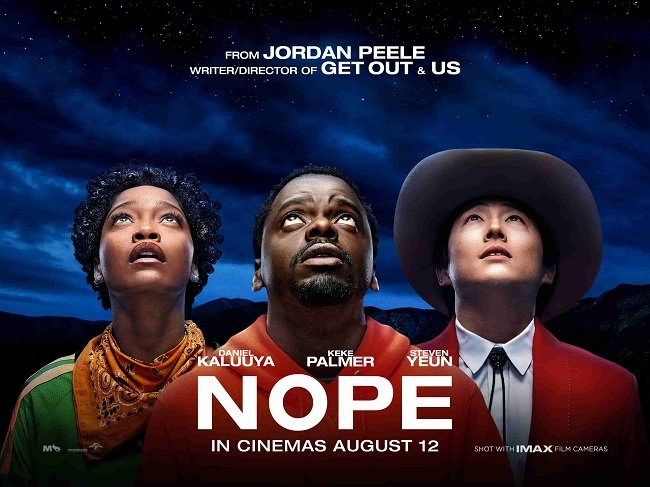
Nope (2022)
In Agua Dulce, California, the Haywood family trains horses for film and TV productions. One day at the Haywood ranch, small metal objects unaccountably fall from the sky. One of which, a nickel, kills Otis Haywood Sr (Keith David). His children, Emerald “Em” Haywood (Keke Palmer) and Otis “OJ” Haywood Jr. (Daniel Kaluuya), continue to run the business. However, due to the loss of a contract, they have to sell some of the horses to Ricky “Jupe” Park (Steven Yeun), who operates a Western theme park called Jupiter's Claim. One night, the Haywood’s notice the electricity supply fluctuating and their horses violently reacting to an unknown presence. They discover that something has been taking their horses and regurgitating inorganic matter, which OJ believes caused their father's death. The Haywood’s decide to obtain proof and subsequently ask electronics store employee and UFO enthusiast, Angel Torres (Brandon Perea) to set up surveillance cameras.
In Agua Dulce, California, the Haywood family trains horses for film and TV productions. One day at the Haywood ranch, small metal objects unaccountably fall from the sky. One of which, a nickel, kills Otis Haywood Sr (Keith David). His children, Emerald “Em” Haywood (Keke Palmer) and Otis “OJ” Haywood Jr. (Daniel Kaluuya), continue to run the business. However, due to the loss of a contract, they have to sell some of the horses to Ricky “Jupe” Park (Steven Yeun), who operates a Western theme park called Jupiter's Claim. One night, the Haywood’s notice the electricity supply fluctuating and their horses violently reacting to an unknown presence. They discover that something has been taking their horses and regurgitating inorganic matter, which OJ believes caused their father's death. The Haywood’s decide to obtain proof and subsequently ask electronics store employee and UFO enthusiast, Angel Torres (Brandon Perea) to set up surveillance cameras.
Nope is a contemporary telling of an old tale. It has many of the standard tropes you expect from the “creature feature” genre but with a contemporary spin. Just as George A. Romero’s Dawn of the Dead is also a vehicle for a critique of capitalism and consumerism, director Jordan Peele tackles a wealth of sociopolitical points via Nope. He dissects modern media culture, internet fame and the relationship between race and employment. There are no traditional white scientists, didactically explaining things and expediting the plot in received English. The protagonists are all blue-collar workers, who speak and act in a realistic manner. The cast are very good, and the characters are interestingly quirky. The screenplay’s innovation comes from showing a group of people who usually are not the traditional participants in such genre movies. Yet they figure things out on their own terms and the conspicuous absence of the military, local police or newspaper reporter is refreshing.
Nope also excels in depicting a truly original monster. One that is genuinely scary because of the nature of the threat. The digital effects are subtle and it is not until the climax of the film that the audience gains a clearer grasp of the nature of the creature. One sequence is reminiscent of a comparable scare in The Borderlands (2013) and some viewers may consider this a step too far. However, if you’ve made it this far then I would argue that you’re pretty much onboard with wherever Nope is going to go. Although it can be argued that being 30 minutes shorter may have helped proceedings. There is an entire subplot involving Ricky “Jupe” Park, who was a child actor in a sitcom with a chimp called Gordy. This fascinating and tragic vignette seems a little incongruous in relation to the main story and may well have worked better as the basis for a separate film. Minor criticisms aside, Nope is creative, different and superior to much of current mainstream horror cinema. However, its niche approach may not be everyone's cup of tea.
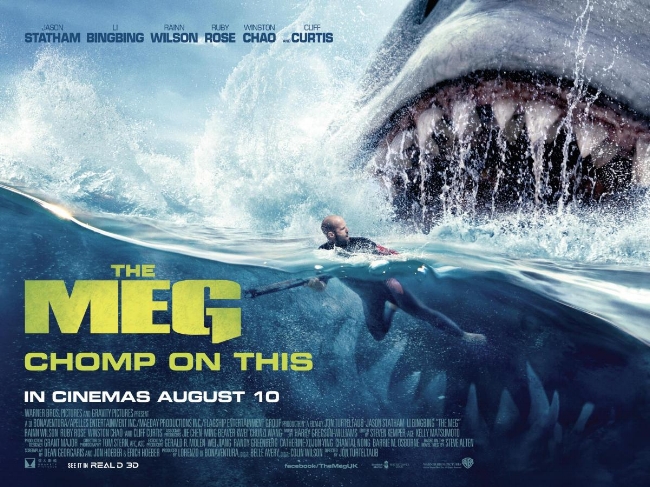
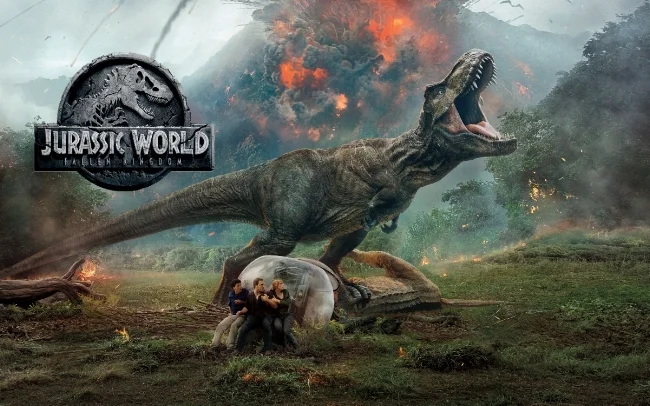
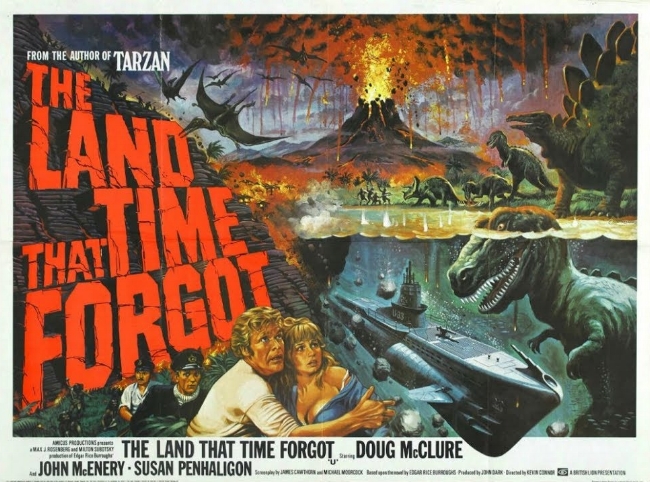
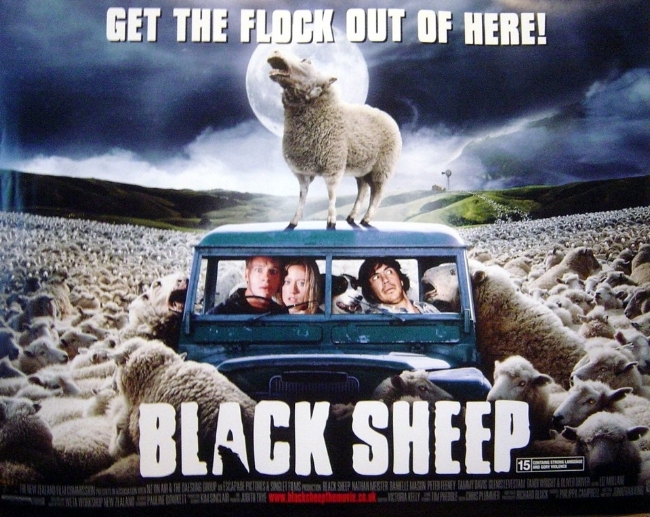
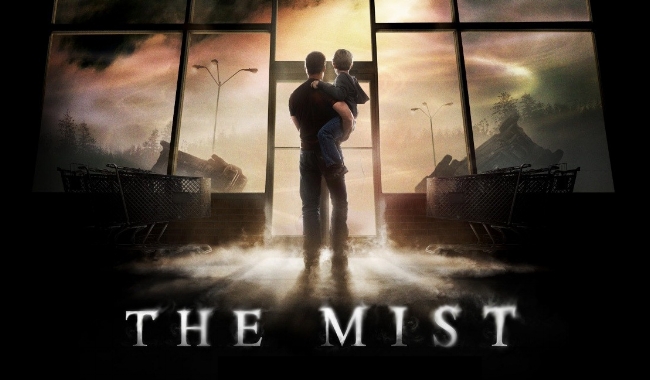
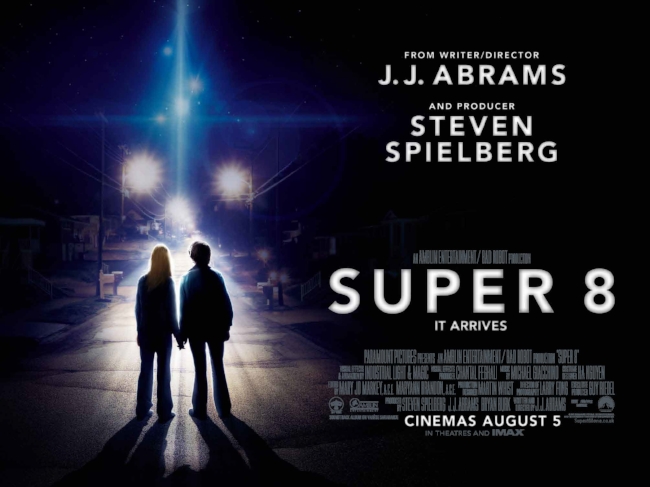
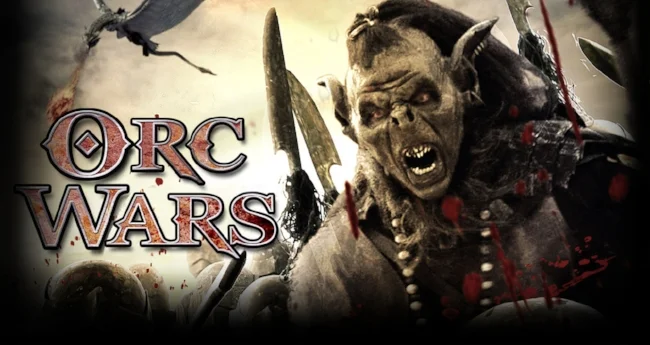
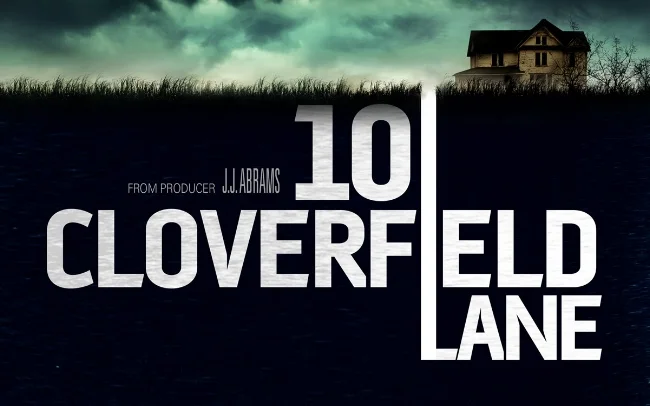

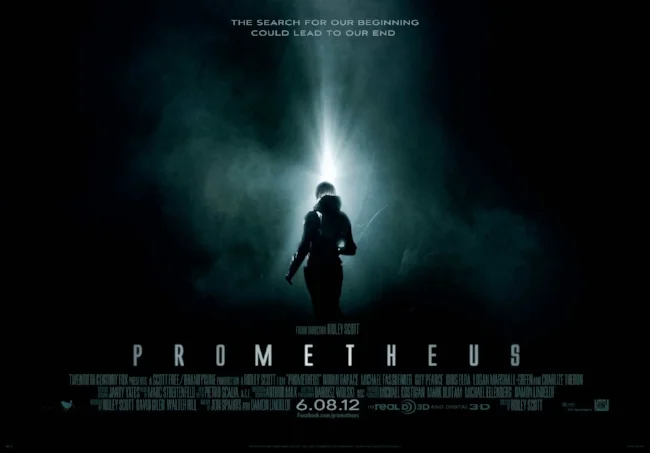

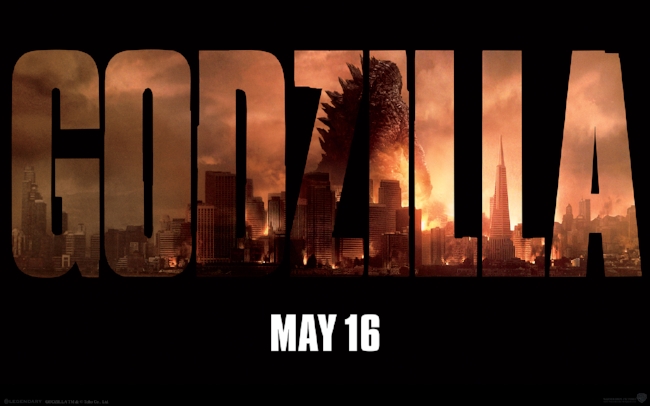
The Return of “Walter Watches”
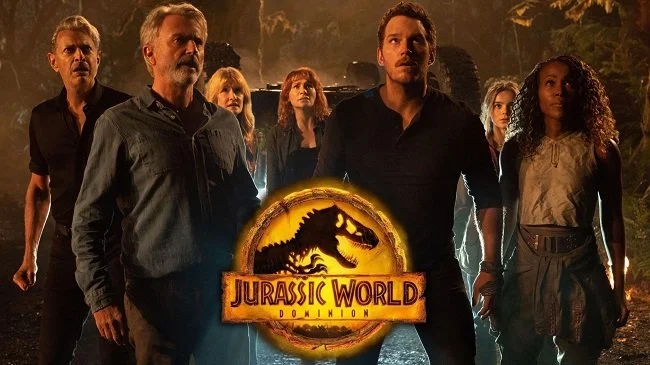
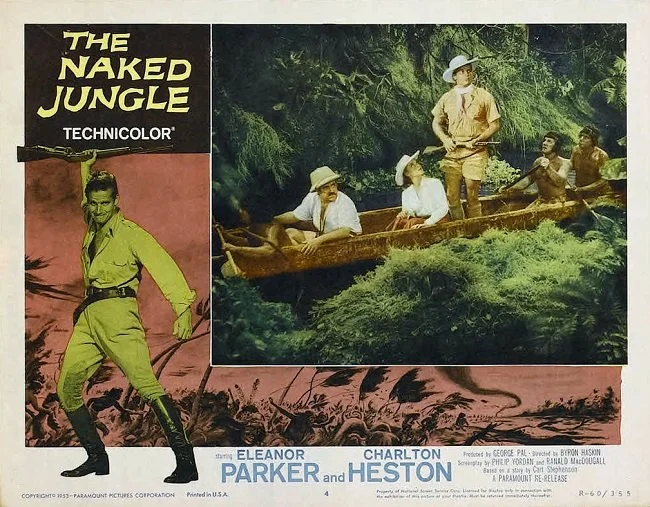
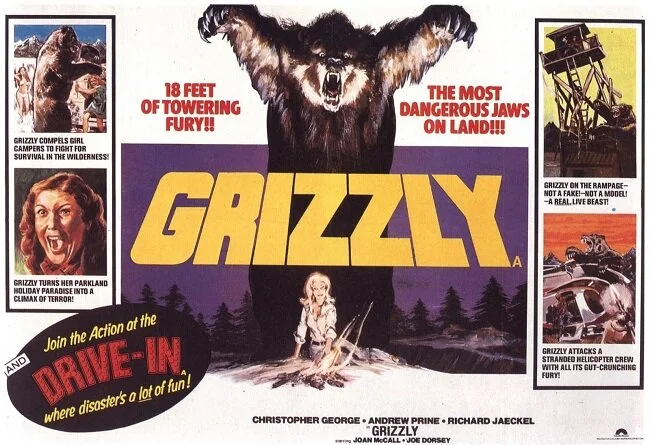
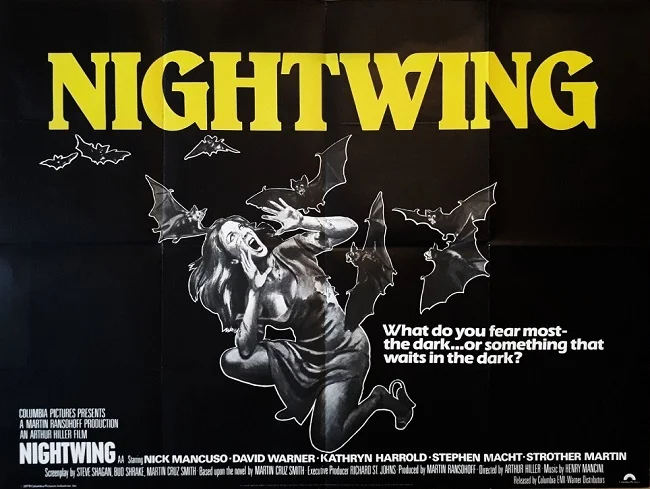
Anyone who writes regularly, sooner or later will have the following epiphany. The realisation that the post you consider your best work seldom finds an audience. Furthermore, the most inconsequential, disposable things that you have written on a whim, will often end up being the one article that gets a big response. It can be very frustrating but it is a reality of writing. It is with that idea in mind, I wish to move on to the matter of “Walter Watches”. In late March 2019, I took a picture of Walter sitting in his chair, watching a classic episode of The Twilight Zone. I subsequently Tweeted this image along with a descriptive caption. This gained a number of “likes” and retweets, so a day later I posted another. This time Walter was watching the film Krull (1983) and I added a humorous caption. Let’s just say I got more of a response for that one Tweet than I had for anything else I had posted over the previous nine years when promoting a blog post.
Anyone who writes regularly, sooner or later will have the following epiphany. The realisation that the post you consider your best work seldom finds an audience. Furthermore, the most inconsequential, disposable things that you have written on a whim, will often end up being the one article that gets a big response. It can be very frustrating but it is a reality of writing. It is with that idea in mind, I wish to move on to the matter of “Walter Watches”. In late March 2019, I took a picture of Walter sitting in his chair, watching a classic episode of The Twilight Zone. I subsequently Tweeted this image along with a descriptive caption. This gained a number of “likes” and retweets, so a day later I posted another. This time Walter was watching the film Krull (1983) and I added a humorous caption. Let’s just say I got more of a response for that one Tweet than I had for anything else I had posted over the previous nine years when promoting a blog post.
Such are the origins of “Walter Watches”. I continued posting pictures until the end of May 2019. I resumed again in January 2020 and continued until the end of February. During these two “seasons”, I selected a variety of cult and famous films for Walter (and his nephew Finwë) to comment upon. Because of my love of cinema and filmmaking, I must admit I did find this process entertaining. And obviously so did others, because “Walter Watches” continued to receive “likes” and retweets while it was “a thing”, as the kids say. Which brings me to the point of this post. Things are far from peachy at present, if you take a step back and take a long hard look at the world. It’s all a bit depressing. Hence, I have decided to bring just a little bit of fun and mirth back to social media with a third “season” of “Walter Watches”.
There are to be no changes in the format. If something isn’t broken, then there is no requirement to fix it. However, as well as being posted on social media, there is now a designated “Walter Watches” page here on Contains Moderate Peril. Walter’s sage wisdom and keen insights will be available here to view and ponder. I shall also be reposting all previous instalments for continuity. It should also be noted that last year we upgraded the TV in our lounge, so Walter now has the luxury of watching in 4K UHD. Whether this has any significant impact upon his musings, remains to be seen. As does whether Walter will consider requests from readers to watch specific things. We shall have to wait and see. Season three should begin by the middle of September. As the saying goes, “watch this space”.

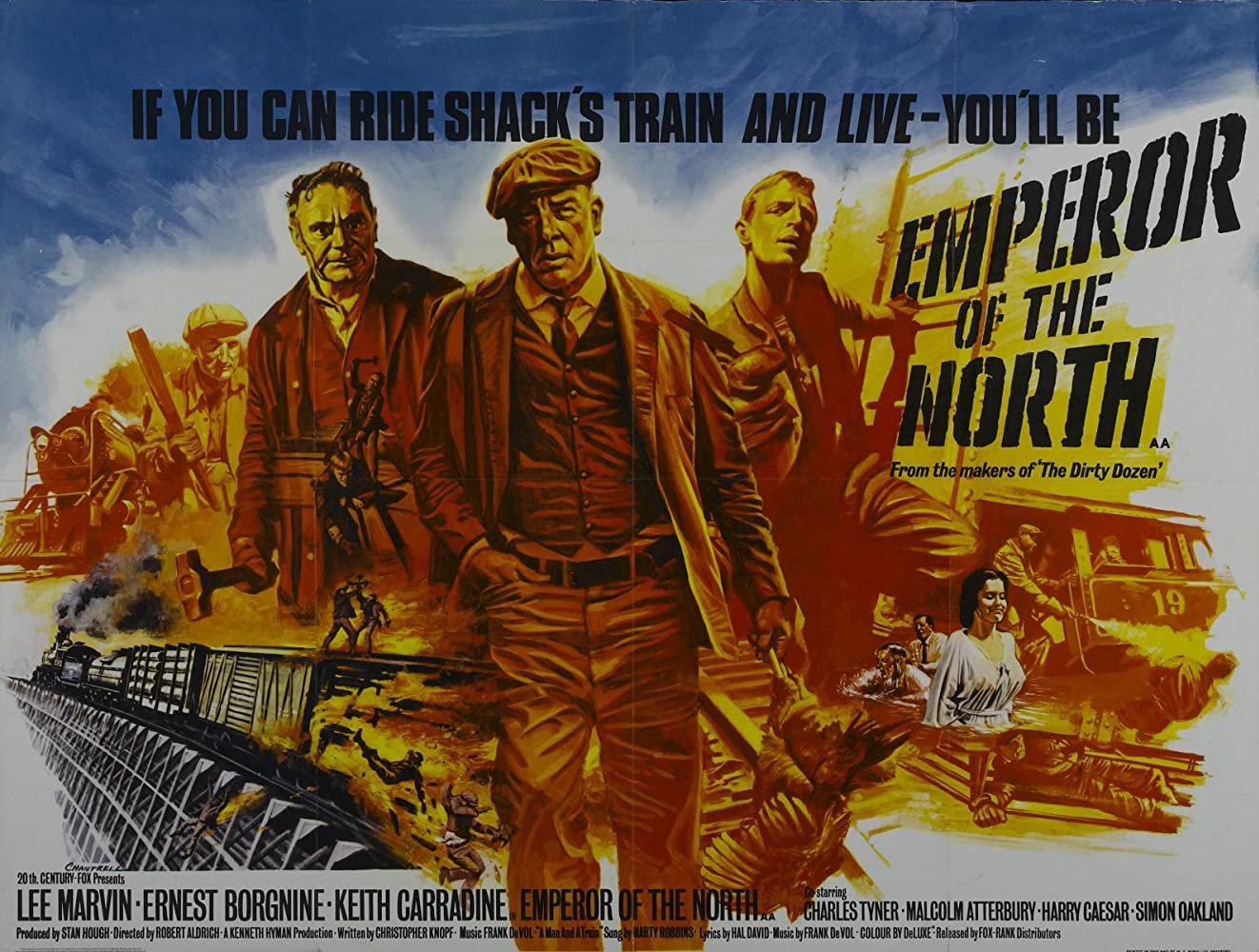



Fallen (1998)
Detective John Hobbes (Denzel Washington) visits convicted serial killer Edgar Reese (Elias Koteas), prior to his execution. An unrepentant Reese poses a riddle for Hobbes then lapses into a strange language. He goes to his execution singing “Time Is On My Side” by The Rolling Stones. Shortly after, Hobbes receives an anonymous tip by phone of a murder. On arrival at the crime scene, Hobbes and his partner “Jonesy” (John Goodman) find that the murder victim has been killed in an identical fashion to those killed by Reese. Furthermore, the same riddle has been written on the wall. Despite warnings from his senior officer, Lieutenant Stanton (Donald Sutherland), not to pursue solving the riddle, Hobbes persists in his investigation. It leads to a highly decorated policeman who killed himself under mysterious circumstances and a pattern of events not dissimilar to those that Hobbes is currently facing.
Detective John Hobbes (Denzel Washington) visits convicted serial killer Edgar Reese (Elias Koteas), prior to his execution. An unrepentant Reese poses a riddle for Hobbes then lapses into a strange language. He goes to his execution singing “Time Is On My Side” by The Rolling Stones. Shortly after, Hobbes receives an anonymous tip by phone of a murder. On arrival at the crime scene, Hobbes and his partner “Jonesy” (John Goodman) find that the murder victim has been killed in an identical fashion to those killed by Reese. Furthermore, the same riddle has been written on the wall. Despite warnings from his senior officer, Lieutenant Stanton (Donald Sutherland), not to pursue solving the riddle, Hobbes persists in his investigation. It leads to a highly decorated policeman who killed himself under mysterious circumstances and a pattern of events not dissimilar to those that Hobbes is currently facing.
Fallen did not do well upon its initial release. It received mixed reviews from the critics and failed to recoup its production costs at the box office. However, not being commercially successful doesn’t mean that a film is bad. Sometimes it can be because a film is not marketed correctly and has failed to find its audience. Or that it was released at the wrong time and cinema goers may have been struggling with genre fatigue. If you want a textbook example of this consider the 1989 James Bond film Licence to Kill. This seems to be the case with Fallen (1998), directed by Gregory Hoblit. More recently, opinions have been revised regarding this film and it has developed a cult following. There is definitely more to it than the plot synopsis suggests.
Fallen is a character driven, performance lead, slow burn. An intellectual game of cat and mouse between Hobbes and his potentially supernatural adversary. There are a few minor action scenes but they are not the film’s raison d'être. Instead the script by Nicholas Kazan (who also wrote Matilda and Enough) explores the nature of the “daily” evil that the police face and how it impacts upon their lives. Hobbes is a morally upright man, who tries to do his best, both at work and at home where he looks after his special needs brother and young nephew. The theological elements are handled very discreetly and the protagonists gradual realisation that something potentially supernatural is afoot is managed well. The film doesn’t make the mistake of trying to force a romantic situation between Hobbes and the only major female character in the story.
I suspect that the subtlety of the supernatural elements in Fallen and a distinct lack of any overt genre sensationalism may have contributed to it not being a commercial success. There are similarities between this film and The Hidden (1987) which handles the theme of a transient killer moving from host to host far more graphicly. Such trappings are absent here by choice. However, if you have the patience to apply yourself to a thoughtful, understated, psychological thriller then Fallen has much to offer. The strong cast, especially Washington himself, holds your attention and although the ending may not necessarily be to everyone's liking, it at least brings the story full circle. This is thoughtful genre filmmaking with the emphasis on suspense and a requirement for audiences to think. The latter often alienates a percentage of viewers.
Meg 2: The Trench (2023)
Back in 2018 I wrote the following about The Meg in my review. “My interest doesn’t go so far as a sequel. This sort of movie is the equivalent of a greasy burger you buy at the funfair. It’s fine once in a while as an indulgence, despite the fact that you know it’s bad, but you would soon tire of them being a regular part of my diet”. Five years later, I foolishly thought it may be “fun” to give the sequel, Meg 2: The Trench (2023), a go. Especially in light of the fact that it’s directed by Ben Wheatley. Surely such a filmmaker would bring some creativity and a fresh perspective to this franchise? Nope. Turns out he didn’t. Meg 2: The Trench lacks everything that made its predecessor tolerable. This superfluous sequel is an uninspired, poorly written mess which confuses turning everything up to eleven with entertainment. It gets nowhere near “it’s so bad, it’s good” territory. Instead it makes the biggest mistake a film of this nature can do. It’s dull.
Back in 2018 I wrote the following about The Meg in my review. “My interest doesn’t go so far as a sequel. This sort of movie is the equivalent of a greasy burger you buy at the funfair. It’s fine once in a while as an indulgence, despite the fact that you know it’s bad, but you would soon tire of them being a regular part of my diet”. Five years later, I foolishly thought it may be “fun” to give the sequel, Meg 2: The Trench (2023), a go. Especially in light of the fact that it’s directed by Ben Wheatley. Surely such a filmmaker would bring some creativity and a fresh perspective to this franchise? Nope. Turns out he didn’t. Meg 2: The Trench lacks everything that made its predecessor tolerable. This superfluous sequel is an uninspired, poorly written mess which confuses turning everything up to eleven with entertainment. It gets nowhere near “it’s so bad, it’s good” territory. Instead it makes the biggest mistake a film of this nature can do. It’s dull.
Five years on from the first film, Jonas Taylor (Jason Statham) now works for Mana One Marine Research centre, which is currently exploring the depth of the Mariana Trench where the Megalodons and other unknown ichthyofauna live. Along with company director Jiuming Zhang (Wu Jing), Taylor takes two submersibles to an uncharted part of the trench and finds to his surprise an illegal mining operation on the ocean floor. They are ambushed by a mercenary named Montes (Sergio Peris-Mencheta) and forced to abandon their vessels and walk along the ocean floor to reach the unknown mining base. After contacting Mana One, they learn that the rescue submarine has been sabotaged. Furthermore, an explosion caused by the mining operation has breached the thermocline barrier and provided a means for three megalodons and other creatures to reach the surface.
Like its predecessor Meg 2: The Trench has solid production values. A lot of money has been spent on the production design and sets. Meg 2: The Trench is far from cheap and cheerful. The film also handles dialogue in two languages well, as several characters frequently switch between conversing in English and Mandarin. Sadly the screenplay is perfunctory and the dialogue predictable. Most of the characters are two dimensional and hence disposable. When the big reveal happens involving a team member who has betrayed their colleagues, it has no impact. There is also a conveyor belt of “red shirt” mercenaries who are regularly introduced, just to provide the various beasties something to chow down on. There is also a somewhat anachronistic comedic African American character, played by Page Kennedy, that feels it’s been cribbed from an eighties action movie.
The action scenes are competently constructed but like most “creature features”with a PG-13 rating, they are mostly bloodless and free from any real threat or dramatic weight. There is an attempt to try and make some of the deaths a little more creative to try and compensate for this. One character’s exosuit implodes and the visual effects handle this quite well. But the same problem from the first movie persists into the second. The Megalodons are so large they swallow people and things whole, which effectively mitigates any shock factor. The giant Octopus is handled more discreetly and as a result is a more interesting antagonist. However, this is the sort of movie where you know well in advance who will live and who will die. Not even Jason Statham’s pugnacious character can up the ante. Overall Meg 2: The Trench is a classic example of “the same but more” and a squandered opportunity. I was left sadly feeling “so what?” at the end.