
LOTRO: 64-Bit Server Migration Part 4
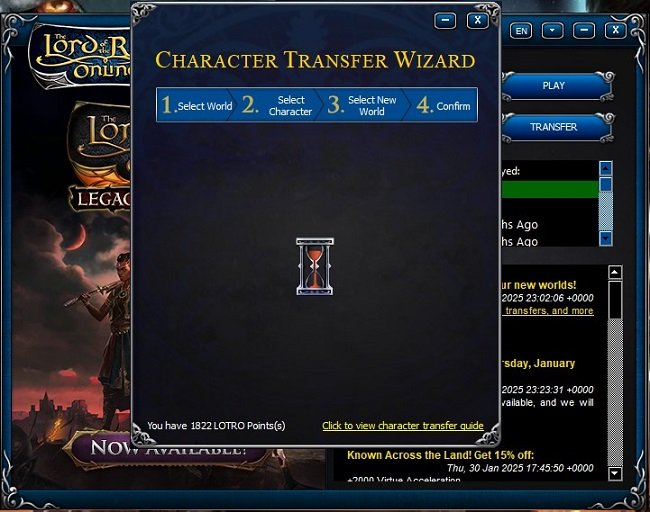
It has not been a good week for the MMORPG, The Lord of the Rings Online and its developer Standing Stone Games. The migration from legacy 32-bit servers to 64-bit servers has not gone smoothly. The transfer queue was overwhelmed by the sheer number of accounts and it has taken far longer than expected to process the backlog of requests. Today has been the fifth day of waiting to see if my 3 main characters from Laurelin server have successfully migrated to their new home on Meriadoc. When I checked this morning, the transfer wizard indicated that my characters were back where they originally came from. I therefore considered repeating the entire process. However, around midday, Community Manager Cordovan indicated that SSG had caught up with transfer requests made around 8:00 AM EST on Sunday 9th March. So I decided to be patient and wait a little longer.
It has not been a good week for the MMORPG, The Lord of the Rings Online and its developer Standing Stone Games. The migration from legacy 32-bit servers to 64-bit servers has not gone smoothly. The transfer queue was overwhelmed by the sheer number of accounts and it has taken far longer than expected to process the backlog of requests. Today has been the fifth day of waiting to see if my 3 main characters from Laurelin server have successfully migrated to their new home on Meriadoc. When I checked this morning, the transfer wizard indicated that my characters were back where they originally came from. I therefore considered repeating the entire process. However, around midday, Community Manager Cordovan indicated that SSG had caught up with transfer requests made around 8:00 AM EST on Sunday 9th March. So I decided to be patient and wait a little longer.
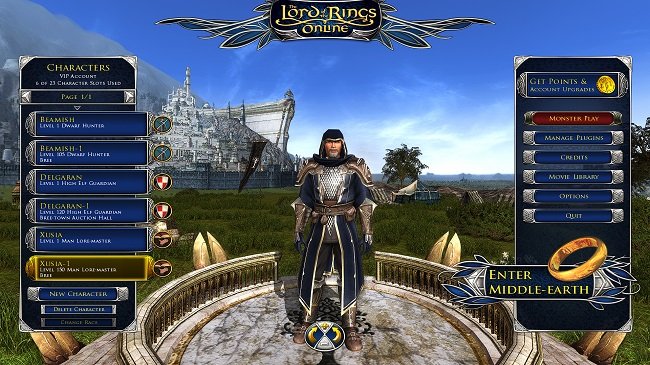
I logged into Meriadoc server again this evening, at approximately 21:00 and found that my three characters had successfully arrived. All three now have their existing names appended with a “-1” so it just remains for me to delete the placeholder alts that I created and to use the “/changename” command to rename my migrated characters and reclaim their correct identities. I have a final alt that is transferring from Landroval to Peregrin server but that has yet to arrive. I did initiate that transfer 24 hours after the first, so it is logical that it has yet to be processed. I have decided not to replace my premium house which I sold prior to migrating. I intend to start playing through the latest expansion and enjoying the benefits of the new 64-bit server. I am for the present without a kinship and it remains to be seen whether my old one will move or not. It may even be time to find a new home.
It will be interesting to see how long it takes for SSG to catch up with all the outstanding transfer requests and whether the same problem occurs again when more players decide to move. The new 64-bit servers were a perfect opportunity for LOTRO to relaunch itself and try to attract new players. Sadly, this issue has received quite a lot of coverage in video games media and it hasn’t been positive. Furthermore, it is not the first time that the game’s developers have shot themselves in the foot. However, the LOTRO player base is very loyal and as there isn’t another Middle-earth themed multiplayer game in town, there’s a good chance that the community will forgive SSG at some point. Maybe we’ll all be laughing about this in the summer. In the meantime, good luck to those still waiting for their alts to turn up on their new servers. As for those who have chosen not to migrate, sit tight.






LOTRO: 64-Bit Server Migration Part 3
I’ve been busy this weekend, so it wasn’t until late afternoon today that I found time to sit down and attempt to migrate my characters from the old 32-bit server Laurelin, to the new 64-bit server Meriadoc. The “Great Server Migration” has not gone smoothly and the week has been a litany of changing deadlines and unfulfilled expectations. However, developer’s Standing Stone Games, have been “firefighting” issues on a daily basis and communicating regularly with the player base of the MMORPG, The Lord of the Rings Online. Sadly, a lot of players have not responded well to the ongoing technical difficulties and there is subsequently a lot of ill feeling on the official forums. I have chosen to adopt a more pragmatic outlook and to let events run their course.
I’ve been busy this weekend, so it wasn’t until late afternoon today that I found time to sit down and attempt to migrate my characters from the old 32-bit server Laurelin, to the new 64-bit server Meriadoc. The “Great Server Migration” has not gone smoothly and the week has been a litany of changing deadlines and unfulfilled expectations. However, developer’s Standing Stone Games, have been “firefighting” issues on a daily basis and communicating regularly with the player base of the MMORPG, The Lord of the Rings Online. Sadly, a lot of players have not responded well to the ongoing technical difficulties and there is subsequently a lot of ill feeling on the official forums. I have chosen to adopt a more pragmatic outlook and to let events run their course.
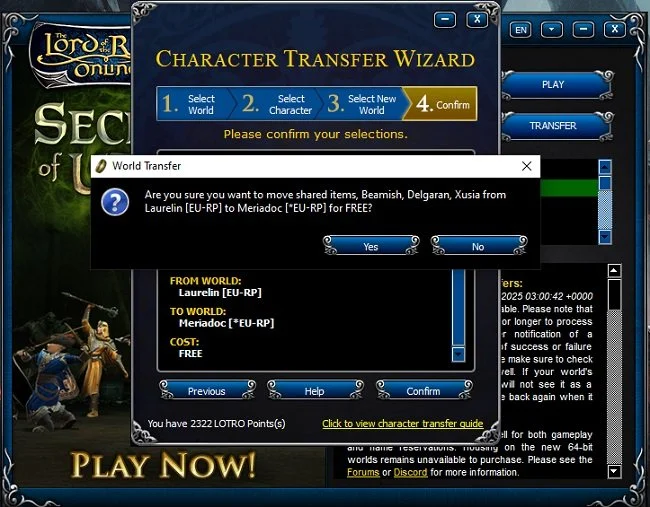
At 16:50 GMT today I started the LOTRO client launcher and saw that the transfer service button was available. I chose to migrate all three of my characters from Laurelin to Meriadoc and followed the process as stated in SSG’s migration notes. At first all appeared to be working as intended. However, I received an error message at the very end of the process indicating that it had failed. I then took a break and returned to my PC at 17:20 GMT and repeated the process. It took a few minutes and it was clear that this procedure was running somewhat slow but it was quicker than my previous unsuccessful attempt. This time round there were no errors and I received a confirmation message on screen. I have no idea how long it takes to migrate data from one server to another. I am writing this post at 23:00 GMT and my characters have neither left its old home nor arrived at its new destination.
I have one alt left, that I haven’t yet moved. They are based on the US server Landoval and I intend to move them to Peregrin. I shall attempt this tomorrow morning after I’ve checked to see if my initial transfer has been completed. Furthermore, I shall record the process and share it on YouTube. It may be of use to those who are concerned about this entire migration or unfamiliar with the transfer process. In the meantime, my advice to LOTRO players is to wait a little longer before attempting to migrate your characters to a new server. Let SSG process the backlog of data that is still outstanding. I chose to move servers now, mainly so I could write about the process. I suspect it will be a lot smoother in a week's time. Until then, stay put on your current server and do some in-game housekeeping to make your move easier when you decide to leave. I’ll post an update when my alts arrive on Meriadoc.
LOTRO: 64-Bit Server Migration Part 2
Standing Stone Games were scheduled to open their new 64-bit servers for the MMORPG, The Lord of the Rings Online, today. However, when the free transfer service went live yesterday, it was quickly overwhelmed by the sheer number of players trying to migrate their alts from the older 32-bit servers to the new ones. Eventually SSG had to disable the transfer facility so that they could process the backlog. Hence today’s launch of the new servers has been postponed till tomorrow. In the meantime, the official LOTRO forum’s have gone into meltdown with irate players berating the developers for handling the migration poorly. True to form, SSG have been somewhat defensive and prickly in response to what they see as unjust criticism. Let it suffice to say that neither party has covered themselves in glory and there is a good chance that the technical problems will persist a while longer.
Standing Stone Games were scheduled to open their new 64-bit servers for the MMORPG, The Lord of the Rings Online, today. However, when the free transfer service went live yesterday, it was quickly overwhelmed by the sheer number of players trying to migrate their alts from the older 32-bit servers to the new ones. Eventually SSG had to disable the transfer facility so that they could process the backlog. Hence today’s launch of the new servers has been postponed till tomorrow. In the meantime, the official LOTRO forum’s have gone into meltdown with irate players berating the developers for handling the migration poorly. True to form, SSG have been somewhat defensive and prickly in response to what they see as unjust criticism. Let it suffice to say that neither party has covered themselves in glory and there is a good chance that the technical problems will persist a while longer.
So far, as stated in my previous post, all I have done is create placeholder alts on the new server that I intend to move to. I didn’t attempt to migrate any of my characters yesterday because I suspected that the service would grind to a halt under the volume of users. Those who did manage to initiate a transfer request currently find their alts in “gaming limbo”. They cannot access their characters on their old server and the new servers aren’t open yet. Not exactly an ideal situation. Hence the pushback from players on the official forums. According to feedback from SSG, the slow performance of the transfer service is specifically due to housing claims and moving kinships. If the backlog isn’t addressed in the next 24 hours they have hinted that they may defer opening the new servers further.
After working IT for several decades and having been involved in several major server migrations, I am painfully aware that there is always scope for something unforeseen to crop up and derail the most well planned project. However, SSG seem bamboozled by the fact that a substantial percentage of their player base have done exactly what they were encouraged to do. Namely, transfer their alts to the new 64-bit servers, on the day stipulated in SSG. It seems somewhat odd to publish a timetable and then be surprised when people follow it to the letter. Sadly, this isn’t the first time that SSG have been wrongfooted by their own plans and it probably won’t be the last. Which is why a lot of LOTRO players have chosen to adopt a “wait and see” policy, like that of UK Prime Minister Herbert Asquith. Let us see what tomorrow brings.
Update: While writing this post, SSG have announced that the new 64-bit servers are now going to open on Friday 7th March. Furthermore, the transfer service will return on Thursday 6th March, possibly as early as 8:00 AM EST. However, all dates are potentially subject to change.
LOTRO: 64-Bit Server Migration Part 1
What Massively Overpowered calls LOTRO’s “Great Server Migration” began today. The MMORPG The Lord of the Rings Online has opened 4 new 64-bit servers in conjunction with the 2 existing 64-bit legendary servers and the long term plan is to migrate all current players over to them. Eventually, the 32-bit legacy servers will be shut down, however that is a long way off at present. As of today, VIP players can select a new server, log into it and create new characters with their desired names. These placeholder characters cannot be played at present but can be used to reserve names. Tomorrow, if all goes well, the new servers formally open and free transfers begin. Players can then delete placeholder characters and rename alts that they have migrated, thus restoring desired names. It should be noted that none of this is mandatory and players can remain on the old servers for the present.
What Massively Overpowered calls LOTRO’s “Great Server Migration” began today. The MMORPG The Lord of the Rings Online has opened 4 new 64-bit servers in conjunction with the 2 existing 64-bit legendary servers and the long term plan is to migrate all current players over to them. Eventually, the 32-bit legacy servers will be shut down, however that is a long way off at present. As of today, VIP players can select a new server, log into it and create new characters with their desired names. These placeholder characters cannot be played at present but can be used to reserve names. Tomorrow, if all goes well, the new servers formally open and free transfers begin. Players can then delete placeholder characters and rename alts that they have migrated, thus restoring desired names. It should be noted that none of this is mandatory and players can remain on the old servers for the present.
LOTRO developers Standing Stone Games offer comprehensive guidance with regard to migrating characters, moving player houses and transferring kinships to the new servers. So I decided to create a placeholder character and reserve the name of my primary alt. At present all my characters reside on Laurelin which is an EU RP server, therefore I have decided to move to Meriadoc which is the new 64-bit equivalent server. Hence, at 5:00 PM GMT I attempted to log into LOTRO and begin the process. Let it suffice to say that the number of players attempting to do the same had an impact upon response times but after a while I could log in to the game and select Meriadoc from the server list. I successfully created a placeholder alt for my primary character. Having secured the name of my beloved Lore-master that I have exclusively played since late 2008, I logged out of the game.
I have chosen not to secure the names of my remaining two alts, mainly because I seldom play them and have precious little attachment to them. I have also decided to sell my existing Premium House on my current server and not to repurchase it when I transfer to the new one. The house as it stands is just a virtual warehouse, mainly for unused housing items. As I don’t craft and seldom visit it, I just don’t see the point of having it anymore. Plus the prospect of having to redecorate a new home is singularly unappealing. Hence, for the meantime, I will just concentrate on moving my Lore-master. Upon arrival I suspect I shall be throwing away a lot of unwanted items and generally decluttering. At present, my kinship doesn’t have a plan to move, so I’m monitoring the situation. It may be time to move on and find a new one. Let us see what tomorrow brings.
LOTRO: Will Your Kinship Survive the Server Migration?
I have many pleasant memories associated with playing the MMORPG The Lord of the Rings Online during its first decade. A lot of them are due to the kinship (guild) that I have been a member of since 2009. I started playing LOTRO in December 2008 and it took me a while to find a suitable kinship but once I did, it made logging into the game a real pleasure. I was at a point in my life where I had sufficient time to play the game regularly and take part in kinship organised raids. It was also an added bonus to be able to spend some time and chat with some like minded people. I’m sure such an experience is not unique to me and that many LOTRO players have enjoyed similar periods of time. The lucky ones may still be enjoying a comparable kinship experience today.
I have many pleasant memories associated with playing the MMORPG The Lord of the Rings Online during its first decade. A lot of them are due to the kinship (guild) that I have been a member of since 2009. I started playing LOTRO in December 2008 and it took me a while to find a suitable kinship but once I did, it made logging into the game a real pleasure. I was at a point in my life where I had sufficient time to play the game regularly and take part in kinship organised raids. It was also an added bonus to be able to spend some time and chat with some like minded people. I’m sure such an experience is not unique to me and that many LOTRO players have enjoyed similar periods of time. The lucky ones may still be enjoying a comparable kinship experience today.
Sadly, nothing remains the same forever. Kinships eventually run out of steam as people move on to other games or their personal circumstances change. MMOS themselves have fundamentally changed and a lot of content is no longer designed to be exclusively tackled by a group. For all the positive social aspects that a kinship can offer, there are also plenty of negatives ones as well. Drama, conflict and hierarchies. Hence a lot of players no longer see kinships as an essential part of the game experience but an optional extra. As a result of this gaming evolution and changing social dynamics, many kinships turn from an active social collective to a legacy group. The kinship endures but is no longer active. People stay out of friendship, or simply because why alter the status quo. Human nature loves the path of least resistance.
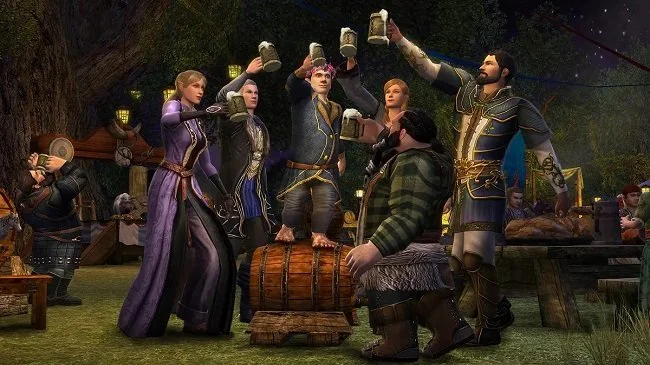
I suspect that for every active kinship there is in LOTRO who plan raids or social activities on a regular basis, there are another two which have become what I described previously as a legacy group. Kinships that have a house and a few members that decorate it and leave items in the kin chest. Everyone says “hi” to each other when they come online and one member continuously updates the message of the day to reflect what item is free in the in-game store. Long term players bring their alts into the kinship out of habit. Occasionally a returning player makes an appearance and everyone gets nostalgic. But beyond this, nothing really happens. No one runs group content and at times you may find that you’re the only member on the kinship online. You check the offline roster and see that people have been active but more often than not, you’re ships that pass in the night.
For kinships such as these, the forthcoming server migration is a significant problem. The logistics of moving alts, housing and a social group are not simple. Sadly, many members of inactive kinships do not have a means to communicate with all members. My own kinship has a Discord server but it is not used by everyone. Furthermore, not everyone who plays LOTRO takes an active interest in developer press releases. I have encountered a few random kinmates of late in-game, who were unaware of the server migration, including the kinship leader. None of which bodes well for a process that will require some organisation and management. Our kinship has to decide which server to migrate to and then the leader has to do a lot of prep to smoothly move the guild from A to B. Individual players also have to make decisions about housing and alts. Unless you travel lightly, all players will have some work to do.
When faced with the realities of this server migration and what it entails, I think a lot of LOTRO kinships will effectively come to an end, either by choice or as a consequence of change. People with opulent houses are going to have enough work cut out for them when they arrive on their new server and have to totally redecorate. VIP players can only protect three alts names prior to the move. What about the rest of their characters? Kinship leaders have all these woes on top of having to spearhead the transfer of their kin. Then on top of all this, there is the risk that comes with any change of infrastructure. Hence some players may decide to leave their current kinship and look for a new home on the new server. Possibly some kinship will collectively decide to call it a day. Others may end up fragmented with a percentage of players moving, while a handful resolutely remain on their old 32-bit home.
I think centralising LOTROs player base between six 64-bit servers, half in the US and half in Europe, will ultimately be good for the game. It is important to see other players in an MMORPG and reinforce the notion of a shared environment. However, I do not expect the process to go 100% smoothly and there is a lot of potential for collateral damage to occur along the way. SSG has to manage this process better than they did last time they consolidated servers back in 2011. Perhaps in some respects this situation provides an opportunity for a social reset among legacy linships that are effectively just treading water. Perhaps some will merge with others in the hope of revitalising interest. But I suspect many will simply fade away, which in many respects is a very Tolkienesque theme.
Playing MMOs on a Second Monitor
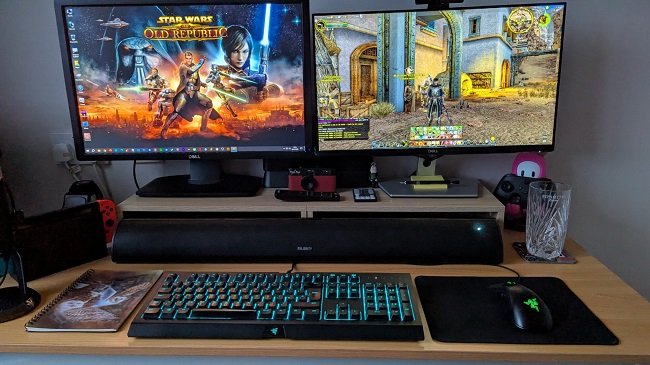
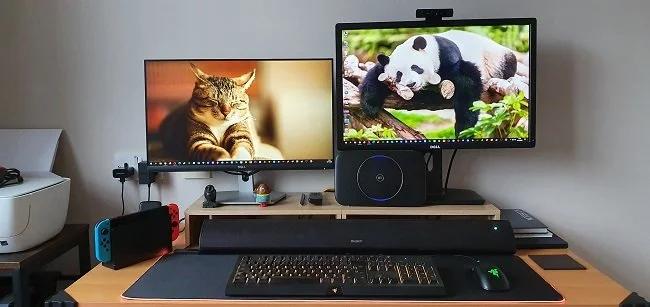
I have two monitors on my desk. The first (which is the primary monitor as far as my PC is concerned), is on the left and the second is on the right. The primary monitor is a 24 Dell U2412M, which has a resolution of 1920 x 1200. It therefore has an aspect ratio of 16:10 which adds a little extra desktop real estate, which I prefer when writing. The second monitor is a 24 inch Dell S2421H with a screen resolution of 1920 x 1080. It has an aspect ratio of 16:9 which is standard FHD. My chair is adjacent to the middle of my desk and I can turn according to each monitor I’m using. I tend to use the primary, larger monitor on the left for tasks such as writing via Google Docs and emails. The second monitor on the right is used for YouTube and gaming. This is because of its FHD format. I also have a Nintendo Switch connected to the second monitor for the same reason.
I have two monitors on my desk. The first (which is the primary monitor as far as my PC is concerned), is on the left and the second is on the right. The primary monitor is a 24 Dell U2412M, which has a resolution of 1920 x 1200. It therefore has an aspect ratio of 16:10 which adds a little extra desktop real estate, which I prefer when writing. The second monitor is a 24 inch Dell S2421H with a screen resolution of 1920 x 1080. It has an aspect ratio of 16:9 which is standard FHD. My chair is adjacent to the middle of my desk and I can turn according to each monitor I’m using. I tend to use the primary, larger monitor on the left for tasks such as writing via Google Docs and emails. The second monitor on the right is used for YouTube and gaming. This is because of its FHD format. I also have a Nintendo Switch connected to the second monitor for the same reason.
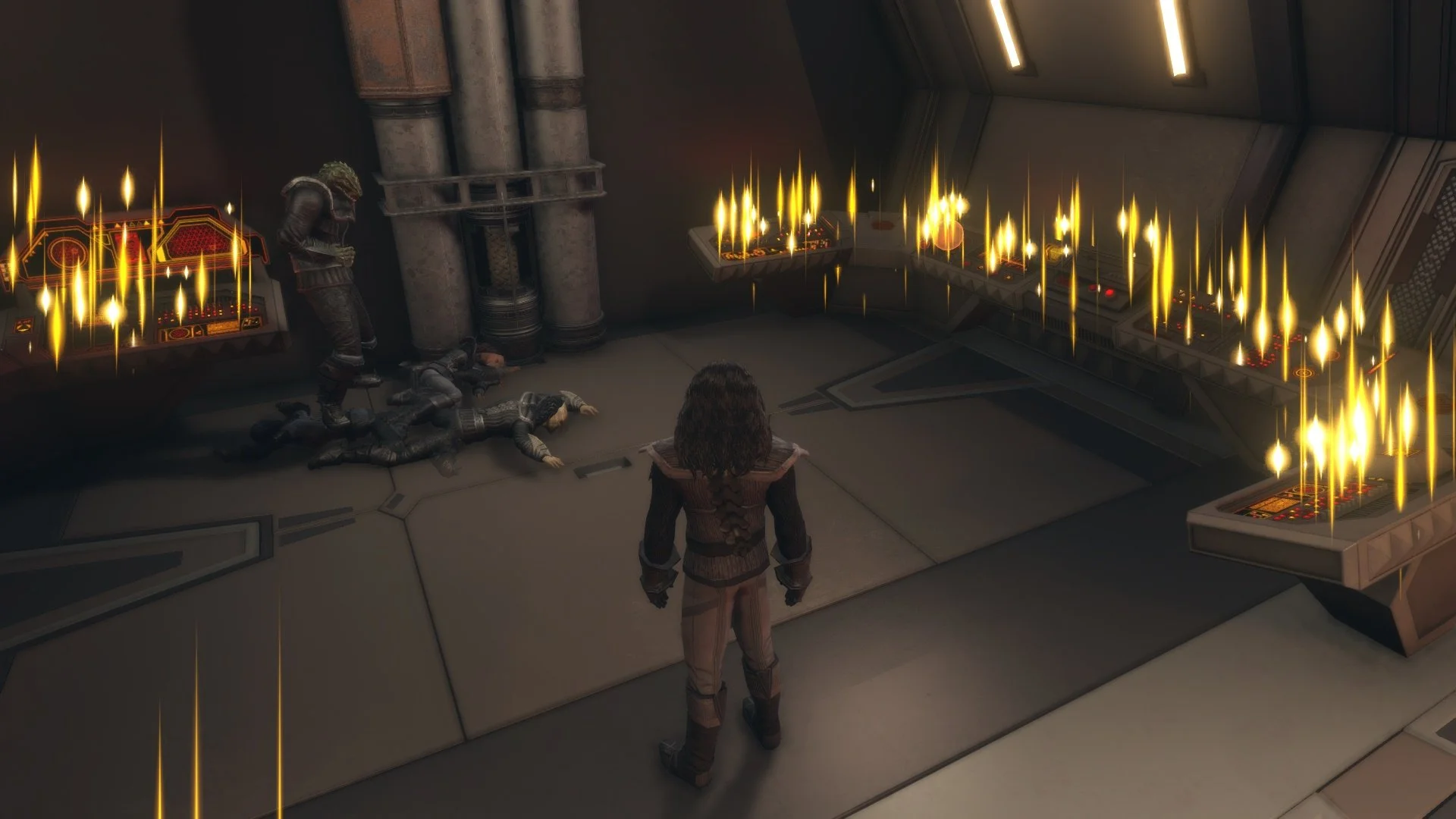
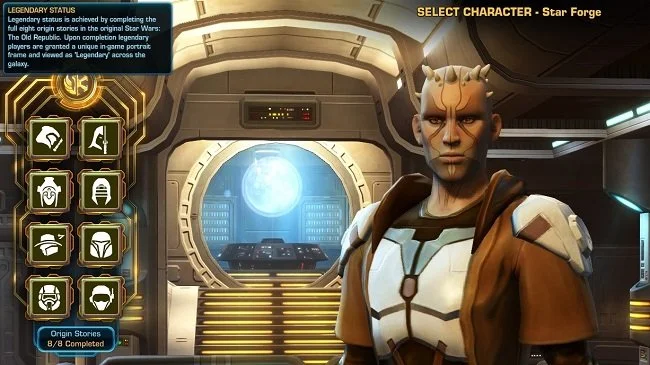
Now that’s out of the way, let’s move on to video games that are relevant to this post. I have at present six MMORPGs installed on my PC. Age of Conan, Star Trek Online, The Lord of the Rings Online, Guild Wars 2, The Elder Scrolls Online and Star Wars: The Old Republic. As previously stated I prefer to play video games using the second monitor as it is a default FHD standard. Screen captures and any recorded material are in a 16:9 aspect ratio, which is very useful for YouTube or streaming. Working within a standard format is also convenient when trying to find optimal game settings for my CPU and GPU. However, trying to get these games to run on my second monitor and more importantly stay there, has not proven easy. Some cooperate, others have to be cajoled and a few flat out refuse to do so.
The obvious solution is to change the primary monitor designation in the PC settings. However, I don’t want to do this as it would have a knock on effect on my current preferences. Hence I have had to manually tinker with each game to see if it will run consistently on monitor number 2. ESO being the most recent MMO out of those listed, has a drop down box in the game settings where you can choose which display you use. Both STO and SWTOR can be temporarily set to “windowed mode” and dragged over to the second display. Furthermore this change persists after exiting the game client and rebooting the PC. Sadly, AoC, LOTRO and GW2 resist this simple work around. The games can be dragged to the second monitor in “windowed mode” but when the display is set back to fullscreen they instantly revert back to the primary monitor.
I am far from alone in my preferences. A simple Google search shows that many other gamers have made similar enquiries and you’ll find numerous forums and subreddit posts. Often the advice is to use various Windows 10 settings to force content from one monitor to another but it seldom works, or if it does it doesn’t persist. Using the management software that comes with your GPU is also frequently recommended but this tends to be for spanning a game across two monitors, rather than forcing the output to a specific one. There are also some third party apps that have been developed by “gifted amateurs” but again the results are not guaranteed and often depend on having the right sort of GPU with the right sort of output cable. The problem ultimately stems from most of these games being developed when having multiple monitors was not as common as today.
Out of the three MMOs where this problem persists I find GW2 the most egregious. This game possibly has the biggest development budget of them all and is regularly updated. You would have thought such a feature as a choice of displays would have been added to the game by now. AoC is in maintenance mode, so one adjusts one’s expectations accordingly. However, LOTRO is a curious beast. It has a small but loyal playerbase and makes sufficient money to keep going. Updating the GUI is on the development “to do list”. In the meantime I finally found a workaround today by making some alterations to the “UserPreferences.ini” file. I changed “DisplayOutput=1” to 2 in the list of [Render] settings and changed all display resolution data to 1920 x 1080 and the aspect ratio to 16:9. LOTRO now runs on my second monitor and stays there after rebooting the PC. A minor victory but a victory no less.

LOTRO: Server Migration Concerns
I always remember the sage wisdom of the great children’s TV character Huxley Pig. “If in panic, if in doubt. Run in circles, scream and shout”. Such was the initial reaction of players of the MMORPG The Lord of the Rings Online, when it was announced recently that there is to be a new 64-bit server rollout in Q1 of 2025. At first glance, new servers are surely a good thing? The 64-bit legendary servers, which were tested in 2024, have proven to be a success and do much to address the lag issues that plague the existing 32-bit servers. Surely this is what players want? Well, yes it is, in principle but new infrastructure ultimately raises the issue of server migrations. Developer’s Standing Stone Games intend to consolidate the player population in the long term with the addition of 4 new 64-bit servers. The 2 legendary servers will remain but the 32-bit legacy servers will eventually close.
I always remember the sage wisdom of the great children’s TV character Huxley Pig. ”If in panic, if in doubt. Run in circles, scream and shout”. Such was the initial reaction of players of the MMORPG The Lord of the Rings Online, when it was announced recently that there is to be a new 64-bit server rollout in Q1 of 2025. At first glance, new servers are surely a good thing? The 64-bit legendary servers, which were tested in 2024, have proven to be a success and do much to address the lag issues that plague the existing 32-bit servers. Surely this is what players want? Well, yes it is, in principle but new infrastructure ultimately raises the issue of server migrations. Developer’s Standing Stone Games intend to consolidate the player population in the long term with the addition of 4 new 64-bit servers. The 2 legendary servers will remain but the 32-bit legacy servers will eventually close.
LOTRO players were somewhat concerned about the vague nature of the original server announcement, in the “2025 Roadmap” that came out prior to Christmas. Hence Executive Producer Rob Ciccolini saw fit to appear on a live stream in the New Year to clarify the situation. Sadly SSG have a track record of poor communication with their playerbase and being true to form, Mr Ciccolini’s “clarification” simply raised more questions. Newer LOTRO players with only a handful of alts may well find the prospect of transferring to another server to be no big deal. However, the majority of the existing LOTRO community is made up of long term players who are greatly attached to their kinships, their housing and most importantly their alts. Server migrations can break such things, leaving players nameless and without their virtual possessions and community.
If in panic, if in doubt. Run in circles, scream and shout”
Furthermore, SSG has handled server migrations in the past and it wasn’t perfect. In 2011 SSG (formerly Turbine) took back control of the European game servers which had previously been administered by Codemasters. Yes, the process ultimately worked but there was a lot of player collateral damage along the way. Many of the players affected back then are still playing today and they’re far from optimistic, judging by the ongoing discussion of the official forums. It would appear there is a lot more to consider beyond the obvious. Apart from the logistics and management issues arising from this server migration, many players are not happy with the prospect of moving per se. The previously mentioned migration of 2011 was not well received by all. Some feel that communities were broken and the new servers were far from friendly.
I have no doubt that by the end of 2025 there will be a clear resolution to this situation. SSG has done this before and can do it again. Hopefully, if they’ve learned from their past mistakes they’ll be more communicative and cautious this time round. There are some potential positives arising from a migration and server merge. The player population will increase across the final 6 servers and there should be the technical benefits of the new 64-bit builds. SSG have also stated they will strive to allow players to retrieve characters from servers closed in 2011, so there may be the chance of resurrecting long lost alts. However, it would be naive to think that this enterprise is going to be plain sailing. Perhaps the most prudent thing for LOTRO players to do in the meantime is to start organising their inventories and divesting themselves of any virtual assets they don’t require. Forewarned is forearmed.
Are MMORPGs Expensive to Play?
Bree Royce, editor-in chief at Massively Overpowered, recently asked the question “what is the most expensive MMORPG right now”. My first thought was to search through my old draft blog posts and track down an MMO cost analysis I wrote circa 2019. It includes data such as subscription rates and the price of current expansions. There was also information on what were the most popular cash shop items at the time. However, I then read some of the comments that had been left on Bree’s post and I quickly realised that this wasn’t just a matter of financial expenditure. Whether or not an MMO is expensive is also determined by one’s disposable income, respective wealth and personal relationship with money. The latter is perhaps the most important, irrespective whether you consider yourself rich or poor.
Bree Royce, editor-in chief at Massively Overpowered, recently asked the question “what is the most expensive MMORPG right now”. My first thought was to search through my old draft blog posts and track down an MMO cost analysis I wrote circa 2019. It includes data such as subscription rates and the price of current expansions. There was also information on what were the most popular cash shop items at the time. However, I then read some of the comments that had been left on Bree’s post and I quickly realised that this wasn’t just a matter of financial expenditure. Whether or not an MMO is expensive is also determined by one’s disposable income, respective wealth and personal relationship with money. The latter is perhaps the most important, irrespective whether you consider yourself rich or poor.
I play several MMORPGs over the course of a year. I tend to return to a game when there’s sufficient outstanding content to keep me busy for a few months, such as a new expansion. Hence I will binge play games such as The Lord of the Rings Online, Star Wars: The Old Republic and The Elder Scrolls Online. While I am playing any one of these titles, I will subscribe to ensure that I am not impeded by any “free-to-play” restrictions. I will also buy some in-game currency so I can obtain any cash shop items I desire. Hence, if I play SWTOR for three months or so, I can end up spending between £60 to £75. It is therefore entirely possible that I can spend £300 a year across multiple MMOs. Broadly, this breaks down to about £6 a week. I personally do not feel that this is a lot of money.
Every hobby has some sort of cost associated with it. From golf, fishing, gardening, painting lead figures to trainspotting. Compared to others, I consider video games good value, especially the MMO genre. However, this is very subjective. Some people may consider my spending to be profligate. Others may think that I’m penny pinching. It all comes down to our own relationship with money. Something that varies between generations and other social divides. I know very wealthy people who will balk at costs that are just pocket change to them. I know others on what would be considered a relatively low income, to happily embrace in-game expenditure because it is the primary source of leisure and entertainment. Furthermore, “whales” do exist and are a big enough factor to influence a video game’s business model.
However, setting aside one’s own finances, there is another factor that counts here. One that is a matter of perspective. Most gamers understand that games cost money to develop and that there is a requirement to generate revenue to finance new content. Hence we broadly accept that there will be charges such as a subscription or the sale of cosmetic items. What matters here is setting a cost that feels appropriate. If this is done right then the player does not feel abused or exploited. A $5 or $10 cosmetic mount is therefore acceptable. Not so, $50 or more. Sadly, publishers often push egregious charges upon developers and mandate that they are included in the game. All too often a deliberate bottleneck or grind is artificially created in an MMO which can only be bypassed with a paid solution. This is the main bone of contention with many gamers.
As I’ve stated in other posts recently, what we expect from a video game is very much determined with what we have grown accustomed to and that varies depending on age. Paying once and getting everything was the norm during the eighties and nineties. But those days are gone and are not coming back. Therefore one has to adjust one’s expectations. It is also true that video game studios only pitch a business model that they can get away with. Sometimes, a live service game fails because it delivers too little and charges too much. The business models for games like LOTRO and SWTOR persist because the players ultimately tolerate it. They may complain but they continue paying. Unless you are prepared to stop paying you cannot exercise any leverage. Ultimately, the only intellectually honest answer to the question “what is the most expensive MMO right now” is the one you’ve chosen not to play.
A Year in Gaming
It is customary for me to write an end of year summary of my gaming activities but I suspect that on this occasion it will be somewhat short. For me, 2024 has really hammered home the notion of the ephemeral nature of video games as well as their commercial ubiquity. The moment a game fails to satisfy for whatever reason, rather than complain or worry about it, I just move on to something else. It’s not as if there’s a shortage of games out there. I have a substantial back catalogue of games that Epic and Amazon prime regularly giveaway. I have bought numerous discounted bundles in the past, in the pious hope that I’ll play one of the games included, at some point in the future. Games may well be enjoyable and engaging but many are also disposable. That’s not to say they’re bad. While playing them you are indeed “entertained”. However, when you’re “done”, it’s amazing how you quickly find another and forget what you were previously playing.
It is customary for me to write an end of year summary of my gaming activities but I suspect that on this occasion it will be somewhat short. For me, 2024 has really hammered home the notion of the ephemeral nature of video games as well as their commercial ubiquity. The moment a game fails to satisfy for whatever reason, rather than complain or worry about it, I just move on to something else. It’s not as if there’s a shortage of games out there. I have a substantial back catalogue of games that Epic and Amazon prime regularly giveaway. I have bought numerous discounted bundles in the past, in the pious hope that I’ll play one of the games included, at some point in the future. Games may well be enjoyable and engaging but many are also disposable. That’s not to say they’re bad. While playing them you are indeed “entertained”. However, when you’re “done”, it’s amazing how you quickly find another and forget what you were previously playing.
I started the year playing Call of Duty Modern Warfare III, the 2023 entry in the never ending franchise. These games have a 12 month lifecycle and frequently “evolve” during their quarterly updates. Hence many of the aspects of MW III that I liked when I started playing, were altered, nerfed or simply removed, six months later. The community is also vile and seems to be a magnet for the emotionally dysfunctional. This doesn’t help, especially when trying to find information on builds and tactics via the games subreddit. I found myself in a minority as I actually liked the open world approach to the Zombie play mode. The latest iteration of the game released in October has returned to the traditional round based approach, which I don’t like. So roundabout summer, I stopped playing as the game no longer yielded sufficient fun. I uninstalled it a few months later.
I fancied playing a traditional high fantasy RPG this year and found exactly that in Dragon’s Dogma 2. I quite liked the fact that the game deliberately eschews fast travel and is designed so that the player has to travel slowly around the world map, fighting as they go. I also liked the pawn system in which you could hire up to 3 NPC companions from multiple classes. These can be either prebuilt pawns provided by the game itself, or ones that other players had created. I got quite attached to some of them with their quirky names and dialogue, until I outlevelled them. The combat was more challenging than I had expected but I liked the fact that you could climb onto some of the exotic beasts you fought and attack vital areas. Some players were disappointed by the story, claiming it was somewhat generic. I felt it was adequate and often wonder if games such as these, made by international developers, lose something in translation.
I returned to several MMOs this year. Star Trek Online continues to be a mainstay, due to its continuous calendar of short term events. Such an approach is not a real substitute for longer, story based missions which are becoming more infrequent these days. But STO does afford the casual gamer a quick fix and a means to jump straight into some action if you have limited leisure time. I also resumed playing The Lord of the Rings Online having one update and an expansion to catch up with. I reached the new level cap with my primary character and weathered the ill conceived changes that were made to the Lore-master class. When will developers learn that if it ain’t broken, don’t fix it? LOTRO still benefits from well written and innovative stories to underpin all their quests. It also has a knack of creating interesting zones. Overall the game does sufficient to keep me engaged.
For reasons I can’t quite articulate, I decide to revisit Age of Conan. I found my original character from 2011 along with an MMO that is in maintenance mode. It still has players although they tend to congregate in the cities and most of the time, you’ll find yourself alone when out questing. As such, it can be played as an RPG but I decided not to pursue playing any further than satiating my thirst for nostalgia. Instead I opted to dive back into Star Wars: The Old Republic as there were three classes that I hadn’t played. To date, I have now completed the Sith Inquisitor and Jedi Consular classes and am now focusing on the Judi Knight. The great thing about SWTOR is that each class has a unique story, as does each planet in the game. Hence there is always something new to return to.
2024 was certainly not a standout year for gaming, at least from my perspective. Video games still provided an entertaining pastime but nothing really loomed large and made an impact upon me such as Red Dead Redemption 2 or Skyrim. Such games are becoming increasingly rare. MMOs once again proved to be a comfortable form of gaming and I am still enjoying my return to SWTOR. I also have the latest LOTRO expansion to play through, which I am keeping in reserve for the moment. I have my eye on the new Indiana Jones game in the New Year along with the latest instalment of Sniper Elite. However, the cost of buying new titles is becoming quite expensive. Especially if you want the most comprehensive version of a video game. However, I have a potential solution for that problem but that is a blog post for the New Year.
















MMO Tropes: Name Unavailable
If you’ve ever played an MMORPG, then you have more than likely encountered this problem. Especially if you start playing a game that has been long established. You diligently create your character and spend time and effort customising them to suit your needs. All you’ve got to do next is choose a name, so you type in a pithy and droll title only to find that it has already been taken. So you quickly come up with another and that too is rejected. Next you try the same name but with some “alternative” spelling but the game resolutely tells you that even that permutation is already in use. I have found that even with a list of names that I’ve drawn up prior to playing the game, it can still take anything from 5 to 30 minutes to find one that is available. Naturally, this process is very frustrating, which is hardly the ideal user experience for a new player.
If you’ve ever played an MMORPG, then you have more than likely encountered this problem. Especially if you start playing a game that has been long established. You diligently create your character and spend time and effort customising them to suit your needs. All you’ve got to do next is choose a name, so you type in a pithy and droll title only to find that it has already been taken. So you quickly come up with another and that too is rejected. Next you try the same name but with some “alternative” spelling but the game resolutely tells you that even that permutation is already in use. I have found that even with a list of names that I’ve drawn up prior to playing the game, it can still take anything from 5 to 30 minutes to find one that is available. Naturally, this process is very frustrating, which is hardly the ideal user experience for a new player.
This problem is common to a lot of older MMOs. The Lord of the Rings Online, Star Wars: The Old Republic and Age of Conan are prime examples. Newer games tend to have a more flexible naming system often using a surname that is account wide. This often negates any issues with duplicate names. New players are often aware in advance that securing their name of choice in an older game is going to be problematic. The main issue is that a lot of these games do nothing to help beyond rejecting your choice. They do not give you any clues as to what names are available or any potential spelling changes that are required to bypass the problem. They basically say “no clues” and you’re left to randomly try various permutations until one is accepted. The problem with all this, is that if you do not secure your name of choice it can diminish your gaming enjoyment.
If you’re of a sceptical disposition about the monetisation of MMOs, then you’ll see a direct correlation between this inherent naming problem and the fact that renaming tokens are readily available to purchase in the respective game store. Such items can cost anything between £5 to £10 which seems excessive when you consider that the game itself has contributed to the player ending up with a name they’re not happy with. Although it may sound trivial to some gamers, having “the right name” is an important aspect of character creation for a lot of other players. I like to have character names that don’t obviously clash with the in-game lore and I don’t really care for “humorous” monikers. As previously mentioned, a new player should not really be having these sorts of problems. Surely the best business practice is to make their introduction to a new game as frictionless as possible?
My recent return to SWTOR was prompted by a scheduled “character name purge”. Developers Broadsword sent all players an email stating that inactive accounts would lose their names if they didn’t log into the game by a specific date. That date has now been and gone and as far as I’m aware a substantial amount of names have been released so that new players can access them. When I reclaimed my Age of Conan account recently, I had to rename my old character as a similar policy had been implemented. I didn’t complain as I last logged into the game a decade ago when it went free to play. All of which goes to show that game developers are fully aware of the importance of character names. In light of such, it would be nice if the MMO genre adopted a more equitable policy regarding them.
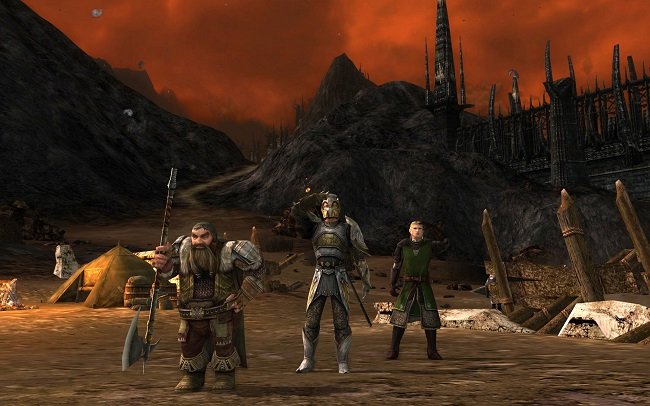
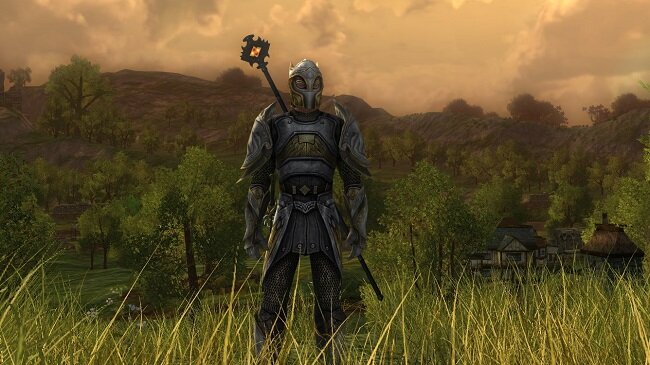
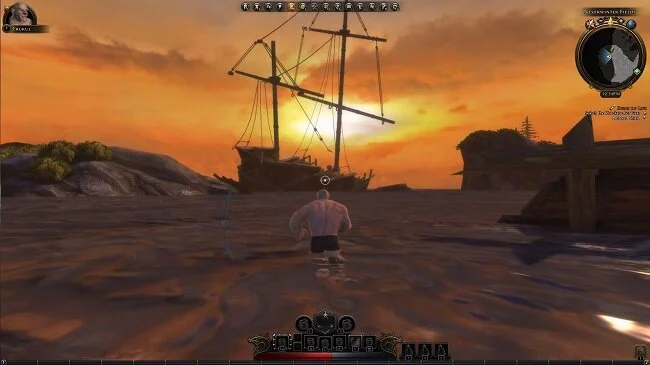
LOTRO: Staying Busy
Exactly what do you do when you reach level cap in the MMORPG, The Lord of the Rings Online? Raiding is the obvious answer and arguably the one the developers would suggest. But only a small percentage of players regularly raid. The last raid I participated in was early 2012 when twelve of our kinship attempted the “Tower of Orthanc”. If memory serves, we failed miserably after investing about 4 hours of our time. Many of us found that we simply didn’t have sufficient time available to pursue raiding in any meaningful way. Those members of the kinship that were focused on this aspect of gameplay ended up leaving and moving to other guilds. I have used the group finder on occasions since then but it has seldom yielded good results. Hence, for me most multiplayer content in LOTRO is “off the table”.
Exactly what do you do when you reach level cap in the MMORPG, The Lord of the Rings Online? Raiding is the obvious answer and arguably the one the developers would suggest. But only a small percentage of players regularly raid. The last raid I participated in was early 2012 when twelve of our kinship attempted the “Tower of Orthanc”. If memory serves, we failed miserably after investing about 4 hours of our time. Many of us found that we simply didn’t have sufficient time available to pursue raiding in any meaningful way. Those members of the kinship that were focused on this aspect of gameplay ended up leaving and moving to other guilds. I have used the group finder on occasions since then but it has seldom yielded good results. Hence, for me most multiplayer content in LOTRO is “off the table”.
My experience is far from unique and it was for this reason that Standing Stone Games introduced the Mission system into LOTRO as an alternative to raiding. Missions offer instanced based activities with specific goals. They often contain a “twist” such as environmental effects or a boss with a specific debuff, to make them suitably challenging. They scale to the player’s level and can be played solo or duo. Delvings are Missions variants that allow level cap players to increase the difficulty to gain superior rewards. Missions and Delvings are repeatable, although there is a cooldown period. Tokens gained from Missions and Delvings can be bartered for gear that is comparable to that rewarded by completing raids. Overall this is a good system although the quality of the Mission is variable. Some are quite well conceived and require a tactical approach but others can be arbitrary.
Another aspect of LOTRO that is a potential source of content is crafting, although it is not for everyone. I have always enjoyed the resource gathering element of this game system, as it can be a good source of XP when levelling and the refined resources can be sold on. When I originally created my Lore-master, I chose the Forester, Prospector and Tailor professions, specifically so I could collect wood, ore and hides which were at the time very marketable commodities. Upon checking recently, I discovered that I had not kept my professions up to date so spent some time travelling around Gundabad and Umbar, gathering resources and levelling my crafting proficiency. I tend not to actually manufacture specific items as I find the costs involved are excessive. However, I do like to buy and sell via the Auction House as a mini game.
LOTRO has several other game systems that can keep you busy, although not all of them are as engaging as story content. As previously mentioned, there are multiple reputation factions throughout the various zones. All of which offer useful rewards upon completion. Besides housing items and cosmetic pets, there are “return to” swift travel skills that will teleport the player to a key location in the zone. If you have bought the “Returning Traveller” and “Expedient Traveller” modifiers from the LOTRO store, then you can reduce the cooldown on all travel skills to 5 minutes. Completing deeds is another option if you are looking for some simple gameplay. Finding locations, treasure caches or completing a specific number of quests all provide XP towards Virtue Traits. Then there are the infamous slayer deeds in which you inflict species specific genocide upon local areas of Middle-earth.
If the aforementioned activities all seem a little formal, there are plenty of informal and social alternatives. Some players upon reaching level cap become in game philanthropists. They become active within their guild organising events and activities. Others simply travel throughout Middle-earth offering assistance to others. Exploring every corner of Standing Stone Games’ world and taking screenshots is another leisurely pastime. It can also be enjoyable to spend some time experimenting with the cosmetic systems within LOTRO, as well as collecting pets and mounts. So it would appear that there is quite a lot that a player can do to keep busy in LOTRO. And then of course there is the issue of returning to the login screen and simply creating a new alt. That however, is a separate blog post altogether.
MMO Tropes: The Time Sink
It would appear that one of the reasons potential new players avoid the MMORPG genre is due to the perception that they are all time sinks. I wouldn’t argue against this assumption because the reality is that it’s true. However any game that you enjoy, irrespective of genre, can become a time sink. That being said, the main difference between other genres and MMOs is as follows. A new player can jump straight into a FPS game and within minutes enjoy some multiplayer action, whereas in an MMO, a new player has to play through a tutorial and several hours of a starter zone before they start making headway in the game. This distinction does not have to be a deal breaker. An FPS can provide a quick fix of gaming and as such fulfils a need. MMORPGs can provide long term entertainment which scratches an ongoing gaming itch. Both are valid ways to enjoy gaming.
It would appear that one of the reasons potential new players avoid the MMORPG genre is due to the perception that they are all time sinks. I wouldn’t argue against this assumption because the reality is that it’s true. However any game that you enjoy, irrespective of genre, can become a time sink. That being said, the main difference between other genres and MMOs is as follows. A new player can jump straight into a FPS game and within minutes enjoy some multiplayer action, whereas in an MMO, a new player has to play through a tutorial and several hours of a starter zone before they start making headway in the game. This distinction does not have to be a deal breaker. An FPS can provide a quick fix of gaming and as such fulfils a need. MMORPGs can provide long term entertainment which scratches an ongoing gaming itch. Both are valid ways to enjoy gaming.
Now that we’ve got that out of the way, I do want to talk about the time I have “invested” into two specific MMORPGs. That investment, or commitment if you prefer, is no small beer. It is a substantial period of time that I could have spent on other leisure activities. Or even non leisure activities, perish the thought. My spare time is possibly one of the most sought after commodities I possess, judging by the amount of businesses, organisations and bodies that pursue it. Hence, I don’t consider spending so much time on MMOs to be something arbitrary. It is a considered choice, one that I constantly review to ensure it is still proving to be satisfactory. The fact that I am still spending time regularly on these two games and enjoying them, validates the overall investment.
I have been playing The Lord of the Rings Online since December 2008. As of 18th November 2024, I have invested 7 months 1 week 6 days 1 hour 7 minutes 28 seconds into my primary character,a human Lore-master. That is 5426 hours. I have two other alts but they have a negligible amount of time spent on them. No more than a dozen or so hours each. Similarly, I have played Star Trek Online since its launch in 2010. However, I have created several alts and really didn’t start playing this MMO seriously until 2013 when the first major expansion was released and a lot of the game’s problems were resolved. My primary character, a Federation Tactical Officer has accrued to date, 72 days, 10 hours, 30 minutes, 33 seconds time investment. That is 1738 hours. Not as much as LOTRO but still a tidy sum.
The obvious question arising from this information is what else could I have done with that collective amount of time (over 7000 hours)? Well, the logical answer is lots of things. I could have learned another language during that time or taken a degree. Yet such introspection is misplaced because I don’t regret my choice. I really don’t. Some people go fishing, bake, play sport, paint lead figures, ring bells, collect stamps, plot world domination or spot trains. I play games. The time I’ve spent has always been “leisure time” and I have never played at the expense of other work or family obligations. If you crunch the numbers, out of the 15 years that have elapsed I have spent about 5% of that time playing MMOs. A similar amount of time could easily be spent watching football as millions of other people do.
Time sink is a loaded and somewhat hyperbolic term. It not only describes the chronological investment but it also infers that it is by its very nature a negative choice. Despite videos becoming a mainstream pastime, there still persists an attitude in certain quarters that they are a childish waste of time and that you’d be better served doing something “productive”. In fact I’ll go so far as to say I know people who still struggle to see the benefits of leisure time per se. They tend to be very two dimensional thinkers. I certainly do not consider investing time in a hobby, working towards goals and the associated positive social interactions as bad things. Quite the opposite. They are very good for one’s overall well being, as are the tangential activities that can arise from gaming, such as this blog. Perhaps we should retire the term time sink and replace it with something more benign like time investment or time intensive.
LOTRO: Voice Acting
One of the most noticeable things that ages the MMORPG, The Lord of the Rings Online, is the lack of comprehensive voice acting throughout the game. If a player interacts with an NPC, they will provide generic greetings or ambient dialogue. Phrases such as “hello there” of “our mission is dire” occur regularly. However, the majority of quest text is not spoken, unless it is part of the Epic Story line. If it is, the first sentence is usually voice acted but no more than that. Cutscenes within instances have dialogue, as are those that occur at key parts of the Epic Story. Overall, LOTRO does not have the extensive voice acting that a similar MMO such as Star Trek Online has. This is a shame, considering how much time and effort has been taken with other aspects of the game.
One of the most noticeable things that ages the MMORPG, The Lord of the Rings Online, is the lack of comprehensive voice acting throughout the game. If a player interacts with an NPC, they will provide generic greetings or ambient dialogue. Phrases such as “hello there” of “our mission is dire” occur regularly. However, the majority of quest text is not spoken, unless it is part of the Epic Story line. If it is, the first sentence is usually voice acted but no more than that. Cutscenes within instances have dialogue, as are those that occur at key parts of the Epic Story. Overall, LOTRO does not have the extensive voice acting that a similar MMO such as Star Trek Online has. This is a shame, considering how much time and effort has been taken with other aspects of the game.
LOTRO was conceived and developed over the course of 2005 and 2006 and although the technology available at the time could accommodate comprehensive voice acting, its inclusion would have certainly had logistical and financial consequences upon the game’s production. Additional audio would have increased the size of the game installation and constantly maintaining and adding dialogue would have increased production costs. Due to the nature of the game, a great deal of time and effort would also have been required ensuring that all dialogue was correctly pronounced and grammatically correct. Tolkien fans are very particular about this. So it can be argued that Turbine/Standing Stone Games have dodged a bullet by deciding to limit the amount of voice acting in the game to date.
Some players will argue that the lack of comprehensive voice acting is a benefit, allowing them to focus on the text, rather than the actor’s performance. Other LOTRO players already have little or no interest in the finer points of the narrative and are focused far more on “getting the job done”. Such players would therefore be indifferent to further voice acting. However, I am in the opposite camp and enjoy LOTRO mainly due to the stories underpinning both the major and minor quests. For me, good voice acting greatly enhances a story and I often struggle to read the wall of text presented by the NPC. This problem gets worse when playing the game on a 4K monitor due to the game’s non-scaling UI. Therefore, the addition of voice acting would greatly help in keeping me apprised of the plot.
After my recent experimentation with LUA Plugins, I wondered if anyone had ever tried to develop some sort of text-to speech facility that could be added to the game. It turns out that it has already been done to some degrees of success. I found the following post on the Official LOTRO Forums by The Almighty Tater, which references a Python programme they have developed called LOTRO to Speech. For those interested in trying this service you can access all the required files and details of how to install and configure them here. Example videos can be found over at the LOTRO subreddit. Another LOTRO player, Luthryth, has indicated that they are developing a text-to-speech app. They have posted videos of their progress on YouTube, an example of which is posted below . Again, this seems to work quite well.
Obviously, with both of these programs being third party services and a workaround rather than a solution, there are inevitably some issues to consider. Relying on optical character recognition to parse the quest text can be problematic and there is scope for dialogue to be misread. Using cloud based, AI voice services to provide in-game narration introduces the possibility of lag. Also not all voices will be character appropriate, especially if you use the free text-to-speech services. Then there is the issue of pronunciation which may well bother some Tolkien fans. However, all of these negatives are outweighed by the potential benefits that text-to speech can bring to the game. Such a service makes LOTRO far more accessible. Furthermore, as technology progresses, there is scope for programs such as LOTRO to Speech to improve.
Although I wholeheartedly approve of player created apps such as these, if given a choice I’d much prefer voice acting to be officially part of the game. Sadly, although I do not consider it impossible to retrospectively add this to LOTRO, it is highly unlikely that it ever will be due to the cost involved and the law of diminishing returns as the game enters the next phase of its lifecycle (I’ll leave it to you to figure out what that may be). In the meantime LOTRO to Speech is a suitable compromise that can fill the gap. As to the future, if there is ever to be a new Middle-earth themed MMORPG, or if Daybreak Games ever intend to bankroll the creation of a LOTRO 2.0, I would expect it to be fully voiced by default. I don’t think the design choice made back in 2005 would be acceptable to modern gamers.
LOTRO: Beneath the Surface
Last week I finally completed the Epic Story content for Corsairs of Umbar, the 2023 expansion for the MMORPG The Lord of the Rings Online. Although I am still undecided about Umbar as a zone, I found the main story engaging and as ever, well conceived within Middle-earth lore. The writers at Standing Stone Games have been very creative with their Fourth Age content and never make the mistake of over blowing it or trying to up the stakes as high as the threat of Sauron. So far, it feels like the free people are credibly mopping up residual forces of evil, as one would after a major regime collapse. Therefore, I was broadly satisfied with the Corsairs of Umbar expansion and was ready to move onto the next major story content update which was released in May this year.
Last week I finally completed the Epic Story content for Corsairs of Umbar, the 2023 expansion for the MMORPG The Lord of the Rings Online. Although I am still undecided about Umbar as a zone, I found the main story engaging and as ever, well conceived within Middle-earth lore. The writers at Standing Stone Games have been very creative with their Fourth Age content and never make the mistake of over blowing it or trying to up the stakes as high as the threat of Sauron. So far, it feels like the free people are credibly mopping up residual forces of evil, as one would after a major regime collapse. Therefore, I was broadly satisfied with the Corsairs of Umbar expansion and was ready to move onto the next major story content update which was released in May this year.
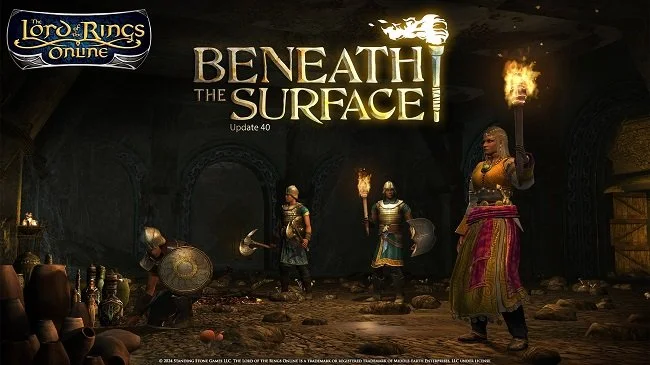
Update 40: Beneath the Surface, continues the latest instalment of the Epic Story; The Song of waves and Wind. According to the official press release from SSG, “It is a new dawn for Umbar. At the request of Hármelak, the Golden Queen, the Kindred of the Coins has reopened the great meeting-hall of Dâr Laja so they can better hear the voices of their people. And yet, beneath the city in Umbar-môkh, there are some who feel threatened by this new order, working in the darkness until their plans bear fruit”. It all sounds very thrilling until I realised that the entire new zone, Umbar-môkh, in which the story takes place is a series of catacombs and labyrinths under Umbar Baharbêl. Out of all the environments present in LOTRO, I enjoy those set underground the least.
Most LOTRO players have distinct opinions regarding Moria, the first significant underground area they encounter when playing the game. Although I have no great love for subterranean zones, Moria is different. It is an integral and iconic part of Tolkien’s source text and therefore a necessary evil in gaming terms. Furthermore, the zone is divided into several lore relevant, themed zones. Hence you have locations such as the Chamber of Mazarbul, the Bridge of Khazad-dûm, the Twenty-first Hall and the body of the Balrog below Zirakzigil. All of which make Moria, more than just a frustrating maze. Sadly, that was not the case with the Gundabad expansion as it lacked the detail of established, in-depth, canonical lore. Effectively it was maze without the benefit of having a complex literary backstory to support it. I enjoyed Moria in spite of its frustrations. I struggled to tolerate Gundabad because of them.
Having now ventured into Umbar-môkh, I can say it does not quite have the same claustrophobic air that Moria and Gundabad have. The aesthetic is that of Umbar and the catacombs are well lit. Plus there are multiple entrances. However, it should be noted that some areas are intended for duos or small fellowships. If you don’t read the various quest texts, you could find yourself surrounded by signature mobs and out of your depth. So caution is advised. In the meantime, I shall follow the main story and see how I get on with the episodic storyline Tales of the Kindred. If things prove to be problematic or not to my liking, I can simply move on to the new content from the next expansion, Legacy of Morgoth, which is released on Wednesday 6th of November.
LOTRO: Bullroarer Update 42 - Legacy of Morgoth Beta #1
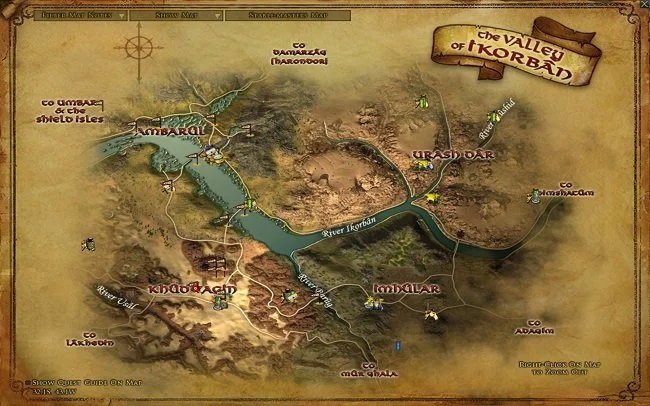
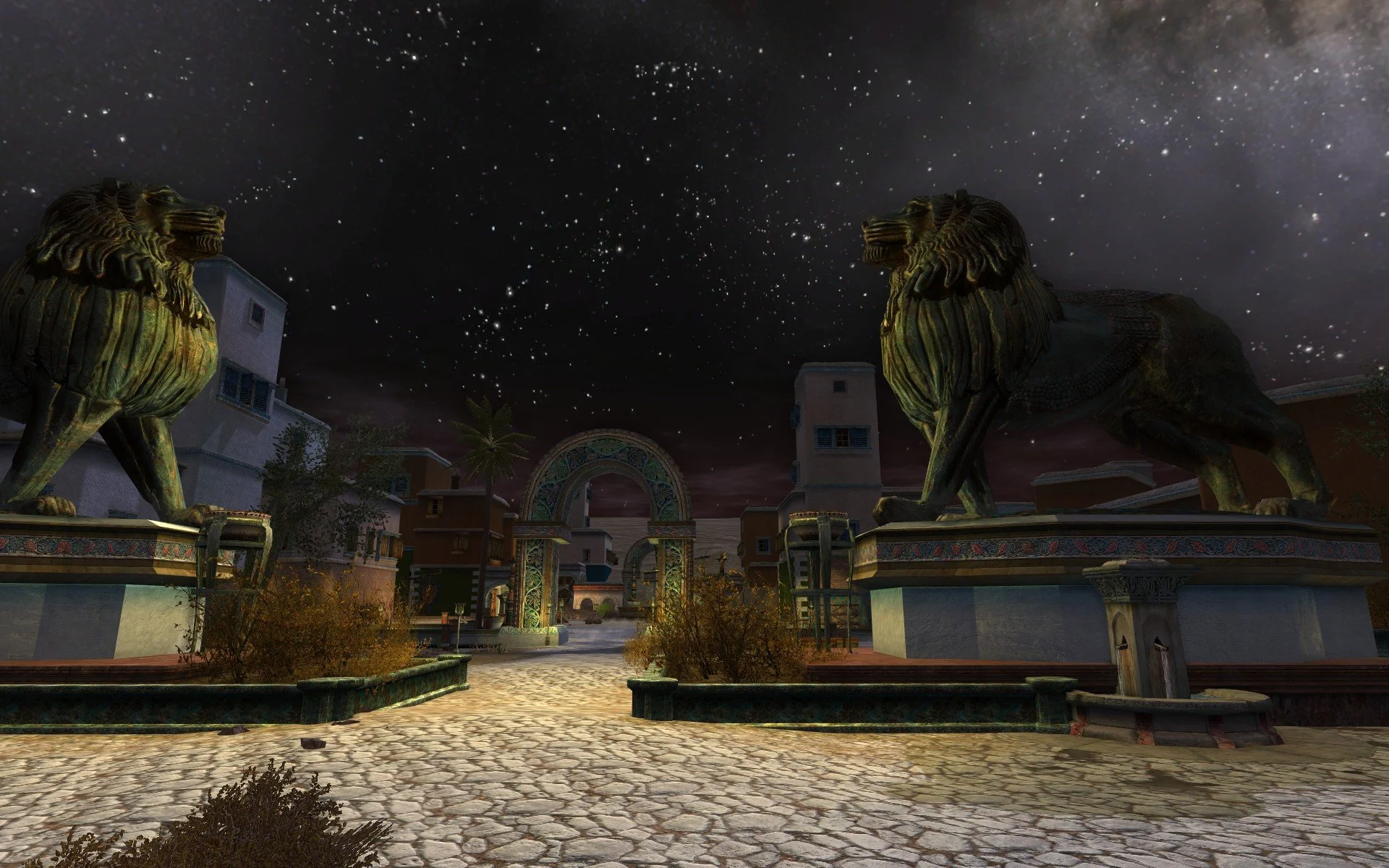
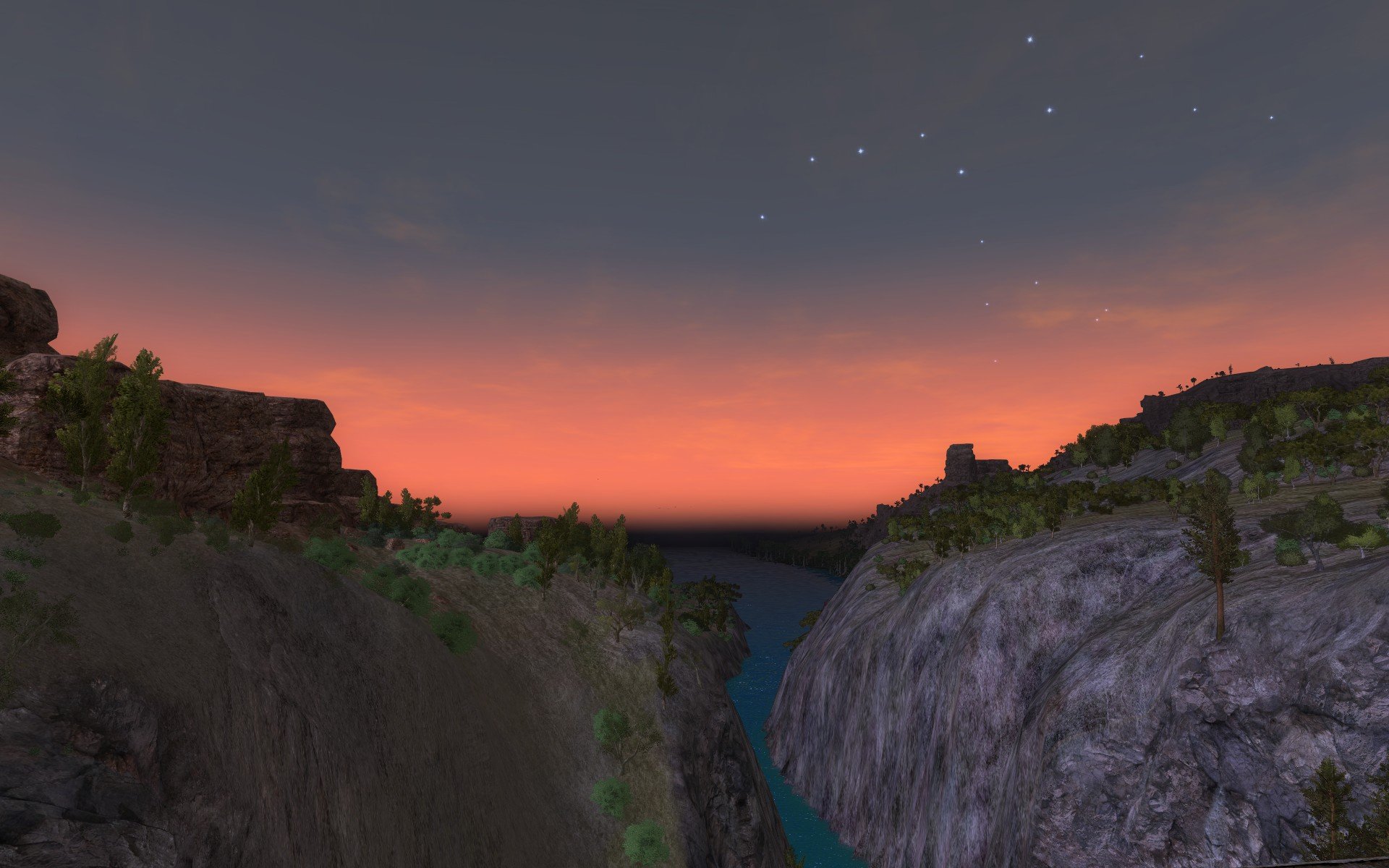
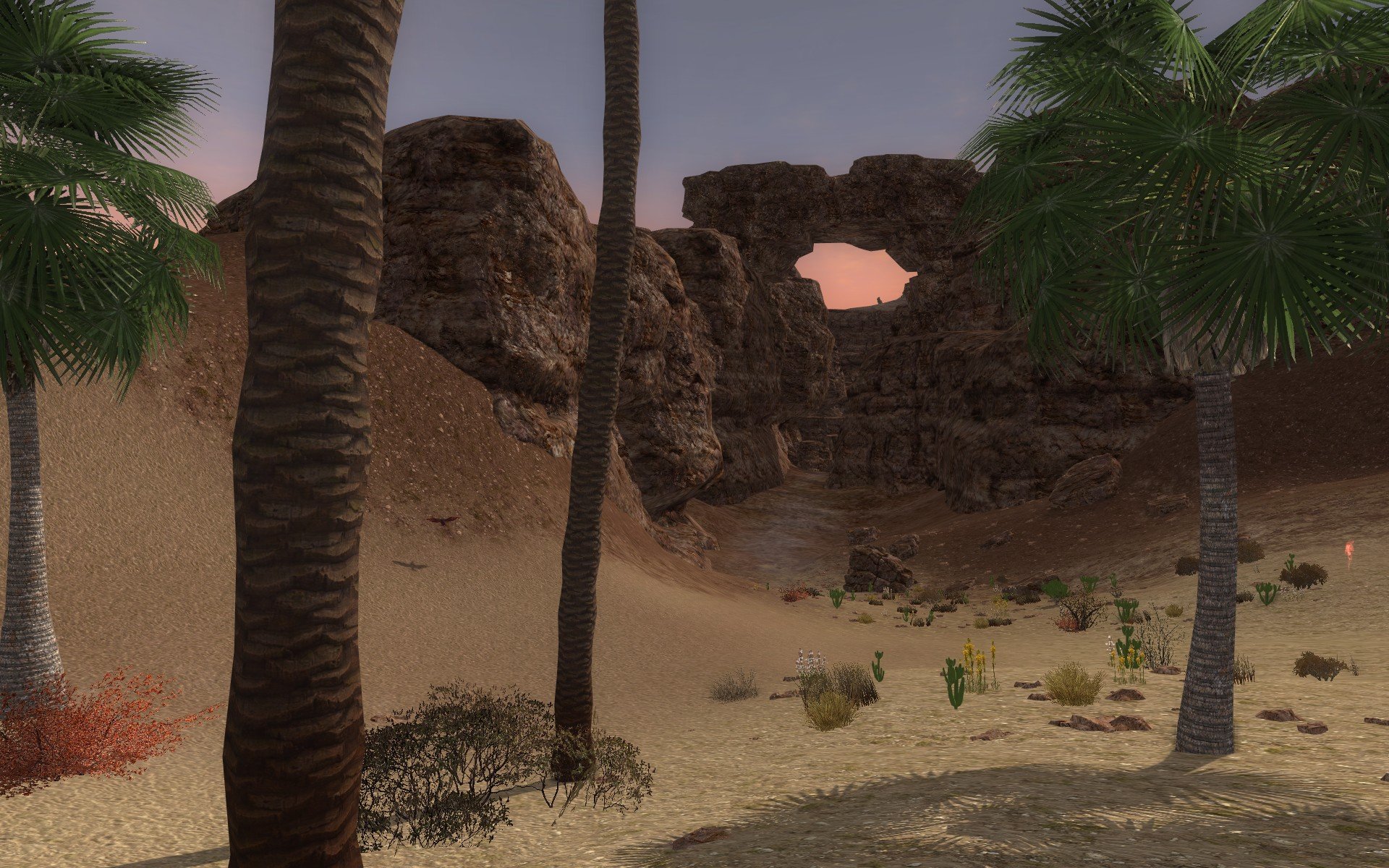
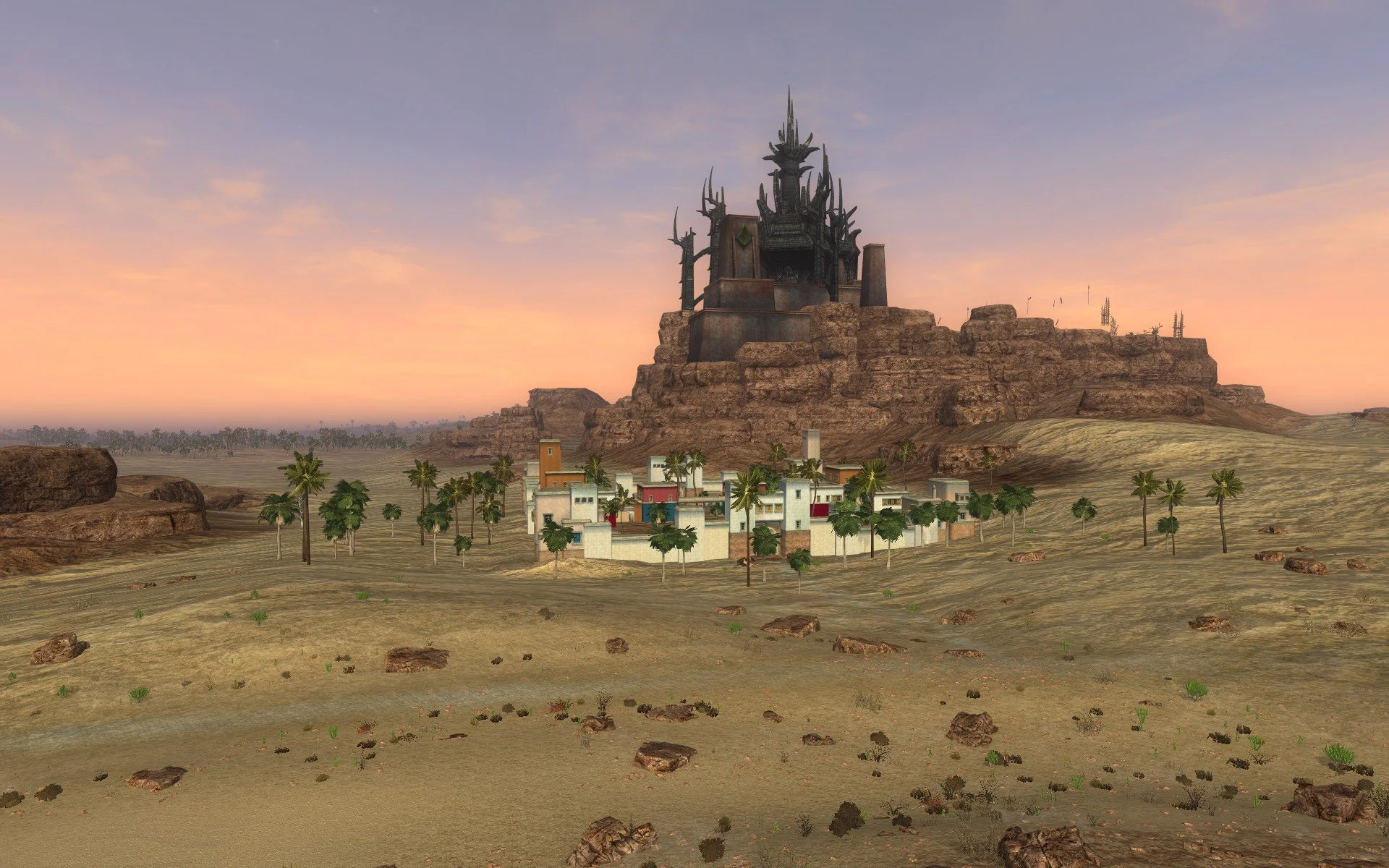
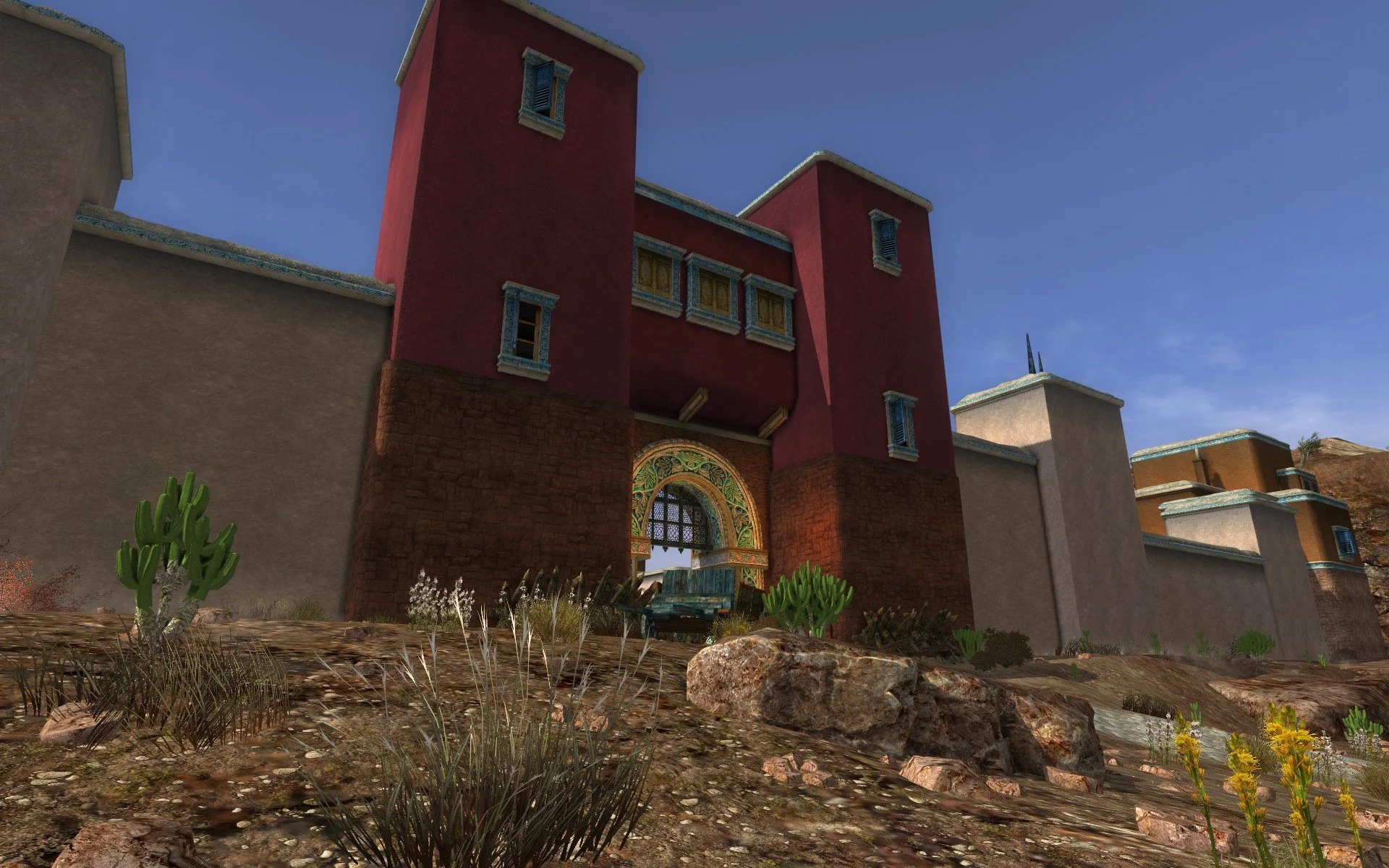
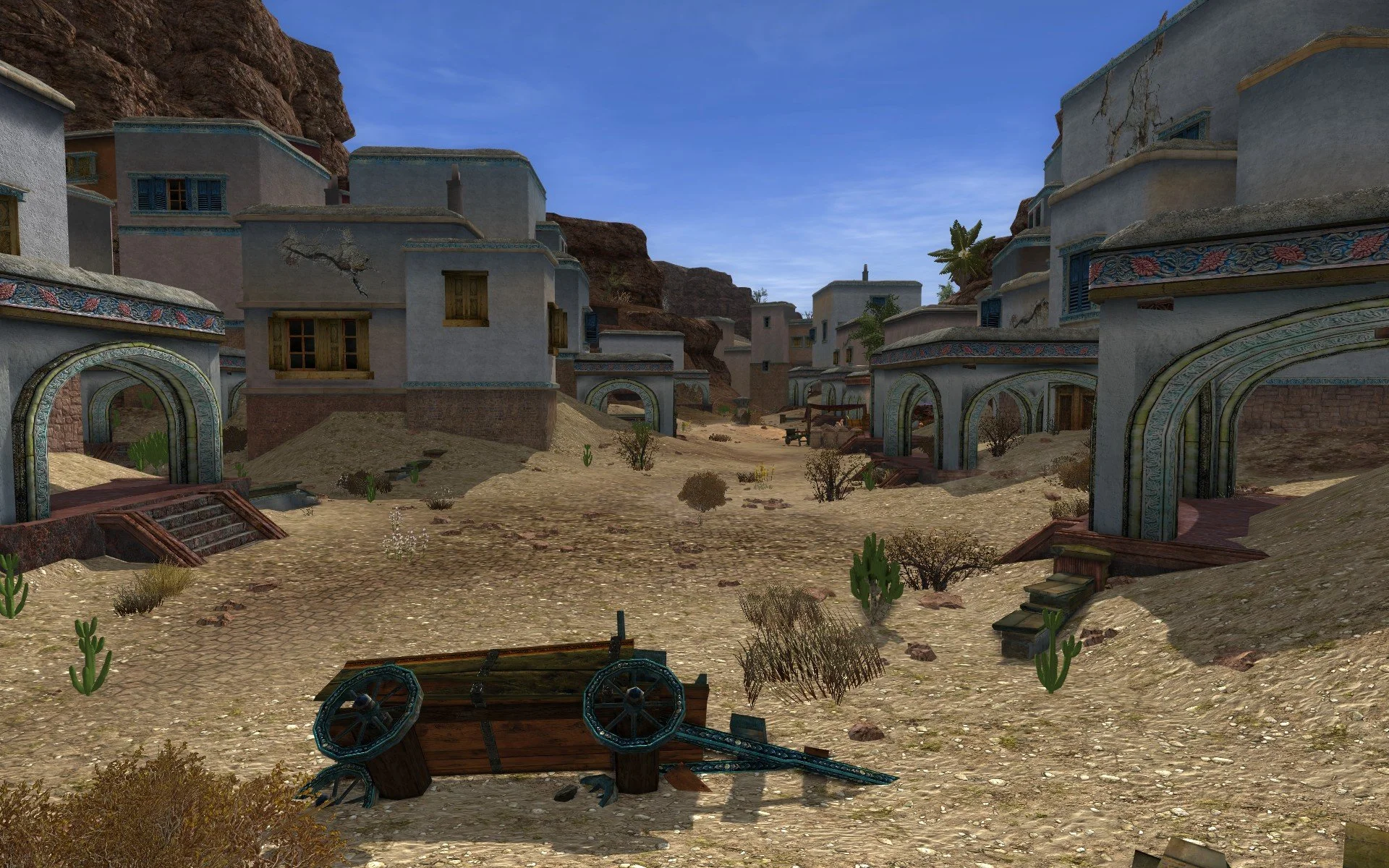
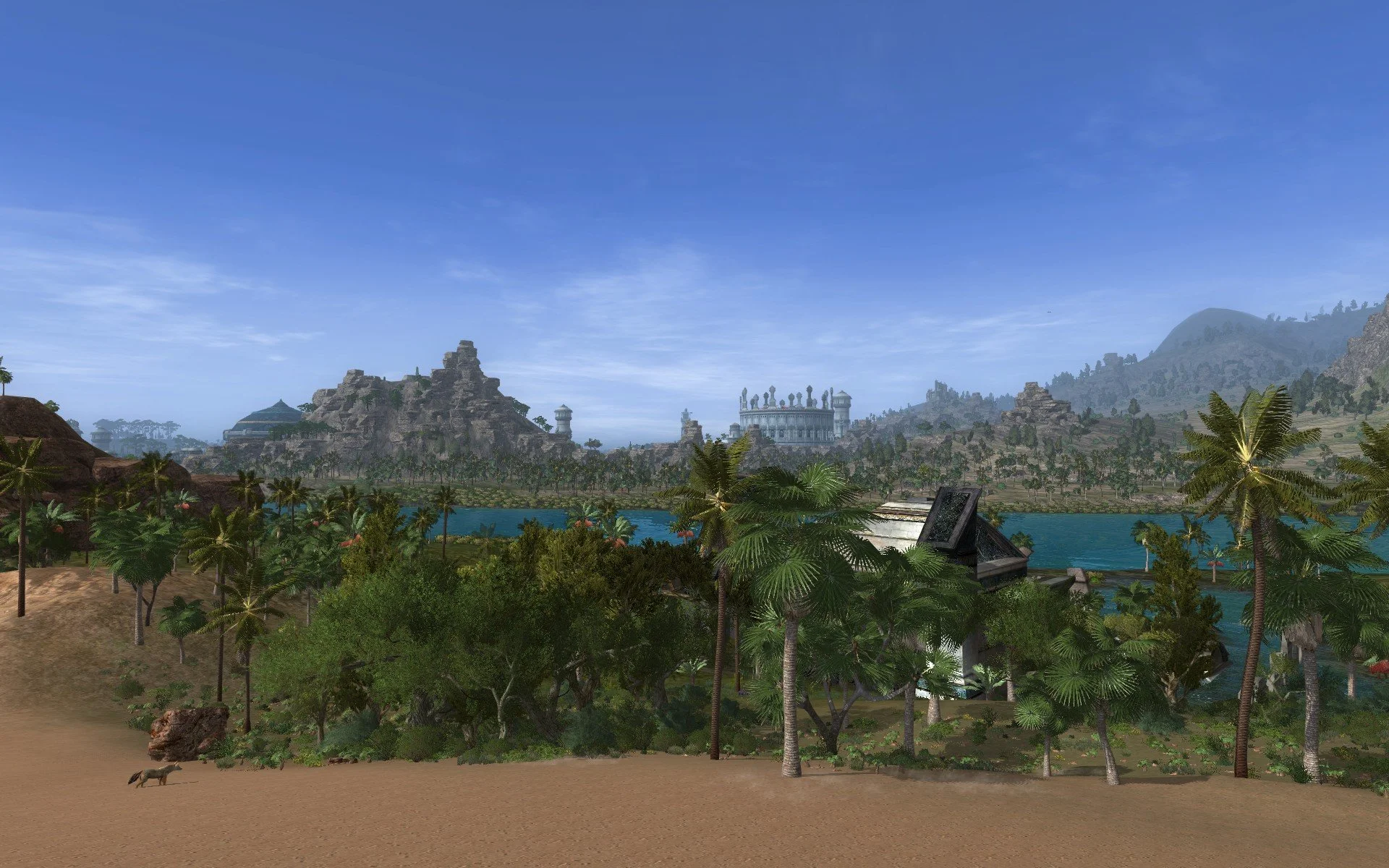
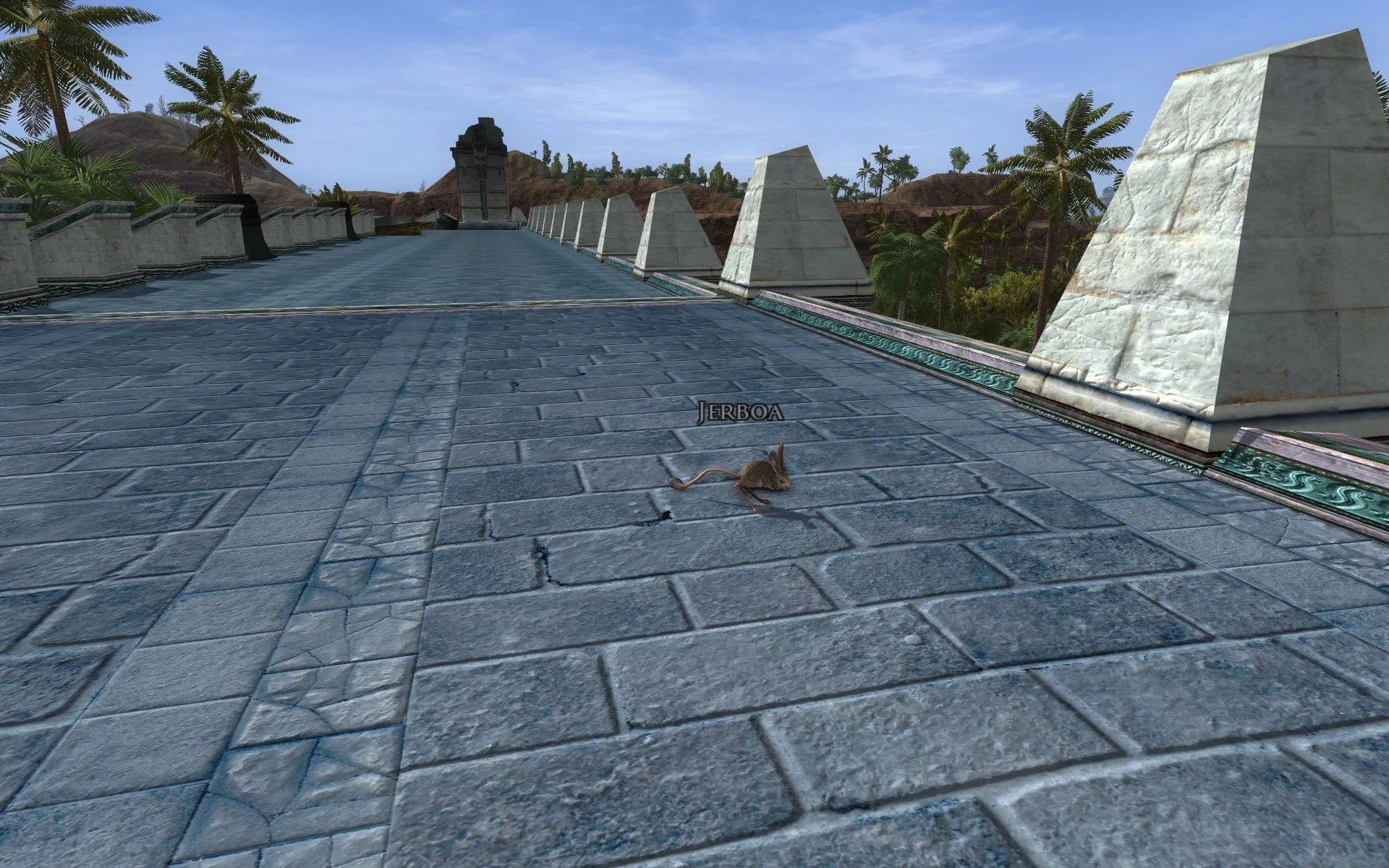
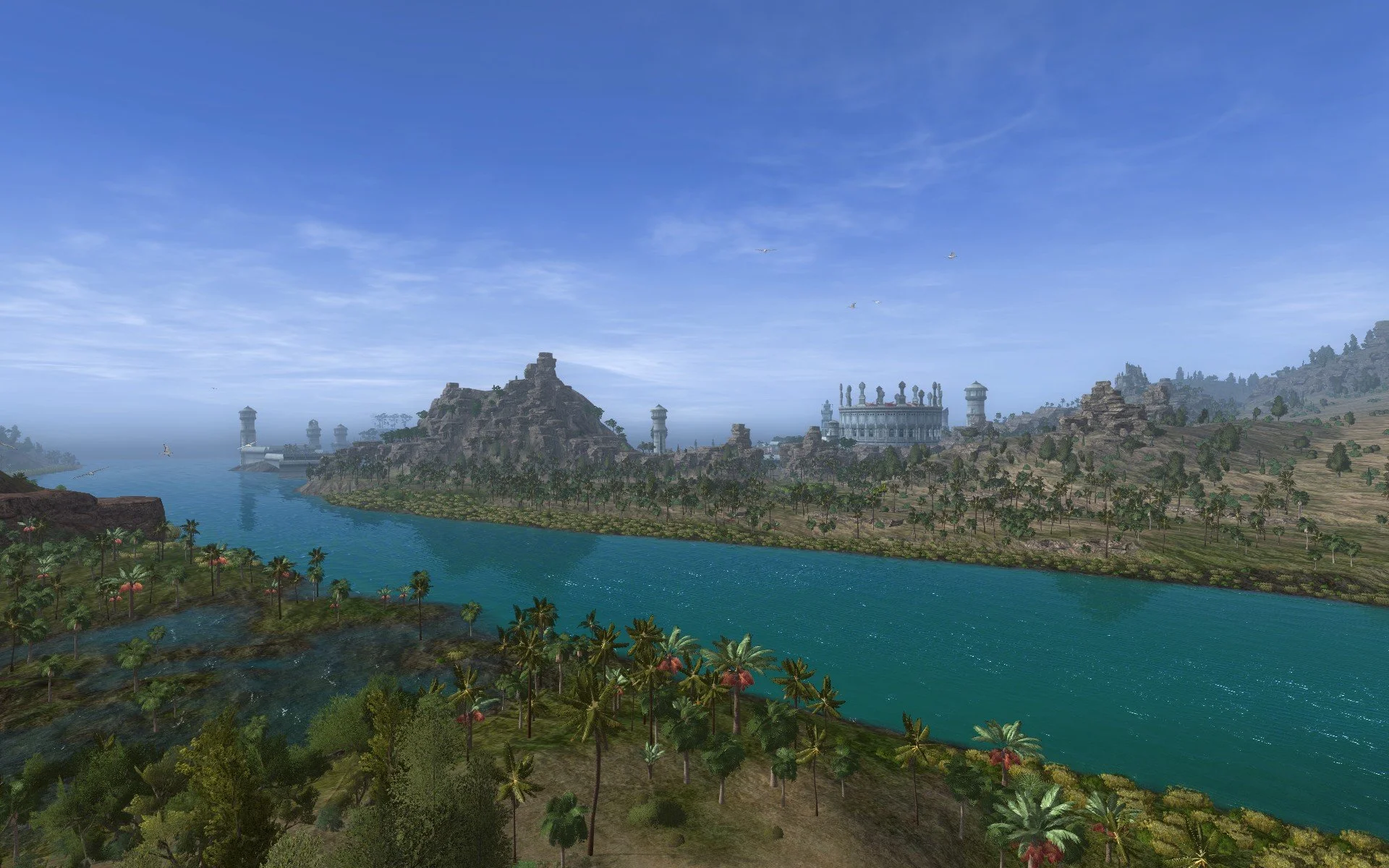
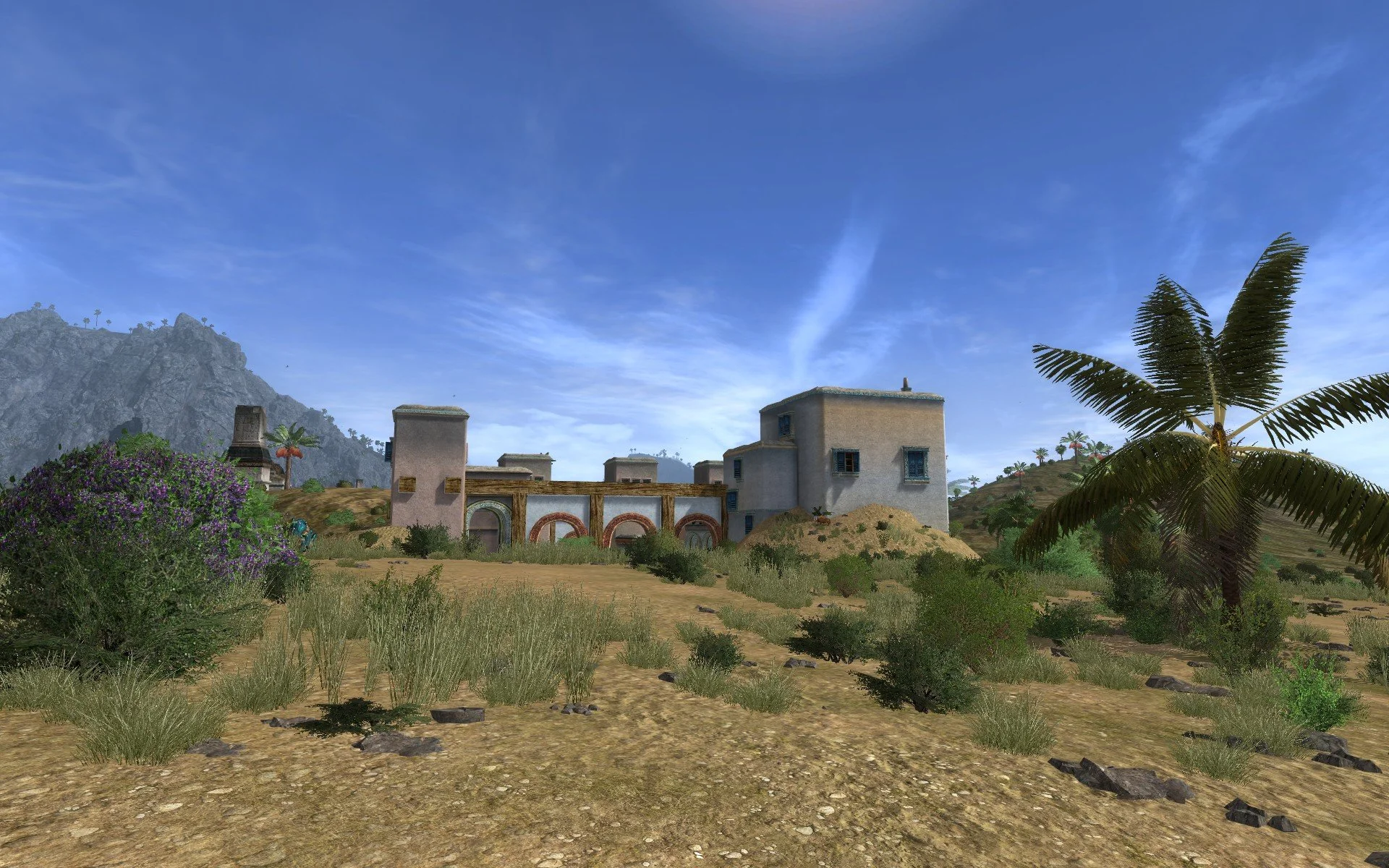
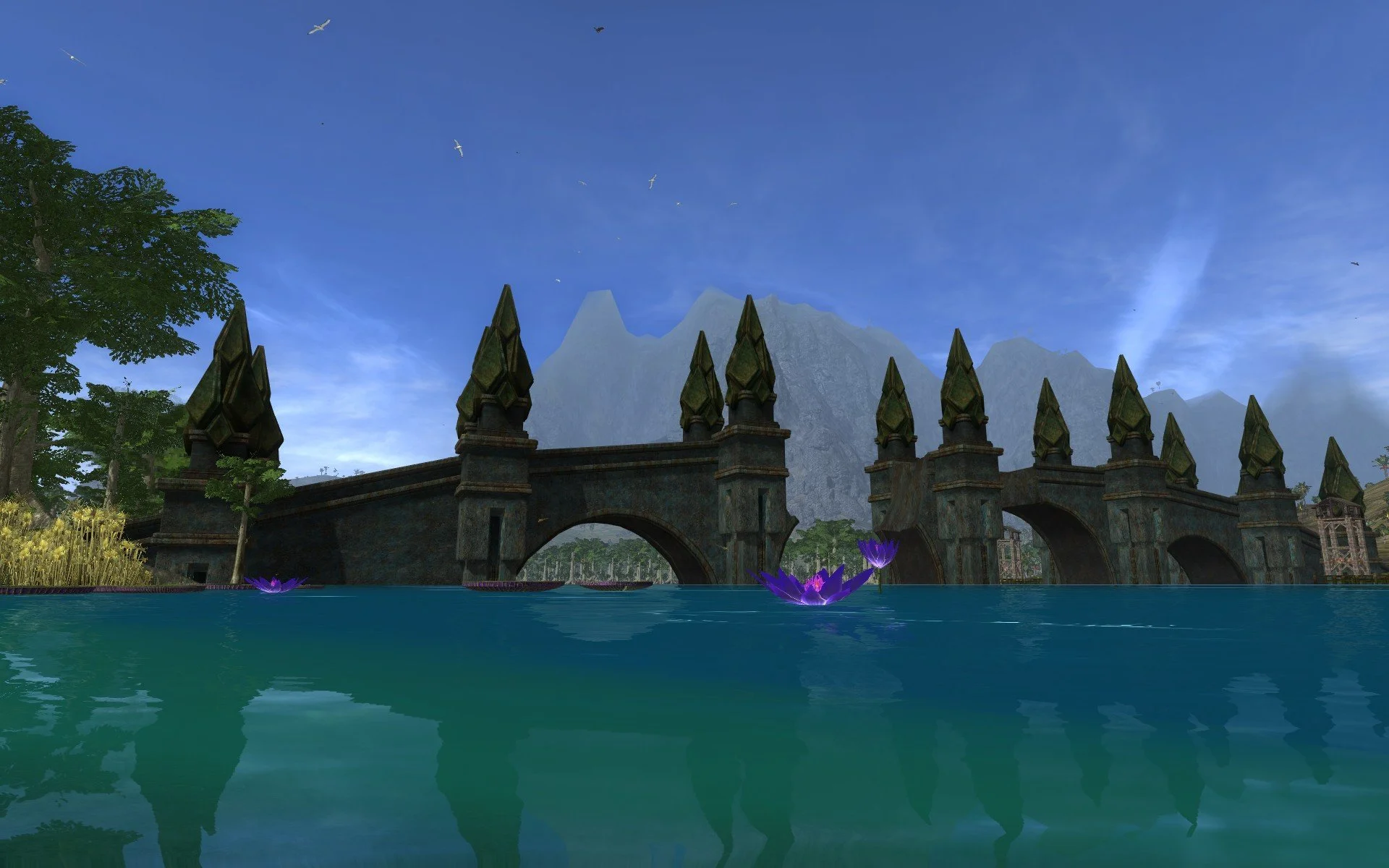
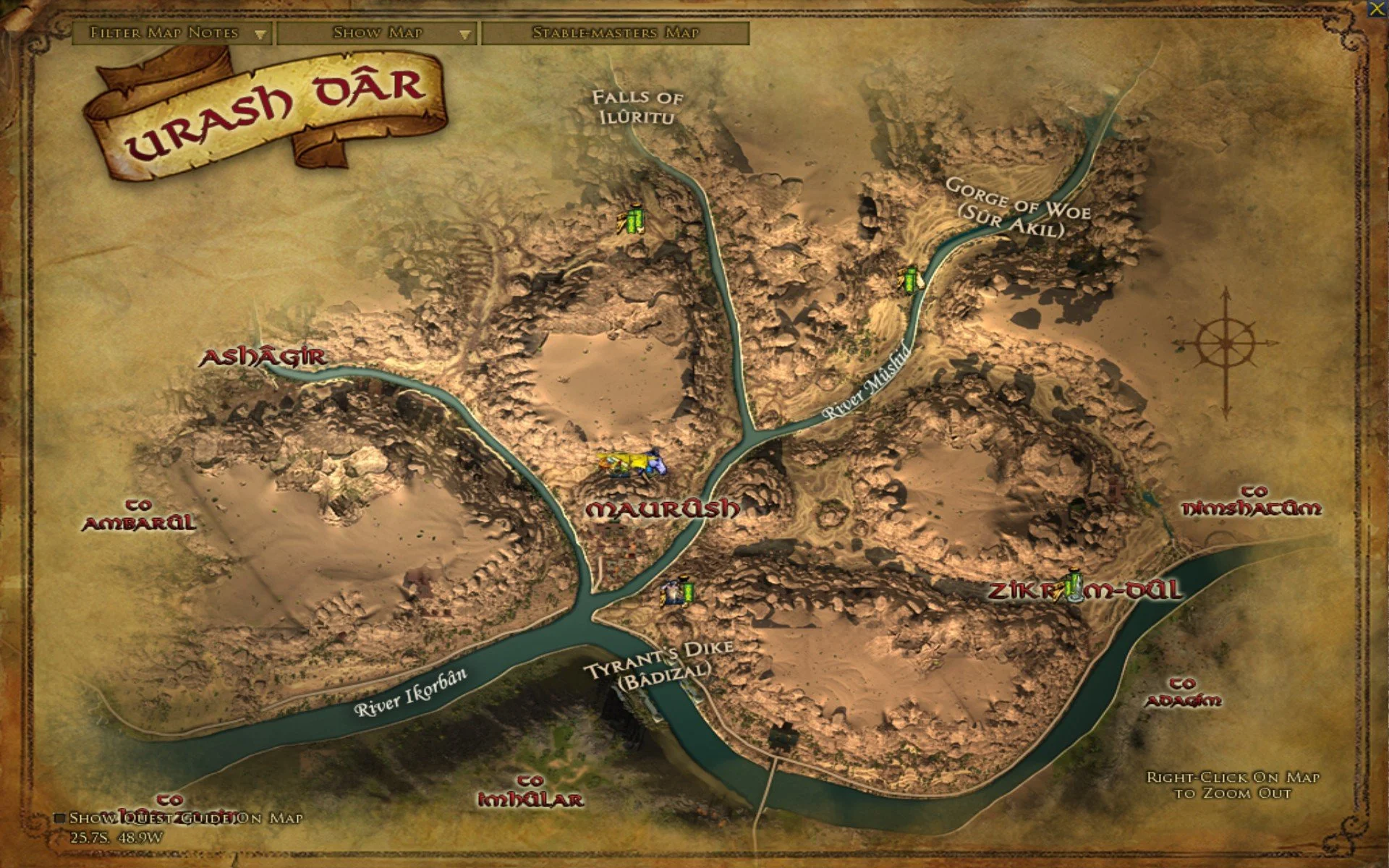
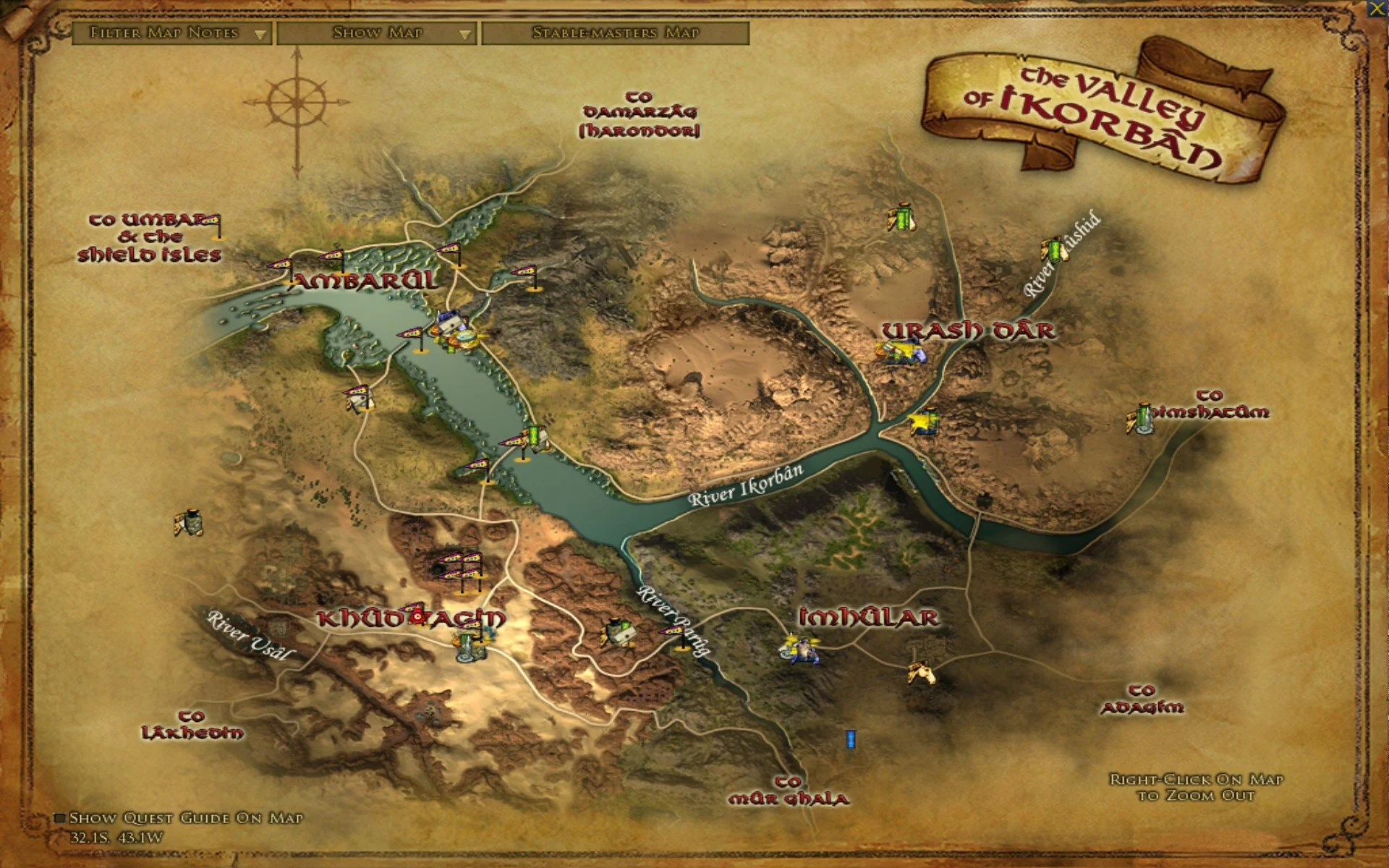
Over the last 24 hours, I’ve spent some time taking part in the first beta test for Legacy of Morgoth on this Bullroarer test server. This will be the 12th expansion for the MMORPG, The Lord of the Rings Online, when it is released on November 6th. According to the developers, Standing Stone Games, “Legacy of Morgoth is homed in the Valley of Ikorbân, located east of Umbar Baharbel. This is a challenge level 150 region, with 4 new zones packed with new quests, Deeds, Missions and Delvings for you to explore”. The Valley of Ikorbân is located to the east of Umbar Barharbel and is part of Near Harad. The aesthetics of the region are a continuation of those featured in the previous expansion, Corsairs of Umbar. Something, I personally still have mixed feelings about, as I find it somewhat incongruous to be questing in a tropical zone, after years of playing in a world that is predominantly based upon a European, temperate climate.
Over the last 24 hours, I’ve spent some time taking part in the first beta test for Legacy of Morgoth on this Bullroarer test server. This will be the 12th expansion for the MMORPG, The Lord of the Rings Online, when it is released on November 6th. According to the developers, Standing Stone Games, “Legacy of Morgoth is homed in the Valley of Ikorbân, located east of Umbar Baharbel. This is a challenge level 150 region, with 4 new zones packed with new quests, Deeds, Missions and Delvings for you to explore”. The Valley of Ikorbân is located to the east of Umbar Barharbel and is part of Near Harad. The aesthetics of the region are a continuation of those featured in the previous expansion, Corsairs of Umbar. Something, I personally still have mixed feelings about, as I find it somewhat incongruous to be questing in a tropical zone, after years of playing in a world that is predominantly based upon a European, temperate climate.
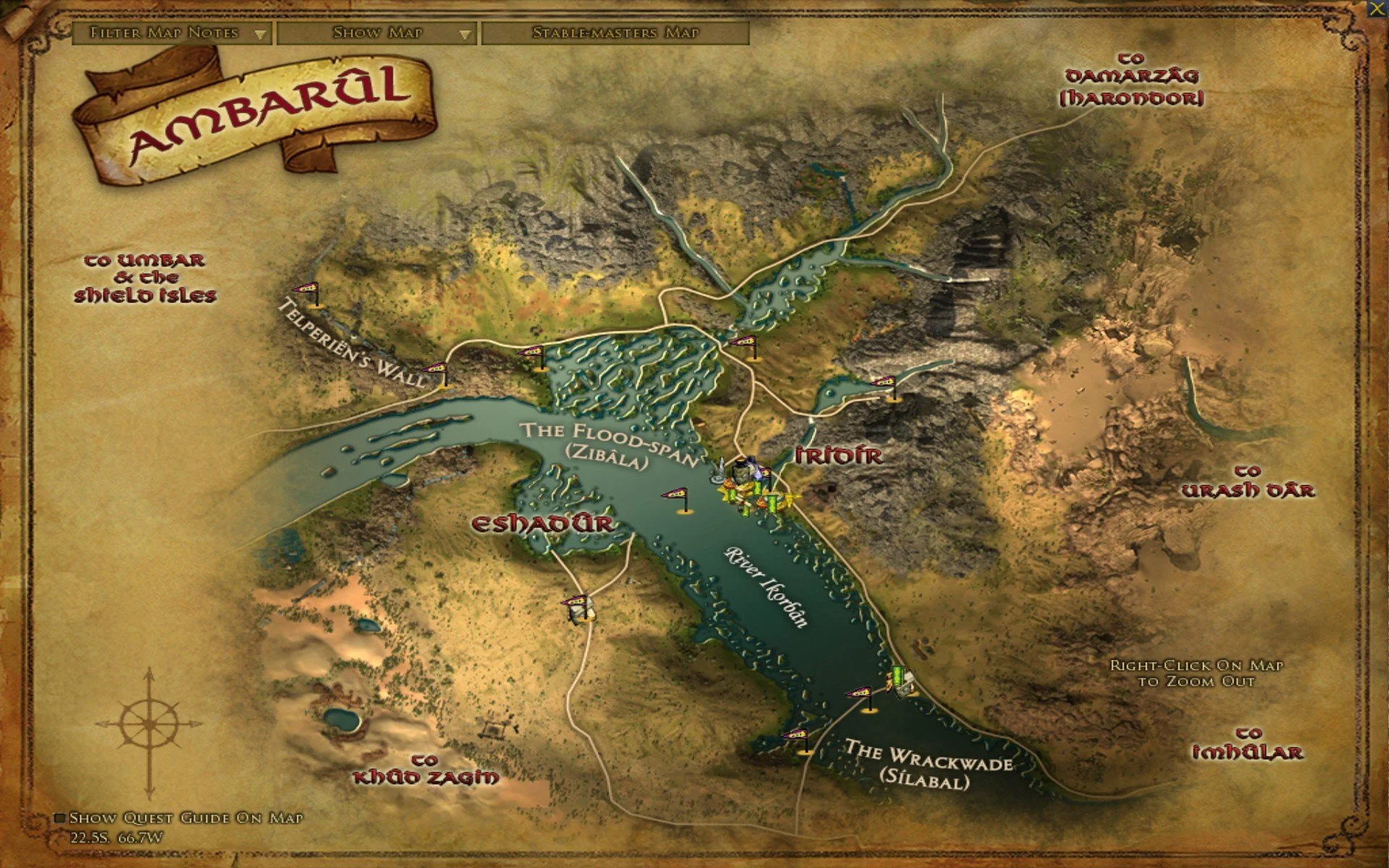
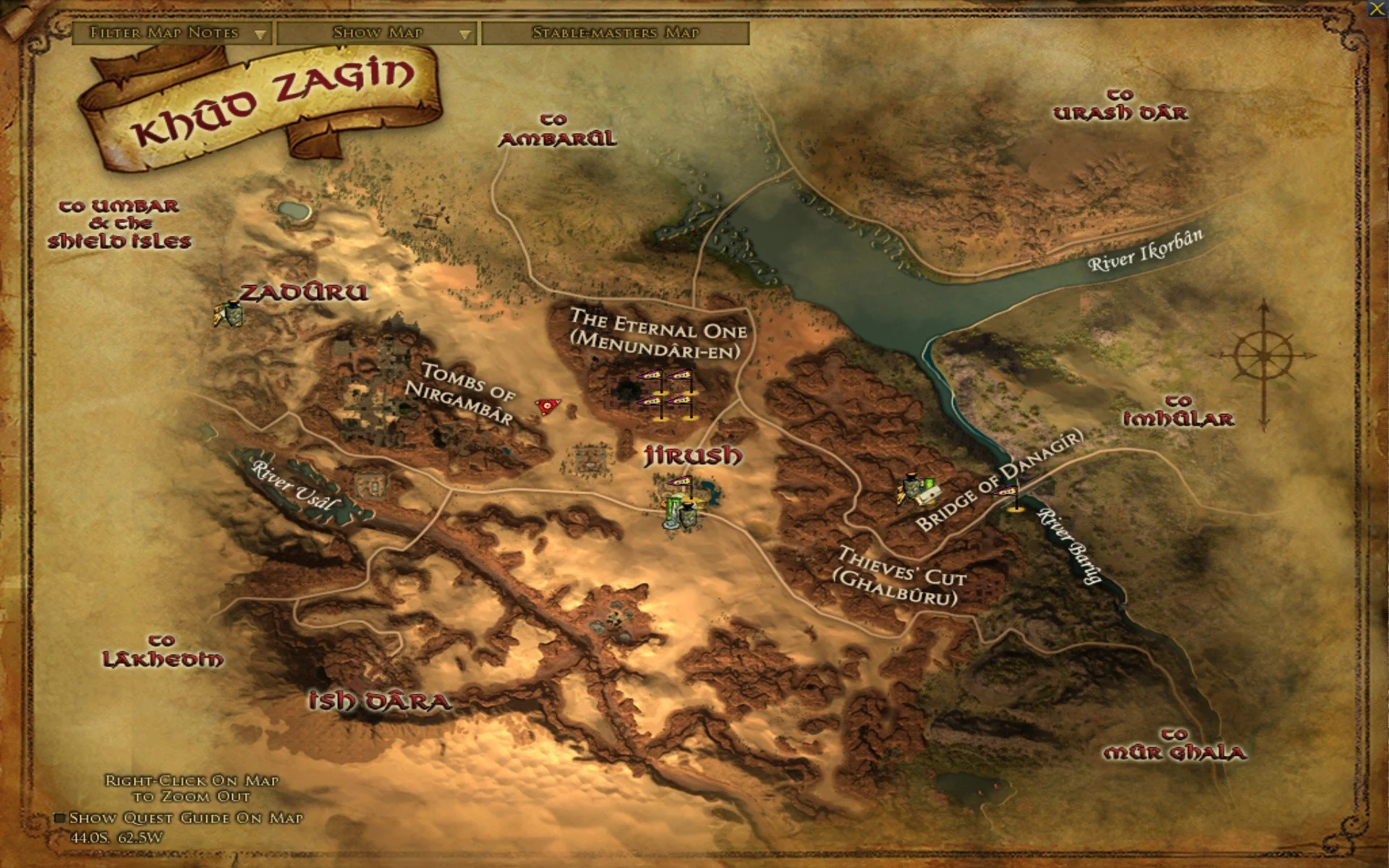
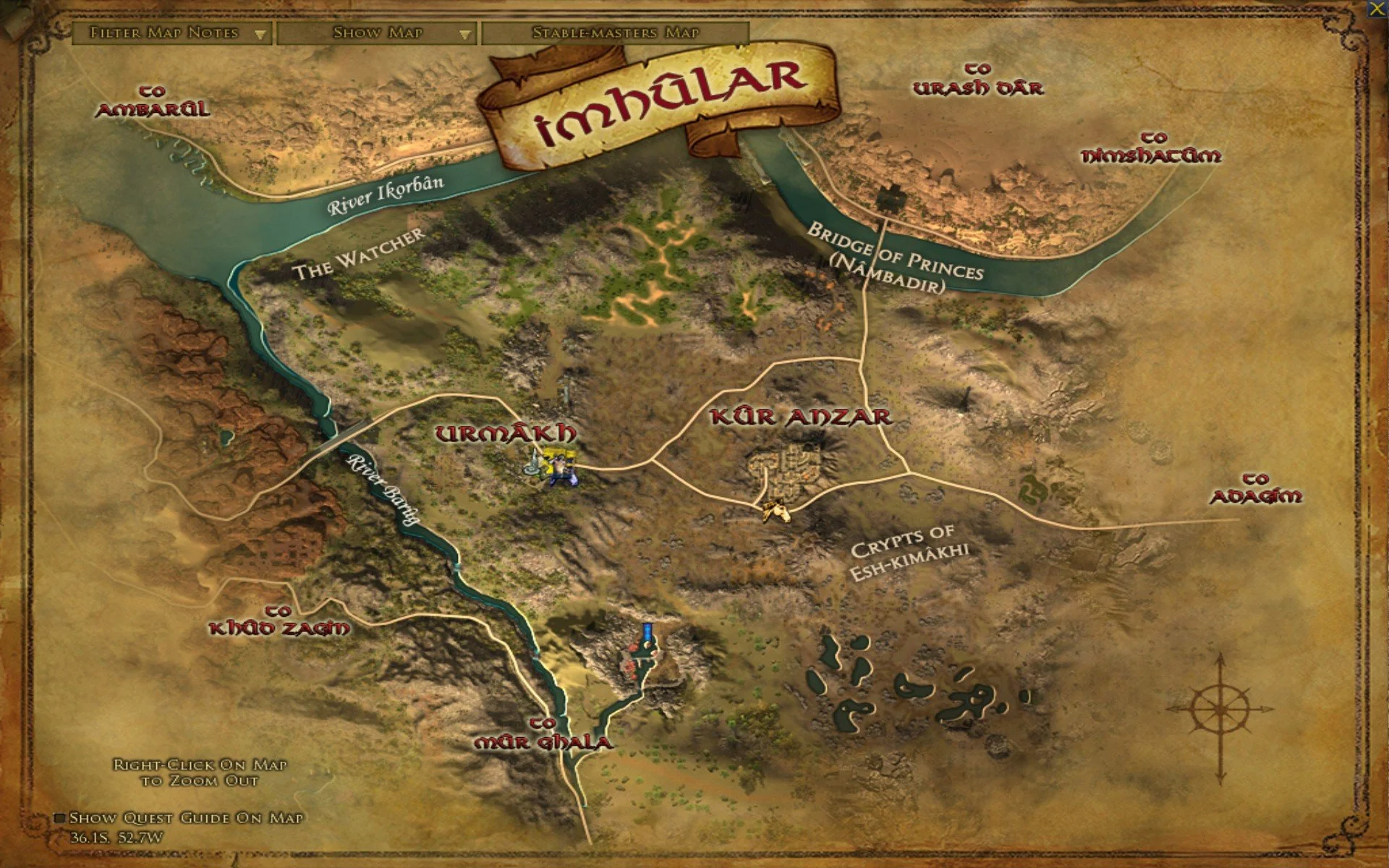
The Valley of Ikorbân is split into four maps, filled with new quests, Deeds, Missions and Delvings for players to explore. The expansion is a challenge level 150 region. The first beta test is unusual compared to those for previous expansions, as developers SSG have not made the entire expansion available as they usually do. Hence I have only been able to explore Ambarûl and Khûd Zagin so far. Both Imhûlar and Urash Dâr will be available for future tests. The downside to this approach is that players will encounter specific invisible walls, the most noticeable is across the Bridge of Danagir. Limiting access to the full expansion has also broken the travel mounts from the stables in the area. Regular travel mounts will ride through a zone until they encounter an invisible wall but swift travel mounts fail to follow the designated route and run into any obstruction.
SSG have not explained why they have made this decision and it has been assumed by many LOTRO players that the quests in the two withheld zones are incomplete. Setting this aside for a moment, an expansion comprising of just four maps, is cause for concern in its own right. LOTRO players have already pointed out that the 3 different versions of the Legacy of Morgoth that were initially announced (standard, collector’s and ultimate fan edition), were lacking in content and the SSG has already decided to add cosmetic items to address such concerns. However, I still do not feel that 4 new maps merits being called an expansion. It is not as if we’re getting a new class, like we did with Corsairs of Umbar. I am curious to see if this becomes a talking point on the official forums and whether SSG will make any further concessions.
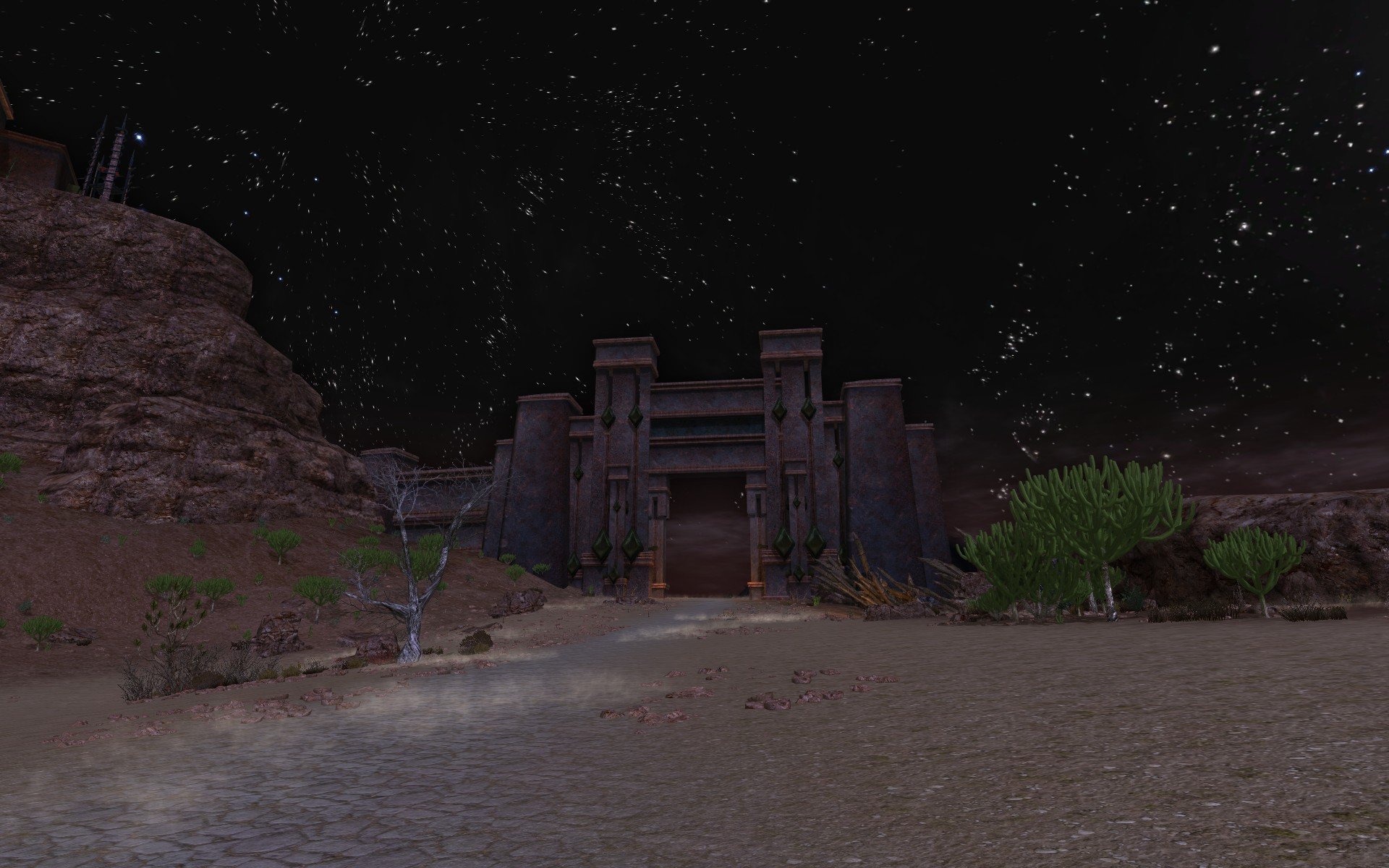
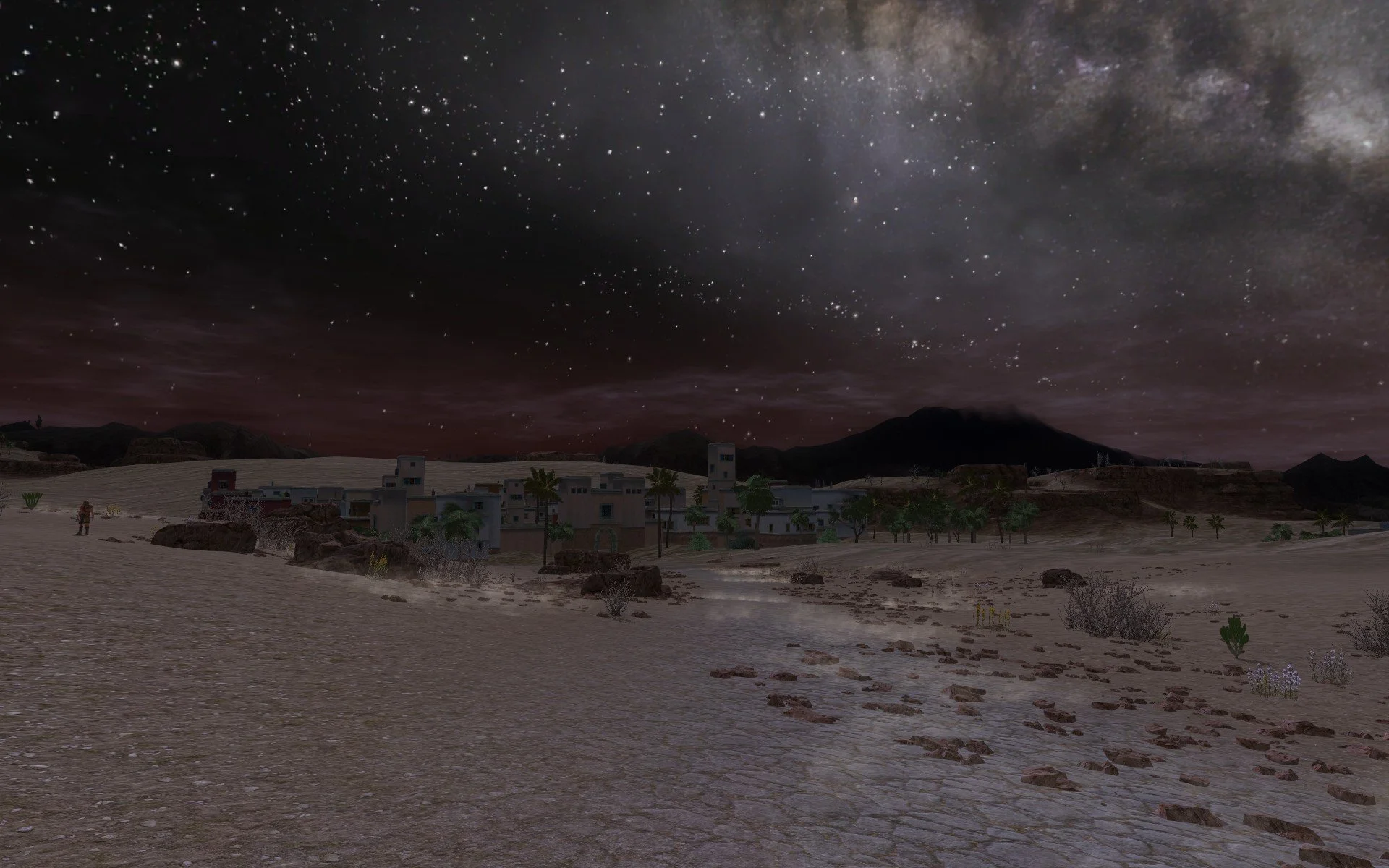
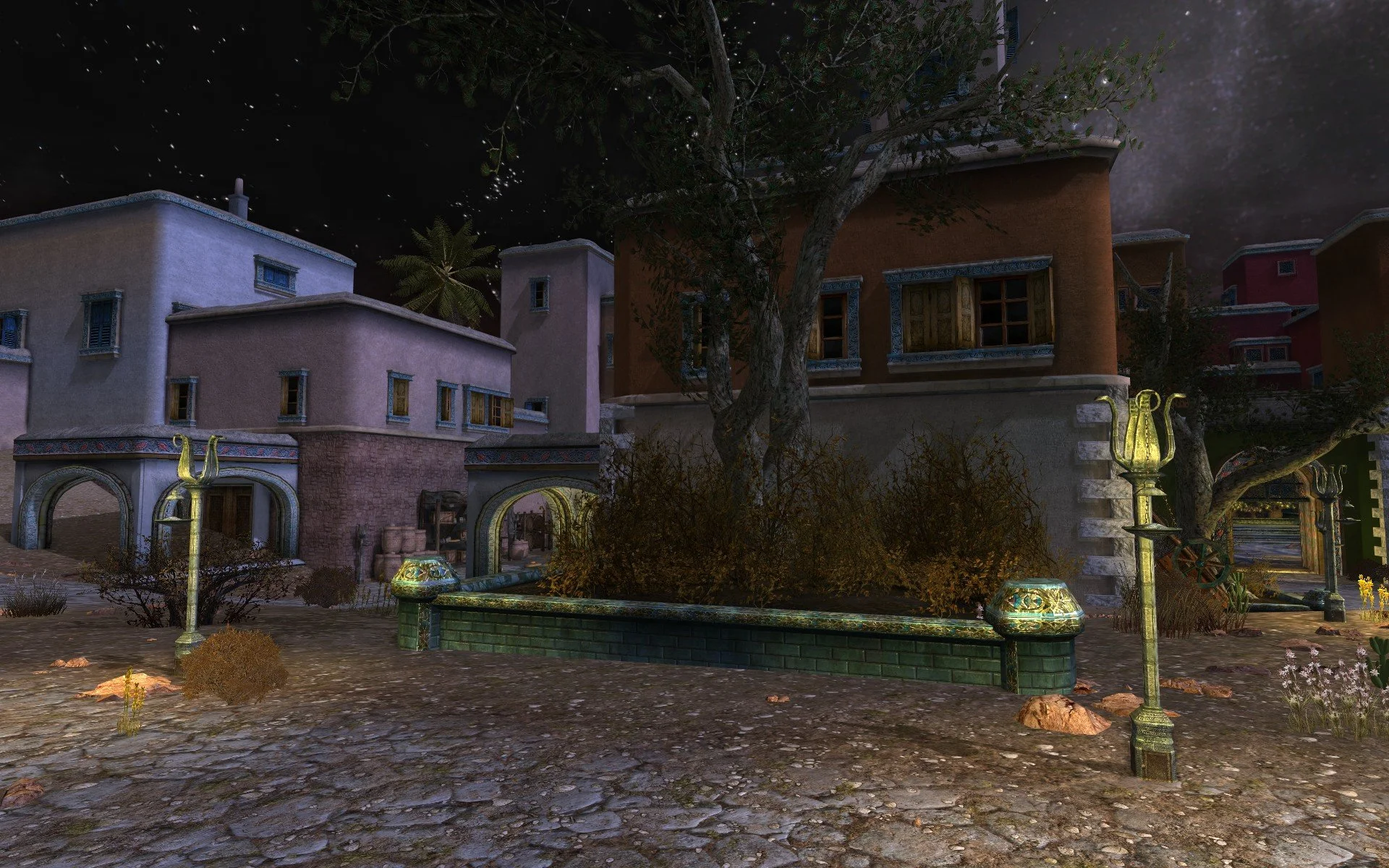
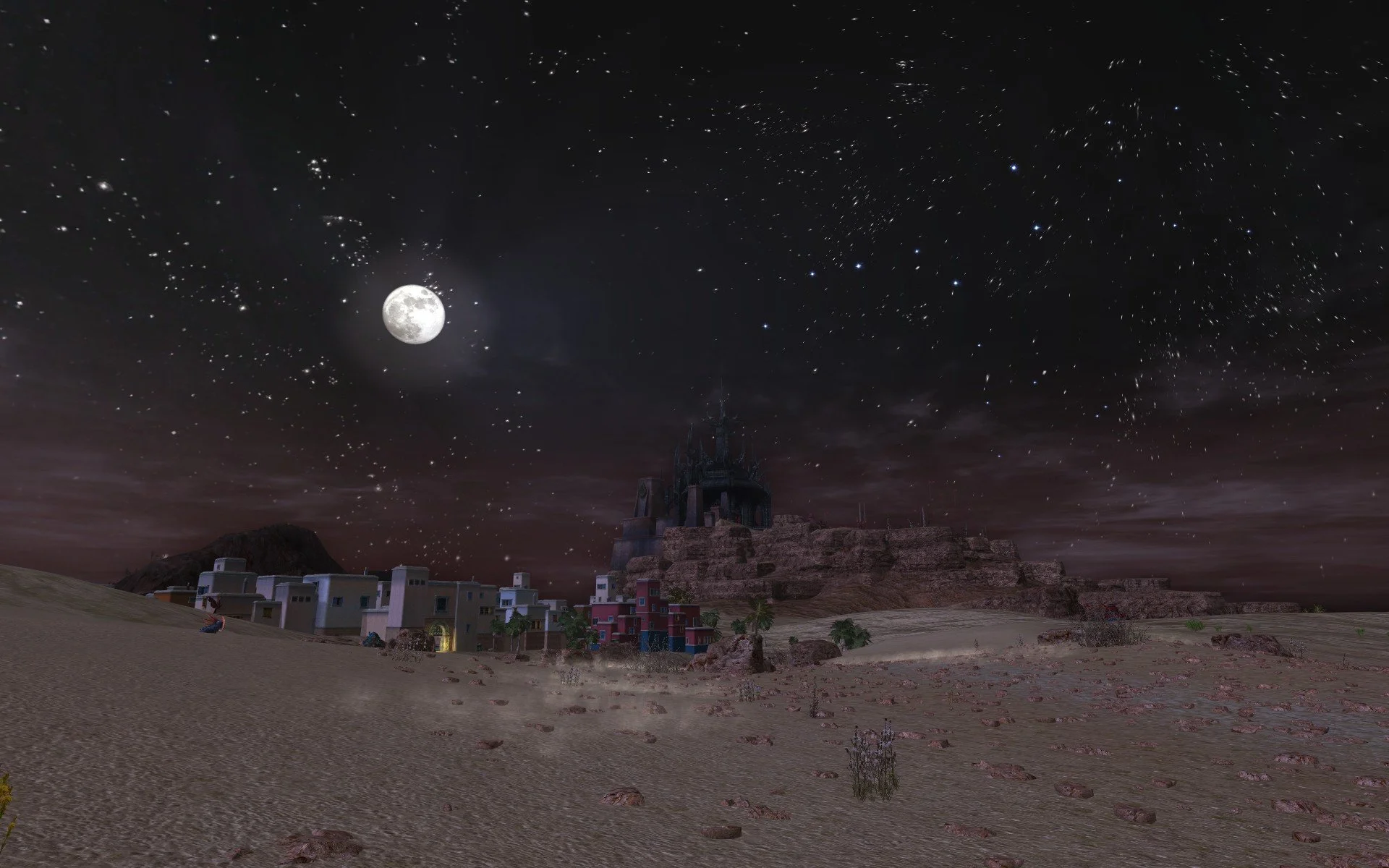
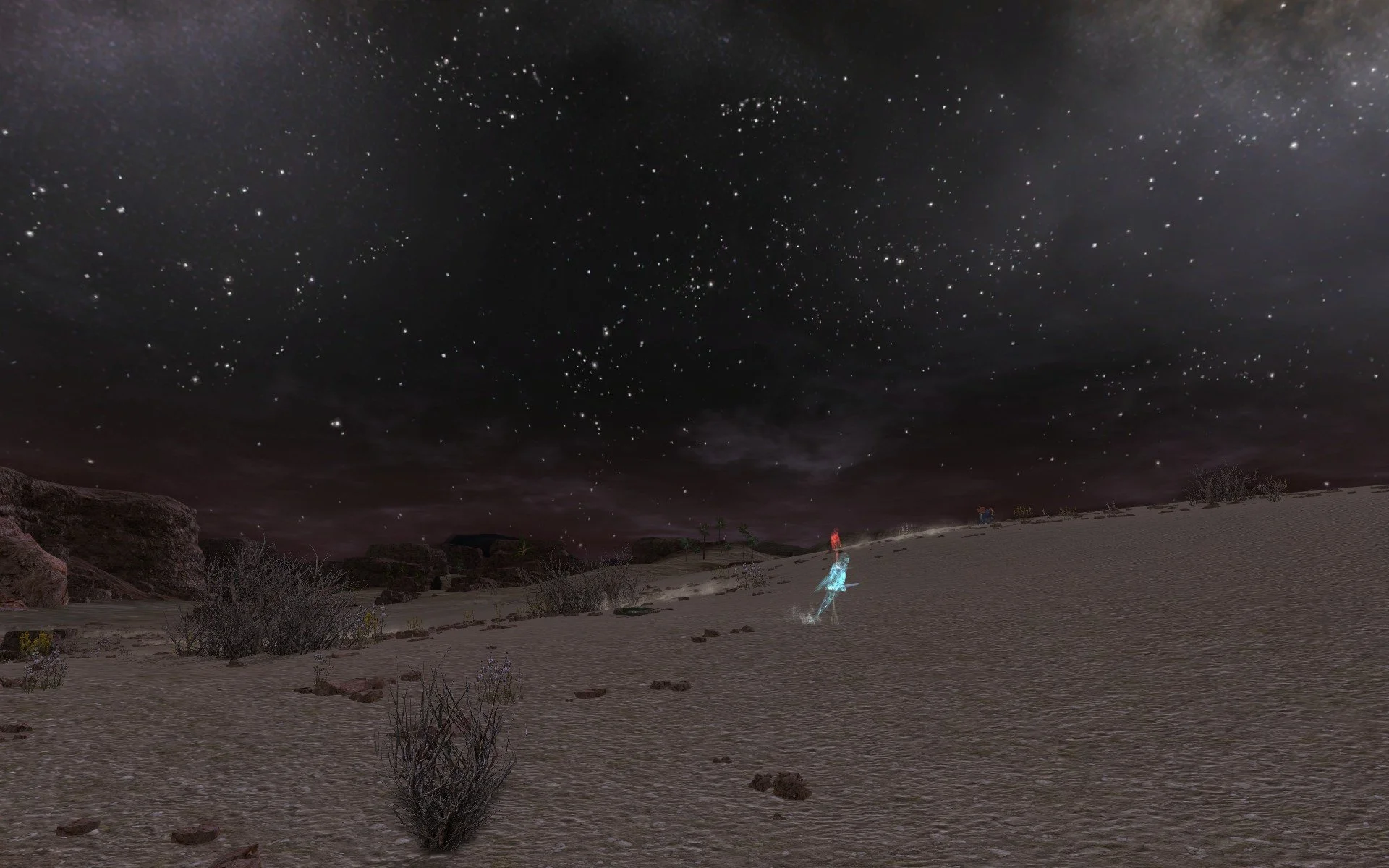
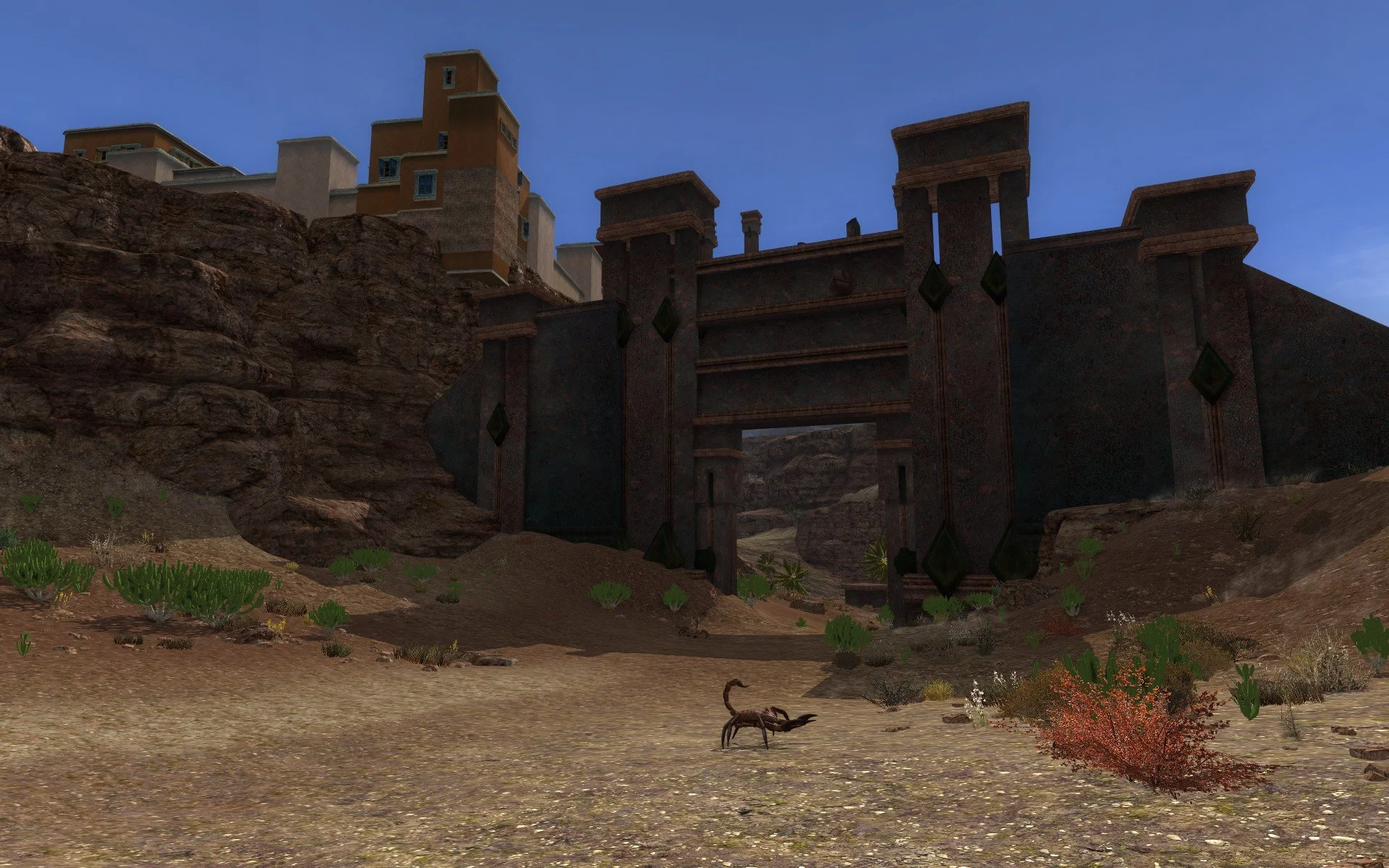
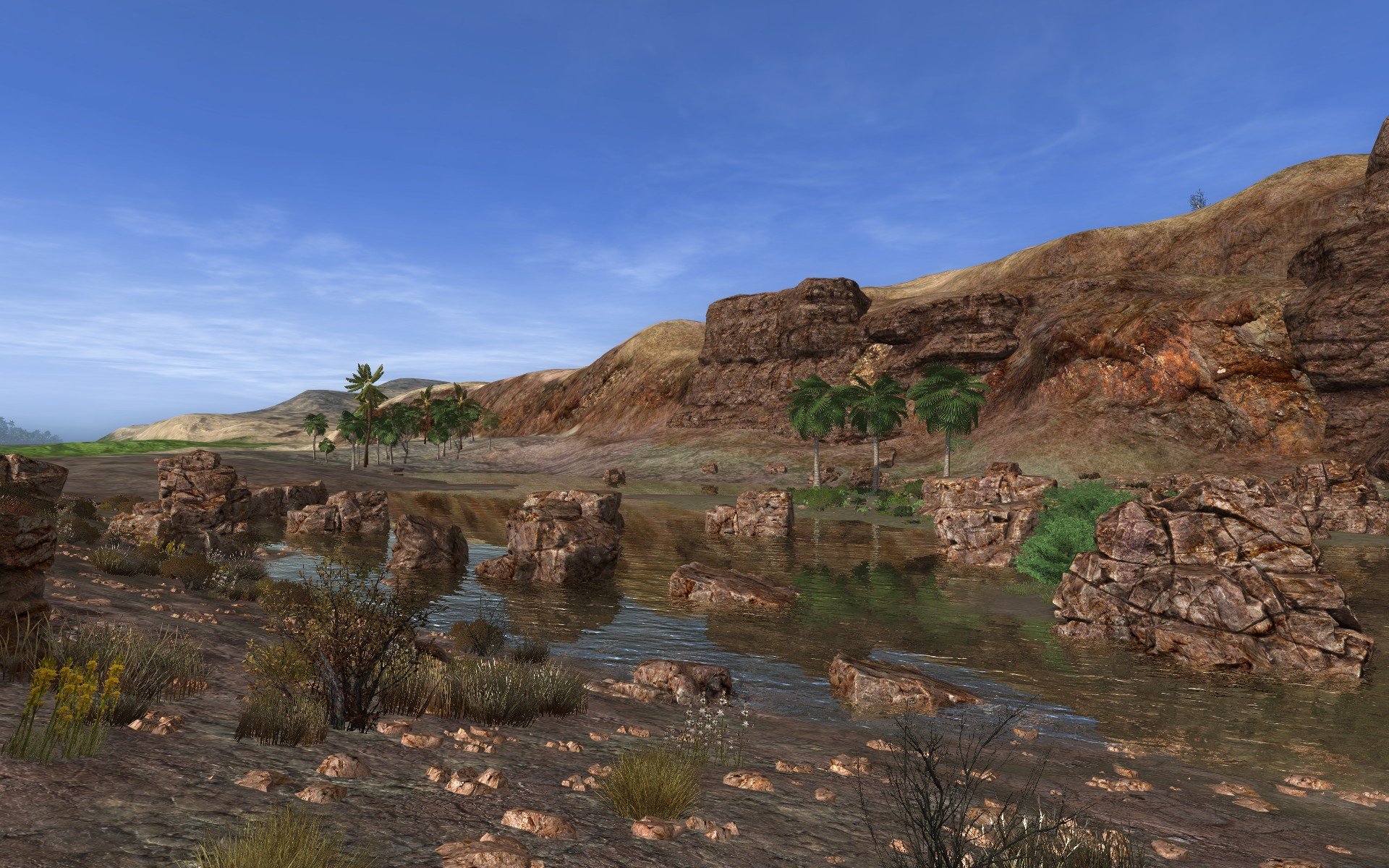
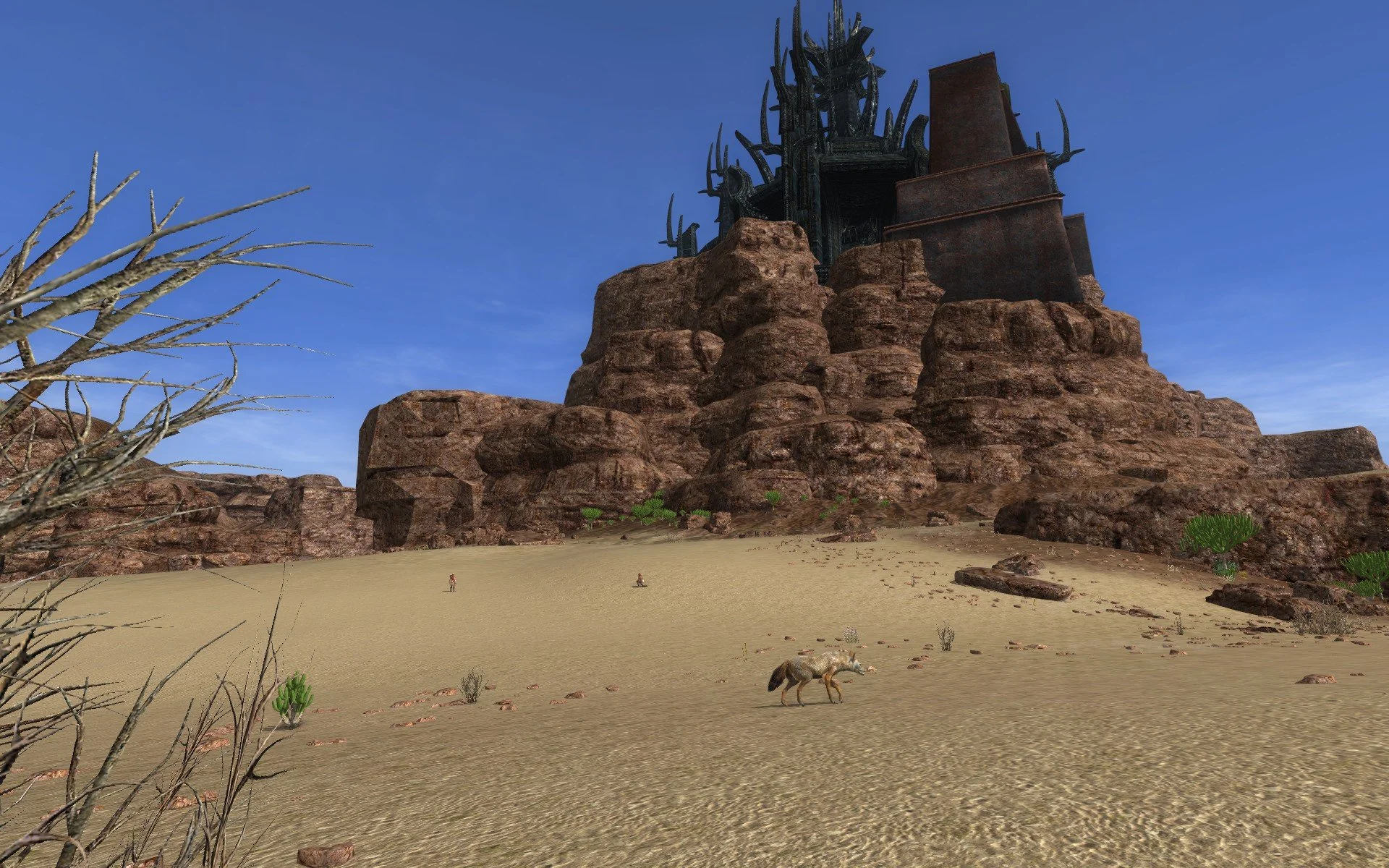
With regard to the two zones that I did have access to, neither reinvent the wheel. Ambarûl continues the tropical aesthetic of the previous expansion and adds some areas similar to a mangrove swamp. The zone is somewhat open and gently slopes up towards the mountains. There is a closed gate to the North East that leads to Harondor, the overland route to Southern Gondor. Khûd Zagin is a more interesting zone, due to its arid, rocky desert. Vegetation becomes more sparse and the landscape is filled with snakes, scorpions and caracal cats. There are dust devils and other embellishments that convey the character of the environment. Furthermore it looks quite sinister at night. As ever with LOTRO, the ambient music by Bill Champagne is outstanding and contributes so much to the game’s atmosphere.
Beta tests are subject to change and are not representative of the final product. Hence, there is scope for things to change in the weeks to come with the next test of Legacy of Morgoth. That being said, I still have my concerns regarding this expansion. In the past, beta tests have presented a virtually finished version of the expansion with all its respective content available for consideration. I find this limited access to only two maps perplexing. Is the new material still being actively created? Have there been issues making the new content? Is this expansion being quickly put together and pushed out the doors at the behest of the bean counters at Daybreak Game Company? It is the latter that worries me the most. It’s not so much a question of quality but one of quantity. Are we being given what is effectively just a content update but being charged for it? It wouldn’t be the first time such a thing has happened. Watch this space.

LOTRO: The Benefits of Plugins
After my recent experiment involving tweaking the graphics settings in the MMORPG, The Lord of the Rings Online, I decided to see if I could improve my gaming experience with the use of mods. These are known within the LOTRO community as “Plugins”. They are created using the Lua programming language and are managed via an option on the character selection screen, after logging into the game. They are mainly used to augment the existing GUI, often presenting existing game data in a more convenient manner. Plugins can also be used to track information such as deed progress and to mark where specific items, resources and locations are on the in-game map. They cannot be used to issue commands or create macros. The most reliable source for Lua Plugins for LOTRO is via the website LOTRO Interface which maintains a comprehensive repository along with guides and FAQs.
After my recent experiment involving tweaking the graphics settings in the MMORPG, The Lord of the Rings Online, I decided to see if I could improve my gaming experience with the use of mods. These are known within the LOTRO community as “Plugins”. They are created using the Lua programming language and are managed via an option on the character selection screen, after logging into the game. They are mainly used to augment the existing GUI, often presenting existing game data in a more convenient manner. Plugins can also be used to track information such as deed progress and to mark where specific items, resources and locations are on the in-game map. They cannot be used to issue commands or create macros. The most reliable source for Lua Plugins for LOTRO is via the website LOTRO Interface which maintains a comprehensive repository along with guides and FAQs.
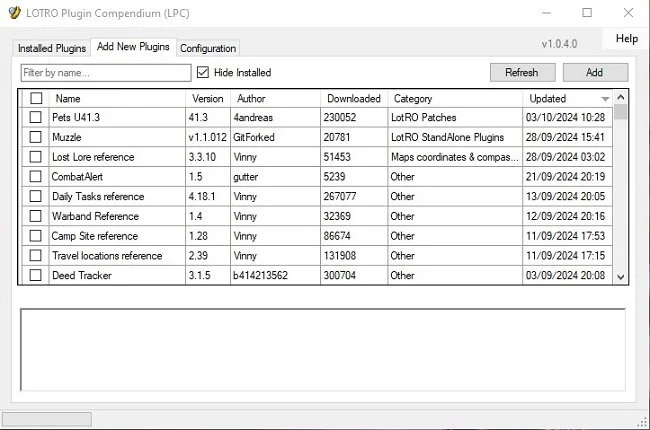
As with other MMOs, the main issue with using any sort of mod or addon is cleanly installing all the appropriate files to the correct locations. While players can do this manually if so desired, the easiest way is to use a third party installation tool. LOTRO Plugin Compendium (LPC) is a windows based plugin management tool. There is also a Java version for Mac and Linux users. It can be used to search for existing Lua Plugins for LOTRO, as well as install, update and uninstall them as needed. It is broadly similar to Minion, for those familiar with the World of Warcraft mod manager. Once installed you can immediately start perusing the wealth of plugins that are available for LOTRO. Upon selection LPC will install all the necessary data to the appropriate game directories. Upon logging into LOTRO, the player has to click on the “Manage Plugins” button on the right of the character select screen to load those they wish to use.
After I installed LPC, I spent a lot of time trawling through the plugin search facility to try and find ones I thought would be beneficial to my play style. I also watched a lot of YouTube videos and read through various subreddits and forums. What I found was that there are a lot of plugins designed around combat and analysing your performance. These are very useful for min-maxing and monitoring data such as DPS, aggro and buffs, when raiding. However, for a player such as I who mainly does PVE content on its default level of difficulty, few of these plugins are relevant. Fortunately, there are plenty of “quality of life” plugins to be found. Addons that present in-game information in a more accessible fashion, so you don’t have to go and search for it at an inopportune moment. Hence I installed the following:
Titan Bar: A transparent toolbar that is located at the top of your screen, which can have a wealth of customisable information displayed on it. I use it to track in-game currency expenditure, damage to gear and reputation progress. I also have an in-game clock that tells you what phase of the day the game is currently in and how long it is until the next one.
Travel Window II: Adds a new window to your screen which lists all your quick travel skills. These can be presented in various different ways and you can minimise the window when not using it. I freed up two complete in-game quickslot bars by switching to this plugin.
Alt Inventory: Does exactly what the name says. Adds a drop down window where you can search your various alt’s inventories. Both bags and vault respectively. This plugin is invaluable if you are an MMO “pack rat”.
So far, I am not aware of the plugins causing any performance issues in LOTRO. However, I am only using three at present. Those installed do not clutter my screen in any way. All can be minimised when not actively used. In fact the Titan Toolbar vanishes during combat which is very convenient. They all provide exactly the functionality I require. I suspect that the key to effectively and efficiently using Lua Plugins for LOTRO, is the same as it is for using addons in any other MMO. Only install and use what you need and don’t get carried away. It is also worth remembering two important things about plugins. They are fan developed and maintained and game updates often break them. Hence, support for them is not indefinite or immediate. It is therefore possible that one day, a plugin you rely on may stop working. With all this in mind, a sensible selection of Lua Plugins for LOTRO can potentially enhance the game and improve your player experience.
LOTRO: Virtue Traits
I returned to the MMORPG, The Lord of the Rings Online, in April this year and caught up with 18 months worth of content. Upon reaching the latest level cap of 150, I built two entirely new Legendary Items and acquired new gear via the game’s lootbox system. As I am not the sort of player who is especially knowledgeable about the “stats” associated with my class and the overall theorycraft of the game, I did some research and found several guides to follow. As I play primarily solo PVE content, I favour a DPS build for my main character in LOTRO, which is a Lore-master. So I copied a specific build and considered my work done. However, along came Update 41 on the 1st of August, which made serious changes to this class. As a result I recently decided to look at every option for the Lore-master and see what I could do to find a new optimal build. The two areas that offer the most scope for improvement are Class Traits and Virtue Traits. This post deals with the latter.
I returned to the MMORPG, The Lord of the Rings Online, in April this year and caught up with 18 months worth of content. Upon reaching the latest level cap of 150, I built two entirely new Legendary Items and acquired new gear via the game’s lootbox system. As I am not the sort of player who is especially knowledgeable about the “stats” associated with my class and the overall theorycraft of the game, I did some research and found several guides to follow. As I play primarily solo PVE content, I favour a DPS build for my main character in LOTRO, which is a Lore-master. So I copied a specific build and considered my work done. However, along came Update 41 on the 1st of August, which made serious changes to this class. As a result I recently decided to look at every option for the Lore-master and see what I could do to find a new optimal build. The two areas that offer the most scope for improvement are Class Traits and Virtue Traits. This post deals with the latter.
Virtues are a type of trait that each character can obtain in LOTRO. Virtues grant bonuses to specific statistics. Each trait grants bonuses to 3 different stats. The first statistic listed grants the largest bonus, the next grants an intermediate bonus and the last stat listed grants the smallest bonus. In order to gain the benefits of a specific Virtue it must be slotted into the top bar in the Virtue page of the Trait Tree Panel. There are 21 Virtues in total, all of which grant a small passive stat bonus (either to Maximum Morale or Physical and Tactical Mastery) even if they are not slotted. A character can have 5 Virtue traits slotted at a time. Virtues are levelled as you progress through game content, with quests rewards often including Virtue XP. Completing deeds is another means of levelling Virtues. The current cap for Virtue Traits is 92.
The key to using Virtue Traits effectively is to slot those with statistics that are beneficial to your specific class. Naturally, you will find hardcore LOTRO players who favour bespoke selections for specific tasks. They may even swap between selections on the fly. For the average player, it is simply a question of finding those traits with stats which benefits your class and favoured play style. Post Update 41, I perused various discussions about the Lore-master class on Reddit and opted for the following Virtue Traits for my “red line” Lore-master. Honesty, Wisdom, Valour, Wit and Confidence. I then proceeded to return to older regions in the game and clear outstanding deeds to earn appropriate XP. Some of the traits I slotted I’d used before, so they were close to the level cap. Others that I had not used previously were only halfway. The benefit of having 5 maxed out Virtue Traits is that it boosts your overall stats and thus your in-game performance.
To cut a long story short, I went through Cardolan, Swanfleet, the Wastes and Elderslade completing various slayer deeds and earning virtue XP. It got somewhat tedious after a while and then I remembered that I have an abandoned Guardian alt, that I previously “boosted” to level to 120. As I hadn’t used all the resources that came with the “boost”, I transferred them to my Lore-master and subsequently maxed out their respective Virtue Traits. This combined with my rebuilt Legendary Items, along with “Teal” gear and jewellery, means that my character stats are now very robust. I always pursue a policy of being overpowered for PVE content, when playing MMORPGs. Hence this has made playing through the Corsairs of Umbar content, a lot easier and faster. I remain undecided about the merits of the last expansion but I am now happy that my primary alt is now what I consider to be optimal.
The Virtue Traits system often gets neglected in LOTRO, due to the more pressing needs such as upgrading your gear and weapon as you level, as well as selecting the right Class Traits to unlock the skills you desire. Hence, levelling your slotted traits is often something we relegate to the time between expansions or content updates, when we’ve done all the major quests and are simply looking for something to do while we kill time. However, it is something that can significantly improve your stats and is therefore well worth pursuing. If done in conjunction with completing deeds, not only will you benefit from the trait XP but you’ll also be rewarded with traceries for your LI and even the occasional additional skills point or mount. There is the possibility that the Virtue Trait cap may be increased in the future, so that is another reason to stay on top of them now.
LOTRO: Fine Tuning Your Graphics
One of the things that I find fascinating about the MMORPG, The Lord of the Rings Online, are other peoples screenshots. Being a 17 year old game, the required hardware specifications are not especially high. Hence it will effectively run on a “potato”; IE an older PC. This is often reflected in the variety of screen captures you will find for the game. No two images ever look quite alike, due to the variety of PCs and laptops that people use to play the game. Hence you’ll sometimes come across screenshots with lower resolutions, or less graphical detail. I have screenshots from when I started playing LOTRO in 2008 and they look demonstrably different to those I’ve taken more recently. The game itself has changed a lot over the last 17 years and this has included graphical updates. Hence, unlike a lot of modern games, LOTRO screenshots do not have such a homogenous look.
One of the things that I find fascinating about the MMORPG, The Lord of the Rings Online, are other peoples screenshots. Being a 17 year old game, the required hardware specifications are not especially high. Hence it will effectively run on a “potato”; IE an older PC. This is often reflected in the variety of screen captures you will find for the game. No two images ever look quite alike, due to the variety of PCs and laptops that people use to play the game. Hence you’ll sometimes come across screenshots with lower resolutions, or less graphical detail. I have screenshots from when I started playing LOTRO in 2008 and they look demonstrably different to those I’ve taken more recently. The game itself has changed a lot over the last 17 years and this has included graphical updates. Hence, unlike a lot of modern games, LOTRO screenshots do not have such a homogenous look.
I bought a new graphics card in July. Specifically a Powercolor AMD Radeon RX 6650 XT Fighter 8GB GDDR6. It is neither the best or worse GPU on the market but essentially the best I could get on my budget. It is certainly adequate for the two monitors I use. An ageing Dell U2412M (1920x1200) and a more recent Dell S2421H (1920x1080). Having recently resubscribed to LOTRO, I decided to fine tune the in-game graphic settings and see if I could get the game to look as good as it could on my PC. I also wondered if it were possible to use some third party software to enhance the ageing games visuals. After some research, I spent a day tinkering with both LOTRO and my PC to try and implement the results. I’ve added a link to a gallery of screen captures at the end of this post, for your edification. The images are at the full resolution that they were taken.
Unlike modern games, LOTRO has no facility to choose which monitor you wish to use if you have more than one. It defaults to your primary monitor. As far as I am aware, there is no easy way around this beyond changing which monitor is designated as primary within Windows but that is far from a convenient solution. I have always played LOTRO via my main monitor which has a resolution of 1920x1200, therefore an aspect ratio of 16:10. It is worth noting that LOTRO does support 2K and 4K screen resolutions but the UI suffers as a result, becoming very small and for many unreadable. Standing Stone Games are allegedly looking into this issue but recent community updates have indicated that this project is “still on the whiteboard”. However, this can be addressed by third party software. More on this later.
Upon launching LOTRO, I maxed out all the settings in “Graphics” and “Advanced Graphics”. The only one I adjusted to a personal preference was “Texture Filtering” which I set to “Very Sharp”. This produces on my PC a clearer image than the “Anisotropic” option, which appears to make the visual detail softer. I set the display “Refresh Rate” to 60Hz, which is the same as the monitor’s. I also checked the box to sync these settings. Once you have maxed out the graphic settings there is nothing else you can do within LOTRO itself to improve the visuals. It is at this point that you have to look to third party software, if you want to make further changes. However, it should be noted that external software can only enhance the existing graphic settings by presenting that visual information in an alternative way. Poor textures, bad animations and elderly character models remain as they are.
The most well known third party software that can be used with LOTRO is ReShade. ReShade is a generic post-processing injector for games and video software developed by crosire. It provides an automated means to access both frame colour and depth information. Players can then add advanced depth-edge-detection-driven SMAA antialiasing, screen space ambient occlusion, depth of field effects, chromatic aberration and other advanced options. ReShade adds an extra folder to your existing LOTRO install. If you are technically proficient you can manually set up the visual changes you desire. Alternatively, ReShade has a library of saved settings made by other LOTRO players. You simply download a single file to the appropriate ReShade folder. You then launch LOTRO and press the “Home” key when at the character selection screen. There you choose the preset and apply it. You can swap between the new ReShade settings and the default LOTRO settings on the fly if you desire.
As stated previously, ReShade and other such software can only do so much. Yet you can still make some further graphical improvements to LOTRO via your graphics card software. For many players this will be either AMD Software: Adrenalin Edition or NVIDIA GeForce Experience. Both have option for upscaling, a technique used in gaming to render games at a lower resolution and then scale them up to a higher resolution without sacrificing performance. This can also be used to resize the GUI at higher resolutions, addressing the problem referred to earlier. GPU software can also improve image sharpness and antialiasing. Having an AMD graphics card I used the respective software for “Image Sharpening”, which I set to 80%, as recommended by the software guide. There are also optional video profiles such as “Cinema Classic”, “Enhanced” and “Vivid” but I’ve chosen not to use these.
Finally, many players have stated they have issues switching between alts in LOTRO as well as exiting the game. This usually manifests as a rather long wait, staring at a black screen. Although not a graphical alteration, I would like to reference the following “workaround” simply as a quality of life improvement. Find the following files in your LOTRO installation folder: lotroclient.exe, lotroclient_awesomium.exe, LotroLauncher.exe, lotroclient64.exe and right click on each one and select “Properties”. Select the tab marked “Compatibility” in the window that subsequently opens and check the box marked “Run this program in compatibility mode for Windows 8”. It does appear to reduce the waiting time when “alting” or exiting the game. Please note this “workaround” is for Windows 10. It would appear that LOTRO performs better when running on Windows 11.
Beyond what I have mentioned, I am not aware of any other straightforward ways to tweak and fine tune the graphics for LOTRO. Ultimately the game is a product of the era in which it was created. Furthermore being a multiplayer game it does not lend itself by design to the “modding” culture of single player games such as The Elder Scrolls V: Skyrim. I suspect that due to where LOTRO is in its life cycle and how its owners view its future earning potential, that there will not be any major investment in upgrading the game’s graphics in any meaningful way. It has already been stated that the money would be better spent on a new game altogether. Therefore, looking at the bigger picture, beyond the tinkering that I’ve referenced there’s not much more you can do to improve the graphics for LOTRO. You can’t make a silk purse out of a sow’s ear as the expression goes. That said, I am somewhat pleased with the results my changes have yielded.
Here is the link to a gallery of screenshots of LOTRO, taken with all the above graphical changes made. The images, via Google Photos, are available at the original screen resolution of 1920 x 1200.
Has LOTRO Lost its Way?
After the initial shock of Update 41 and the radical revisions it made to the Lore-master class, I recently returned to The Lord of the Rings Online to experiment with new Master of Nature’s Fury (red line) and Keeper of Animals (blue line) builds. It is odd to find that skills I’ve been using for years are now gated behind specific trait lines. Furthermore, the consolidation of skills has left the entire class somewhat overpowered. Some players may argue that this is a good thing. However, for me it has rendered what was a subtle class requiring skill and intelligence to use effectively, into what is just a blunt instrument. Since playing tactically is now redundant, instances and skirmishes no longer poses any significant challenge. PVE content has been easy in LOTRO for a long time. Post update 41 it is now trivial and nothing more than a minor diversion.
After the initial shock of Update 41 and the radical revisions it made to the Lore-master class, I recently returned to The Lord of the Rings Online to experiment with new Master of Nature’s Fury (red line) and Keeper of Animals (blue line) builds. It is odd to find that skills I’ve been using for years are now gated behind specific trait lines. Furthermore, the consolidation of skills has left the entire class somewhat overpowered. Some players may argue that this is a good thing. However, for me it has rendered what was a subtle class requiring skill and intelligence to use effectively, into what is just a blunt instrument. Since playing tactically is now redundant, instances and skirmishes no longer poses any significant challenge. PVE content has been easy in LOTRO for a long time. Post update 41 it is now trivial and nothing more than a minor diversion.
For all the good aspects of LOTRO, of which there are many, developer’s Standing Stone Games have a habit of making wrong calls when it comes to adding new systems to the game. Consider mounted combat, fellowship manoeuvres, destiny points and pipe weed. Some of these are interesting ideas that were just poorly implemented. Others are things no one ever asked for. All of which took time and resources to develop. The latest addition to this list is the woefully implemented “Birding” hobby which arrived with Update 41. This bird spotting activity seems somewhat ill conceived and is certainly underwhelming. The fact you don’t actually see any birds during the process is odd, to say the least. Again I return to this notion that those making decisions at SSG seem very removed from what players want.
LOTRO is a 17 year old game. The MMORPG genre and gaming per se have changed a lot during that time. LOTRO looks “old”. Some may argue that is part of the game’s inherent charm and in some respects I would agree. However, the ageing technology that LOTRO runs on is a reality. Although the game has an impressive scope of vision when it comes to its world design, the implementation is looking dated. The low resolution textures, the incessant pop-in and the constant recycling of assets is very noticeable. If you take time to set up a screenshot in LOTRO, especially one that involves an interesting vista, you’ll often find that the game struggles to load appropriately scaled trees, shrubs and buildings. The game engine also cannot cope with the waves and breakers along the coast of Umbar. The game’s UI is also from a different era and struggles to be readable at modern resolutions. Yet plans to address these issues appear to have been abandoned.
LOTRO players will often focus on the game’s strongest asset; the lore and the way that SSG draws upon it so effectively. This is not something I would dispute. If you are a Tolkien fan, you’ll find SSG’s vision of Middle-earth to be very authentic. If you’re a new player starting LOTRO today, you’ll find a wealth of content to get lost in. However, at level cap it is a different issue. You can either embark upon group play and tackle all the respective raids that are available. Or you can simply play new story content and slowly upgrade your gear. I have stated in the past that LOTRO has reached a point in its lifespan where “what you see is what you get”. However, I now feel that the game has begun to run out of steam. Narratively, the game has entered Umbar, which is an interesting region from a lore perspective. But aesthetically it is a visually uninspired zone and it sits uncomfortably with the rest of SSG’s vision of Middle-earth.
Looking at the bigger picture, in recent years there have been a lot of changes with regard to who owns SSG. Initially EG7 appeared to be keen in investing and invigorating the game. However, changes to the internal company hierarchy appear to have reversed this policy. I get the impression that the bean counters are at present happy for LOTRO to continue in the same vein as it always has. It generates revenue consistently and has a robust core playerbase. But I think no one wants to invest any further resources into the game, beyond those allocated. This issue, when combined with SSG’s “mother knows best” outlook, says to me that the game is just marking time. Rather than operating within modest parameters it now feels like lacklustre meandering. Has LOTRO lost its way? Can it be saved and given a new lease of life. Or is it simply entering the final stage of its life cycles.
LOTRO: The Lore-master is Broken
I started playing The Lord of the Rings Online on On Monday 22nd December 2008. I still have the receipt in the box set that I bought, which included the base game Shadows of Angmar and the newly released expansion, Mines of Moria (it had been out about a month). This was my first MMORPG and unlike many other gamers, I had not previously played World of Warcraft. Hence, this was very much a new experience for me. I spent a lot of time pondering what race and class I would play and after reading the game manual thoroughly, (remember them?) I decided upon a human Lore-master. This proved to be a wise decision because I immediately took to the class with its mixture of ranged fire attacks and combat pets. As I am not an “altoholic” this has been my primary character in LOTRO for the last 15 plus years. I have played through every update and expansion with this Lore-master. A total time investment of 7 months, 1 week, 3 days and 5 hours.
I started playing The Lord of the Rings Online on On Monday 22nd December 2008. I still have the receipt in the box set that I bought, which included the base game Shadows of Angmar and the newly released expansion, Mines of Moria (it had been out about a month). This was my first MMORPG and unlike many other gamers, I had not previously played World of Warcraft. Hence, this was very much a new experience for me. I spent a lot of time pondering what race and class I would play and after reading the game manual thoroughly, (remember them?) I decided upon a human Lore-master. This proved to be a wise decision because I immediately took to the class with its mixture of ranged fire attacks and combat pets. As I am not an “altoholic” this has been my primary character in LOTRO for the last 15 plus years. I have played through every update and expansion with this Lore-master. A total time investment of 7 months, 1 week, 3 days and 5 hours.
Over the years I have enjoyed both the good times and bad times with LOTRO. There have been occasions when I have indulged in marathon sessions and other times when I’ve taken several months break from the game. But because of my love of Tolkien and my connection with the character that I’ve created, I always return. Over the years our Fellowship (guild) has waxed and waned. Many friends have come and gone from the game and sadly, some have passed away. Such is the nature of communities within the MMO genre. 15 years has also seen a lot of changes in the games development. Systems have been added and game mechanics have been changed. Mounted combat and epic battles proved unsuccessful. The change from a flexible trait system to a generic skills tree proved problematic. Yet despite various bumps along the way, the road continues to go on and on for LOTRO.
On July 31st, I logged into LOTRO as Update 41: On the Wing was being released that afternoon. I had been away from the game for several months and read that there were to be some class changes included in the latest patch. I took screen captures of my current build, so I could quickly return to it after any system reset. I then logged out, with a view to returning later. It was not until a few days ago that I logged back into LOTRO and I quickly discovered that developers, Standing Stone Games, hadn’t made minor adjustments to the Lore-master class but had radically retooled it. In the past I would have known chapter and verse about this matter well in advance. Nowadays, I have a more casual relationship with the game, so I was blissfully ignorant of the changes. Needless to say, I wasn’t the only player who was confused and frustrated by this decision to alter a class in this fashion.
I won’t belabour casual readers with an excess of detail but all classes in LOTRO have the option to spend their skill points in three distinct skill trees. All of which offer different abilities and play styles. These are colour coded. Blue is weighted towards buffing the Lore-master pets and making them a major focus of gameplay. Red is DPS specific, buffing most fire skills and such like. Yellow line is designed to make all Lore-master buffs and de-buffs more robust and is the favoured skills tree option for those playing group content. All of these have now been nerfed by SSG with certain skills being combined or removed altogether. The most egregious changes are to the red line option. The option that I’ve always favoured. Combat pets which could previously be summoned until manually dismissed, are now relegated to short term skills. You summon them, they fight for a short period and then vanish. These skills now have long cooldowns. Considering that the Lore-master is a pet class, this decision is illogical. It also spoils having these pets as companions when out of combat.
As a mature gamer, I am not prone anymore to gaming related tantrums. They are unseemly and ultimately change nothing. But as a player of LOTRO with 15 years plus standing, who has solely played the Lore-master class for that period, I am “disappointed”. Something that wasn’t broken to begin with has been diminished and is now demonstrably inferior to how it used to be. The irony is this isn’t the first time such decisions have been made during LOTRO’s lifespan and I suspect that it will happen again. SSG developers have a habit of being tone deaf to players’ likes and dislikes and indifferent to any upset or inconvenience they cause. They have an unedifying habit of “always knowing better”, regardless of whether they do or not. As for me, I spent a little time experimenting with the new red line build and then abandoned it. I have not at present chosen an alternative option and have logged out, with no immediate plans to return anytime soon. Nothing remains the same forever but this was a crass decision by the developers and it has now degraded mine and other players’ gaming experience. Bravo SSG, bravo.